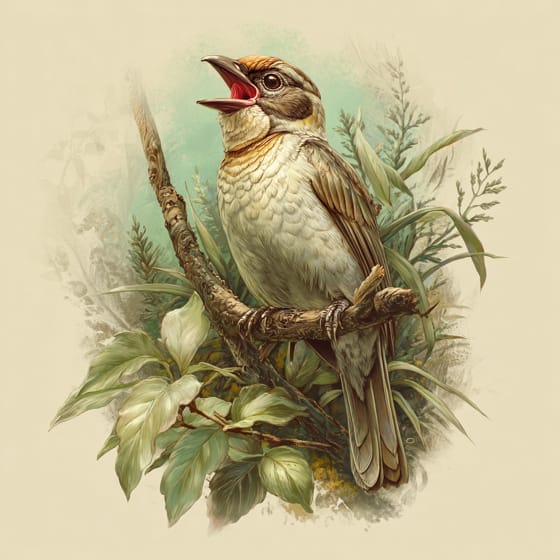





Honeyguide
Indicator
The Honeyguide is a clever bird known for its unique behavior of leading humans to beehives. It has a distinct call that helps people find honey in the wild.
Habitat: Forests
The Honeyguide is generally a drab bird, mostly greyish-brown or olive above with lighter underparts. It has a stout, often dark bill and short legs. Some species may display subtle yellow or olive patches on their wings or shoulders, making them blend well into woodland environments.
Category
BirdsRarity
Common
Danger
1/5 · Very low
Snaps
Be the first to snap!
Ancient African folklore tells tales of honeyguides leading humans to sweet honey.
Honeyguides might even follow you around, hoping you'll find a beehive for them!
Some honeyguides are shy and tricky to spot, preferring to stay hidden high in the trees.
These birds can eat up to 200 bee larvae in one sitting, a truly giant meal!
Honeyguide can digest beeswax because of special gut bacteria that help them break down tough wax, a rare ability in birds.
Honeyguide can lead other animals (like humans or badgers) to beehives, helping them access the sugary honey inside.
Honeyguide has an egg that hatches quickly with a sharp hook, which helps the chick remove or kill host eggs/chicks.
Some Honeyguides have specialized hearing that helps them locate hidden beehives by listening to the buzzing of bees.
Honeyguides love to eat beeswax, bee larvae, and insects, often with the help of other animals!

Homo sapiens
Guides humans to honey, benefiting from leftovers.

Mellivora capensis
Leads honey badgers to beehives, eating the broken wax and larvae.
Apis mellifera
Consumes their wax, larvae, and pupae found in nests.
Trachyphonus vaillantii
Lays eggs in their nests for incubation and chick rearing.
Pogoniulus bilineatus
A common host species for honeyguide chicks.
Feathered describes animals, primarily birds, possessing a covering of feathers.
Social animals live in organized groups, cooperating for survival benefits such as foraging, defense, and raising offspring.
This trait identifies organisms whose diet includes both plant and animal matter.
Singing animals produce complex vocalizations, often for purposes of attracting mates, defending territory, or communicating within their species.

Describes a relationship between two different species where they live in close association, often benefiting one or both.
This trait describes organisms that manipulate external objects to achieve a specific goal.

Forest habitats are terrestrial environments dominated by dense tree cover, supporting a high diversity of plant and animal life.

Describes a species whose presence and role have a disproportionately large effect on its environment.
Danger
1/5 · Very low
Always observe Honeyguides from a safe distance and never disturb their nests.
The easiest way to identify Honeyguide is to use the Snappit nature identifier app.
15-25 cm
25-35 cm
0.02-0.06 kg
5-10 years
45 km/h
Honeyguides love to eat beeswax, bee larvae, and insects, often with the help of other animals!
Forests
Zoom in to split clusters and explore where this object has been snapped.
Recent snaps will appear here as new observations are added.
Take the discovery with you
Snap it with Snappit to identify it, learn what makes it special, and add the discovery to your collection.





.jpg&width=800)









