





Barn Swallow
Hirundo rustica
The Barn Swallow is a small bird with a beautiful blue back and a long tail. They love to fly and catch bugs on the wing, making them fun to watch!
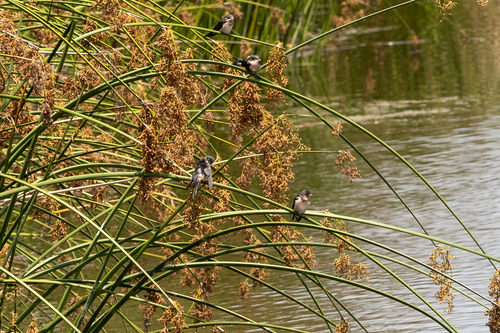
Habitat: Open fields and near water
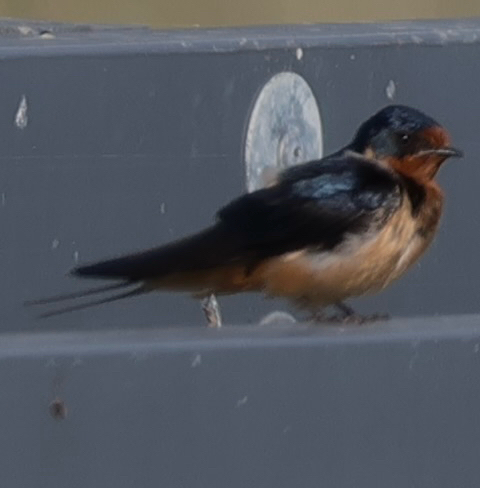
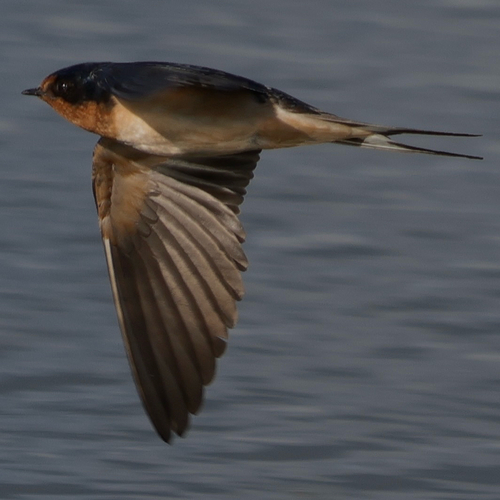
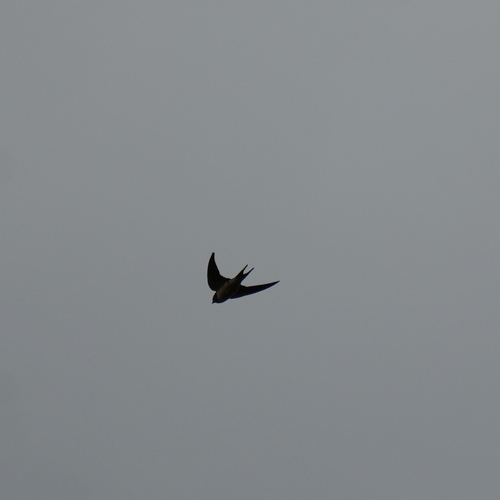
The Barn Swallow has a glossy, iridescent blue-black back, a rusty-red face and throat, and a creamy white belly. Its most striking feature is a deeply forked, long tail with streamer-like outer feathers.
Category
BirdsRarity
Common
Danger
1/5 · Very low
Snaps
123
A Barn Swallow's long tail streamers are a sign of how healthy and attractive it is to mates.
Barn Swallows often drink water by scooping it up with their lower jaw while flying low!
Barn Swallows sometimes fly very low before a storm, catching insects pushed down by air pressure!
Sometimes, young Barn Swallows will stay to help their parents feed the next brood of chicks!
Barn Swallows can perform amazing aerial acrobatics because of their slender bodies, helping them catch flying insects with ease.
Barn Swallows have strong saliva and mud-gathering skills that helps them construct durable, cup-shaped nests.
Barn Swallows have an internal magnetic compass that helps them navigate during their vast seasonal migrations.
These speedy birds are insectivores, expertly catching flying insects like flies and beetles mid-air!
Musca domestica
A primary food source caught mid-flight.
Falco tinnunculus
Hunts swallows and other small birds.
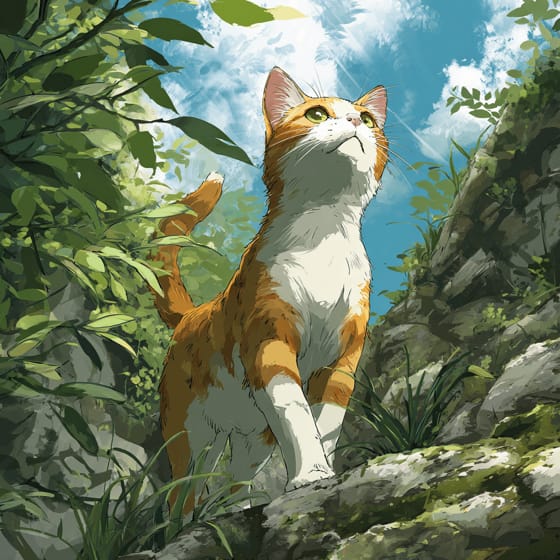
Felis catus
Preys on nesting or fledging birds.
Wildlife encompasses all undomesticated animal and plant life existing in their natural habitats.
Feathered describes animals, primarily birds, possessing a covering of feathers.
Social animals live in organized groups, cooperating for survival benefits such as foraging, defense, and raising offspring.
Aerial creatures spend a significant portion of their lives airborne, utilizing flight for various activities such as hunting, migration, or nesting.

Grassland habitats are terrestrial biomes dominated by grasses and herbaceous plants, supporting a variety of grazing animals.

This trait identifies organisms whose diet primarily consists of insects and other small invertebrates.

Migratory animals undertake seasonal movements from one region to another, typically in response to changes in climate or food availability.
Danger
1/5 · Very low
Barn Swallows are friendly birds, but it's best to observe them from a distance.
The easiest way to identify Barn Swallow is to use the Snappit nature identifier app.
17-19 cm
32-34.5 cm
0.016-0.022 kg
2-8 years
60 km/h
These speedy birds are insectivores, expertly catching flying insects like flies and beetles mid-air!
Open fields and near water
Zoom in to split clusters and explore where this object has been snapped.
Jun 19, 2026
Palo Alto Baylands Nature PreservePhoto attribution
no rights reserved
License: CC0 1.0 ↗
Image may be shown cropped inside the card frame.
Jun 19, 2026
Palo Alto Baylands Nature PreservePhoto attribution
no rights reserved
License: CC0 1.0 ↗
Image may be shown cropped inside the card frame.
Jun 6, 2026
Venice Canal Historic DistrictPhoto attribution
(c) Roberto Daniel Avila, some rights reserved (CC BY)
License: CC BY 4.0 ↗
Image may be shown cropped inside the card frame.
Jun 6, 2026
Reeves-Reed ArboretumPhoto attribution
(c) foxsu, some rights reserved (CC BY)
License: CC BY 4.0 ↗
Image may be shown cropped inside the card frame.
Jun 6, 2026
Bertrand F. Harrison ArboretumPhoto attribution
(c) James Stevens, some rights reserved (CC BY)
License: CC BY 4.0 ↗
Image may be shown cropped inside the card frame.

Connecticut, US
You might spot Striped Wintergreen and Common Eastern Bumble Bee.
View guide →

Rhode Island, US
You might spot Rugosa Rose and American Herring Gull.
View guide →

California, US
You might spot Snowy Egret, Great Blue Heron, and Willet.
View guide →

New York, US
You might spot American Robin, Pond Slider, and Northern Cardinal.
View guide →

Maryland, US
You might spot American Cancer-Root and Rue Anemone.
View guide →

Maryland, US
You might spot Osprey, Duck, and Spotted Lanternfly.
View guide →
Take the discovery with you
Snap it with Snappit to identify it, learn what makes it special, and add the discovery to your collection.





.jpg&width=800)









