





Greater Roadrunner
Geococcyx californianus
The Greater Roadrunner is a fast bird that can run really quickly! It has a long tail and a funny, loud call. You can often see it in the desert, where it loves to chase after insects and small animals.
Habitat: Desert
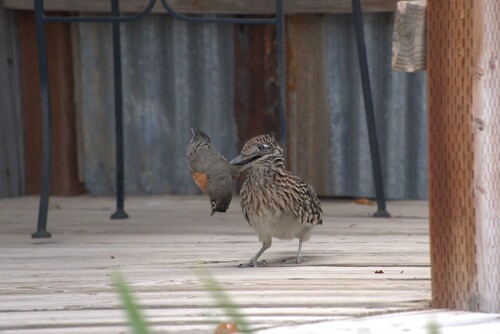
The Greater Roadrunner has streaky brown and white plumage with a shaggy crest and a very long tail. It features distinctive bare skin patches of blue and orange-red around its eyes. Its large, strong legs and long tail are visually prominent.
Category
BirdsRarity
Common
Danger
1/5 · Very low
Snaps
57
Roadrunners often build their nests using tough cactus parts.
Roadrunners sunbathe by raising their feathers to absorb warmth.
Their unique zig-zag footprints confuse animals chasing them.
They can eat dangerous venomous snakes and scorpions!
Greater Roadrunner can run up to 32 km/h because of its powerful legs, helping it catch fast prey and escape danger.
Greater Roadrunner has specialized blood vessels in its feet that help cool its body, allowing it to stay active in extreme heat.
Greater Roadrunner can hunt venomous snakes by repeatedly striking their heads, protecting itself with quick reflexes.
Greater Roadrunner has salt glands to excrete excess salt, helping it get most of its water from the food it eats.
These speedy hunters devour almost any small desert animal they can catch!
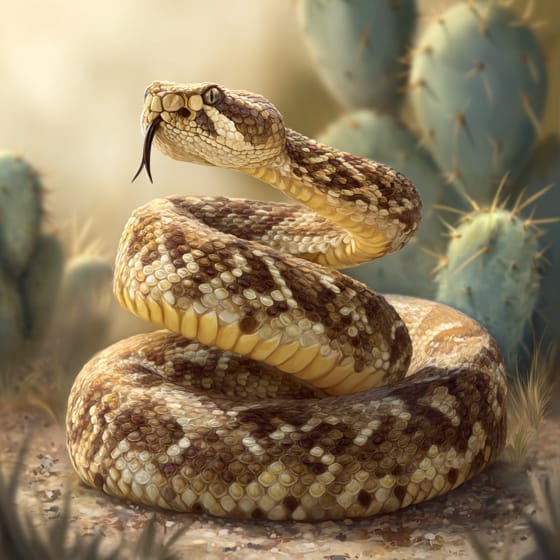
Crotalus atrox
A primary prey item in its desert habitat.
Dipodomys spectabilis
They frequently prey on desert rodents.
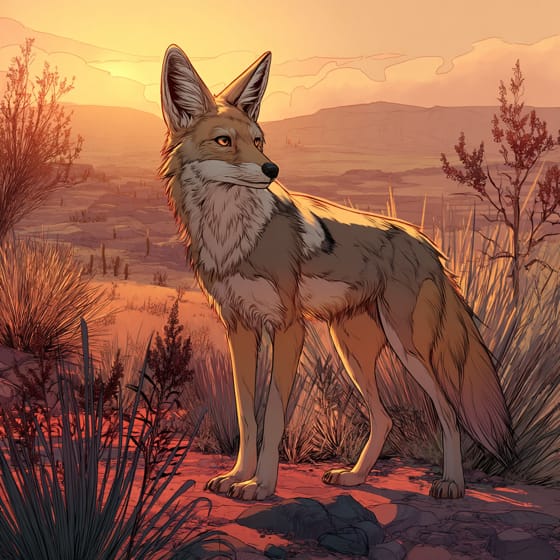
Canis latrans
Coyotes are known predators of roadrunners.
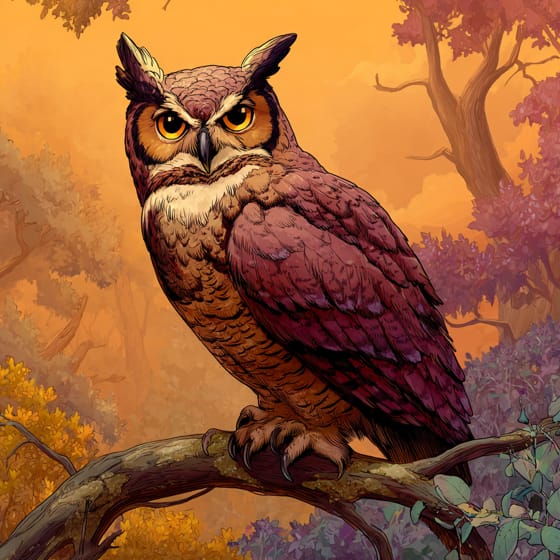
Bubo virginianus
A nocturnal predator that hunts roadrunners.
Feathered describes animals, primarily birds, possessing a covering of feathers.
Solitary animals live alone for most of their lives, only interacting with others for mating or parental care.
This trait identifies organisms whose diet primarily consists of insects and other small invertebrates.
Desert habitats are arid regions characterized by extremely low precipitation and often extreme temperatures, supporting specialized flora and fauna.

This trait identifies organisms whose diet consists entirely or primarily of animal tissue.

Diurnal animals are primarily active during daylight hours, typically resting or sleeping at night.

This trait identifies organisms that exhibit exceptional swiftness in movement for hunting, escape, or travel.
Danger
1/5 · Very low
Watch from a distance and don't try to catch them; they are wild birds.
The easiest way to identify Greater Roadrunner is to use the Snappit nature identifier app.
50-60 cm
43-61 cm
0.23-0.57 kg
7-10 years
32 km/h
These speedy hunters devour almost any small desert animal they can catch!
Desert
Zoom in to split clusters and explore where this object has been snapped.
Nov 13, 2025
Goldfield Historic DistrictPhoto attribution
(c) Jacob Saucier, some rights reserved (CC BY)
License: CC BY 4.0 ↗
Image may be shown cropped inside the card frame.

California, US
You might spot Western Fence Lizard and California Brittlebush.
View guide →

New Mexico, US
You might spot Pronghorn, Great-Tailed Grackle, and Redstem Stork's-Bill.
View guide →

California, US
You might spot Western Fence Lizard, Duck, and California Brittlebush.
View guide →

Oklahoma, US
You might spot Hoary Vervain, Buffalo Gourd, and Pond Slider.
View guide →

Texas, US
You might spot Texas Rainbow Cactus, Ocotillo, and Greater Earless Lizard.
View guide →

New Mexico, US
You might spot Duck, Greater Roadrunner, and American Robin.
View guide →
Take the discovery with you
Snap it with Snappit to identify it, learn what makes it special, and add the discovery to your collection.






.jpg&width=800)








