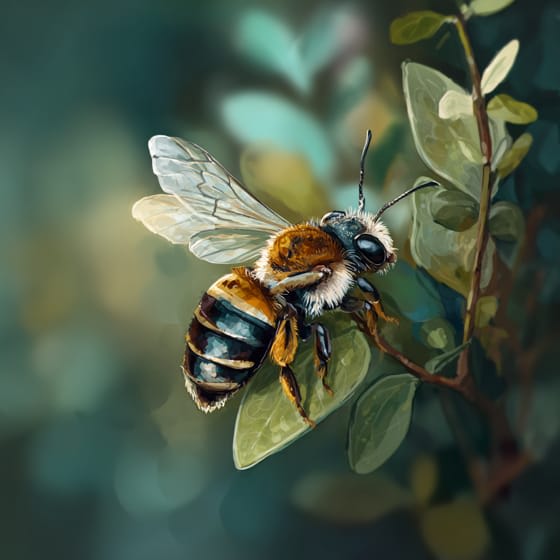





Leafcutter Bee
Megachile gentilis
Leafcutter Bees are special bees that cut leaves to make their nests. They are important for pollinating plants.
Habitat: Gardens and fields
The Leafcutter Bee has a stout, fuzzy body, often dark with bands of lighter hair. Females carry pollen on stiff hairs underneath their abdomen, making their belly look dusty or yellow. They possess large, strong mandibles used for cutting leaves.
Category
InsectsRarity
Common
Danger
2/5 · Low
Snaps
Be the first to snap!
Did you know some leafcutter bees can be confused with wasps because they don't carry pollen in leg baskets?
Imagine having a belly full of fuzz! Female leafcutter bees use these special hairs to transport pollen, not leg baskets.
It's like a tiny, natural fortress! Their leaf-lined nests protect baby bees from the weather and many predators.
Woah! Leafcutter bees are like tiny engineers, using only their jaws to snip out perfect leaf circles for their homes!
Leafcutter Bee can precisely cut perfect leaf circles using sharp mandibles to construct safe, cozy nest cells for their young.
Leafcutter Bee has a specialized scopa (pollen brush) on its belly that helps them carry large amounts of pollen back to its nest.
Leafcutter Bee can craft individual cells for each egg from leaf pieces, creating robust, waterproof, and insulated nurseries.
They feast on flower nectar for energy and gather protein-rich pollen for their growing babies.
Rosa gallica
Helps this rose species produce seeds by transferring pollen.
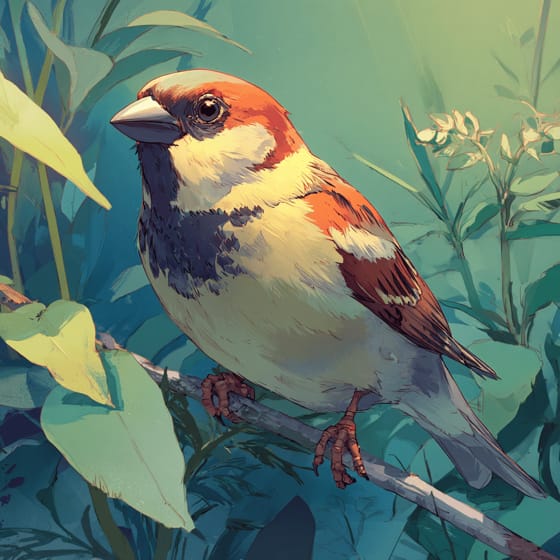
Passer domesticus
Adult bees can become a snack for birds like the House Sparrow.
Coelioxys coturnix
Lays its eggs in leafcutter bee nests, using their stored food.
.jpg&width=800)
Rubus idaeus
Efficiently pollinates raspberry flowers, increasing fruit yield.
Wildlife encompasses all undomesticated animal and plant life existing in their natural habitats.
Solitary animals live alone for most of their lives, only interacting with others for mating or parental care.
This trait characterizes organisms whose diet consists entirely or primarily of plant material.
Describes organisms that transfer pollen, enabling the fertilization and reproduction of plants.
Danger
2/5 · Low
Do not touch or pick up. Some insects sting or bite. Ask an adult for help.
The easiest way to identify Leafcutter Bee is to use the Snappit nature identifier app.
10-30 mm
7-20 mm
30-60 days
20 km/h
They feast on flower nectar for energy and gather protein-rich pollen for their growing babies.
Gardens and fields
Foraging
Zoom in to split clusters and explore where this object has been snapped.
Recent snaps will appear here as new observations are added.
Take the discovery with you
Snap it with Snappit to identify it, learn what makes it special, and add the discovery to your collection.








.jpg&width=800)




