





House Sparrow
Passer domesticus
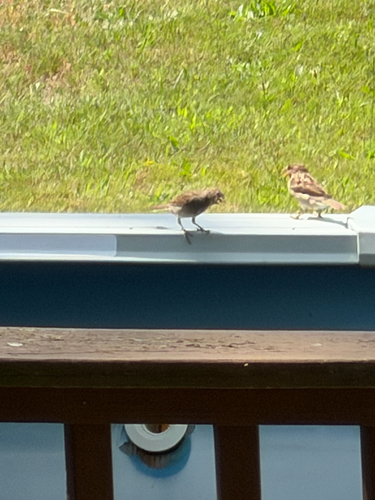
House Sparrows are small, friendly birds often seen in parks and gardens. They love to chirp and can be found hopping around looking for food.
Habitat: Urban and suburban areas
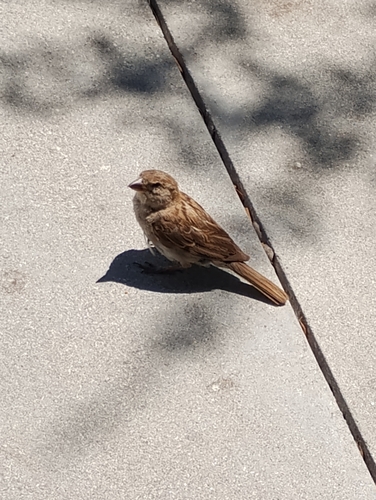
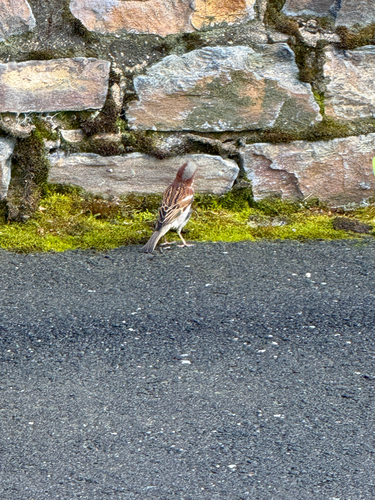
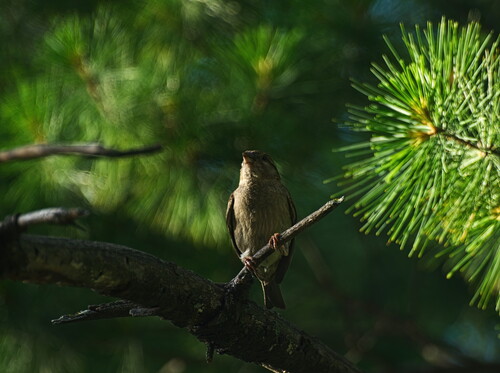
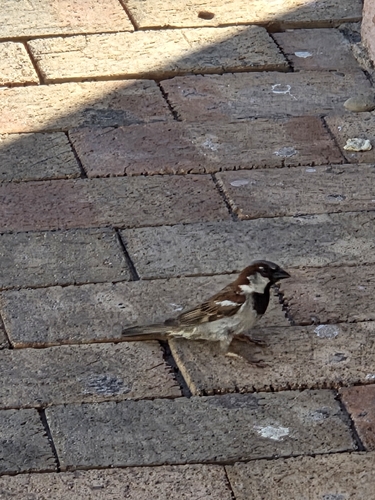
The House Sparrow is a small, stocky bird. Males have a distinctive grey cap, white cheeks, a black bib, and a reddish-brown nape. Females are plainer brown with streaky backs, lacking the male's bold head markings.
Category
BirdsRarity
Common
Danger
1/5 · Very low
Snaps
945
House Sparrows are among the most widespread birds on Earth, found on almost every continent!
House Sparrows were introduced to North America in 1851 and quickly spread across the continent.
Males display to females by puffing up their chest feathers and chirping loudly!
These clever birds often take dust baths to keep their feathers clean and free of tiny parasites.
House Sparrows can thrive almost anywhere humans live because they adapt incredibly well to urban environments.
House Sparrows have a strong, conical beak that helps them easily crack open tough seeds and grains for food.
House Sparrows often nest in colonies, using human structures to build their messy, dome-shaped nests for shelter.
They are opportunistic eaters, feasting on seeds, grains, insects, and human scraps.
Age differences: Young birds eat more insects for protein.
Wildlife encompasses all undomesticated animal and plant life existing in their natural habitats.
Feathered describes animals, primarily birds, possessing a covering of feathers.
Social animals live in organized groups, cooperating for survival benefits such as foraging, defense, and raising offspring.
Aerial creatures spend a significant portion of their lives airborne, utilizing flight for various activities such as hunting, migration, or nesting.

This trait identifies organisms whose diet includes both plant and animal matter.

Singing animals produce complex vocalizations, often for purposes of attracting mates, defending territory, or communicating within their species.

This habitat trait indicates species that can coexist with humans in urban and suburban environments, utilizing man-made structures and green spaces.

Invasive species are non-native organisms that cause harm to the environment, economy, or human health.
Danger
1/5 · Very low
House Sparrows are not dangerous, but it's best to observe them from a distance.
The easiest way to identify House Sparrow is to use the Snappit nature identifier app.
14-16 cm
21-25 cm
0.024-0.039 kg
3-5 years
61 km/h
They are opportunistic eaters, feasting on seeds, grains, insects, and human scraps.
Urban and suburban areas
Zoom in to split clusters and explore where this object has been snapped.
Jun 17, 2026
South Bonnie Brae Tract Historic DistrictPhoto attribution
(c) P Holroyd, some rights reserved (CC BY)
License: CC BY 4.0 ↗
Image may be shown cropped inside the card frame.
Jun 12, 2026
Brattleboro Downtown Historic DistrictPhoto attribution
(c) Karen Saunders, some rights reserved (CC BY)
License: CC BY 4.0 ↗
Image may be shown cropped inside the card frame.
Jun 11, 2026
Four CornersPhoto attribution
(c) Yoatzin Peñaflor, some rights reserved (CC BY)
License: CC BY 4.0 ↗
Image may be shown cropped inside the card frame.
Jun 11, 2026
Bean Hill Historic DistrictPhoto attribution
(c) Sawyer Baran, some rights reserved (CC BY)
License: CC BY 4.0 ↗
Image may be shown cropped inside the card frame.
Jun 11, 2026
Mesilla PlazaPhoto attribution
(c) Suanne Pyle, some rights reserved (CC BY)
License: CC BY 4.0 ↗
Image may be shown cropped inside the card frame.

Hawaii, US
You might spot Brown Anole, Gold Dust Day Gecko, and Red-Crested Cardinal.
View guide →

Ohio, US
You might spot Eastern Fox Squirrel and Spotted Lanternfly.
View guide →

Tennessee, US
You might spot House Sparrow, Northern Mockingbird, and Gulf Fritillary.
View guide →

Michigan, US
You might spot Eastern Gray Squirrel, Tree-Of-Heaven, and House Sparrow.
View guide →

California, US
You might spot Monarch, Canada Goose, and Western Gull.
View guide →

Alabama, US
You might spot Anole, Eastern Gray Squirrel, and Asian Lady Beetle.
View guide →
Take the discovery with you
Snap it with Snappit to identify it, learn what makes it special, and add the discovery to your collection.






.jpg&width=800)










