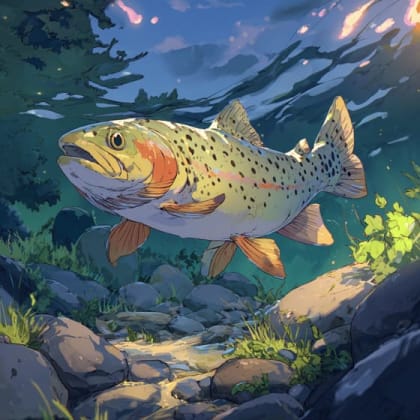



Moray Eel
Muraenidae
Moray eels are long, snake-like fish that live in the ocean. They have sharp teeth and can open their mouths very wide to catch their prey.
Habitat: Marine
The Moray Eel has a long, muscular, snake-like body, often covered in striking patterns of spots, stripes, or mottled camouflage. They possess large mouths filled with sharp, backward-pointing teeth and lack pectoral and pelvic fins, making them appear distinctively streamlined.
Category
FishRarity
Common
Danger
3/5 · Moderate
Snaps
Be the first to snap!
Moray eels breathe by constantly opening and closing their mouths!
Morays often share their reef homes with friendly cleaner shrimp and fish!
Some tiny morays are only as long as a pencil, others longer than a human!
They are toothy predators, but many species are shy, hiding in crevices!
Moray Eel can grab and pull prey deep into its throat using a second set of jaws that extends forward, like an alien.
Moray Eel can expertly hunt in murky water using its excellent sense of smell to locate prey, compensating for poor eyesight.
Moray Eel can tie its flexible body into a knot to shed parasites or gain leverage when pulling tough prey apart.
Moray eels are ocean hunters that mostly eat fish, octopus, and crabs.
Carcharhinus amblyrhynchos
hunts larger morays
Octopus vulgaris
a favorite prey item, hunted at night
Lysmata amboinensis
gets cleaned of parasites in its mouth
Chromis viridis
ambushes small reef fish for food
Piscivorous organisms are animals that primarily subsist on a diet of fish.
This trait describes organisms that manipulate external objects to achieve a specific goal.
An ambush predator hunts by patiently waiting and concealing itself, then launching a sudden attack when unsuspecting prey comes within range.
This trait identifies organisms whose diet consists entirely or primarily of animal tissue.

This trait describes organisms capable of generating electric fields or electric shocks.
Regenerative organisms possess the ability to regrow lost or damaged body parts, tissues, or organs.

Aquatic habitats encompass environments where organisms live predominantly in water, including oceans, rivers, lakes, and wetlands.

Marine habitats encompass all saltwater environments of the Earth's oceans, supporting an immense diversity of aquatic life.

Nocturnal animals are primarily active during the nighttime hours, typically resting or sleeping during the day.
Danger
3/5 · Moderate
Avoid touching or provoking moray eels in the wild as they can bite if threatened.
The easiest way to identify Moray Eel is to use the Snappit nature identifier app.
60-240 cm
1-30 kg
10-30 years
Moray eels are ocean hunters that mostly eat fish, octopus, and crabs.
15 km/h
Marine
Ambush
Zoom in to split clusters and explore where this object has been snapped.
Recent snaps will appear here as new observations are added.

Ohio, US
You might spot Sand Tiger Shark, Nurse Shark, and Cow.
View guide →

Texas, US
You might spot White Tiger, Octopus, and Sand Tiger Shark.
View guide →
Florida, US
You might spot Sand Tiger Shark, Octopus, and North American River Otter.
View guide →

California, US
You might spot Orca, Bottlenose Dolphin, and Sea Lion.
View guide →

California, US
You might spot Penguin, Leopard Shark, and Weedy Seadragon.
View guide →

California, US
You might spot Pacific Hairy Hermit Crab, Sea Urchin, and Sea Cucumber.
View guide →
Take the discovery with you
Snap it with Snappit to identify it, learn what makes it special, and add the discovery to your collection.