Mountain Ash
Sorbus aucuparia
The Mountain Ash is a tall tree known for its bright red berries. It provides food for many birds and animals.
Habitat: Mountain regions and forests
The Mountain Ash is a slender tree with smooth, grey bark and fern-like, pinnate leaves. In spring, it boasts clusters of white flowers, followed by vibrant orange-red berries that persist into winter, making it stand out against winter landscapes.
Category
TreesRarity
Common
Danger
1/5 · Very low
Snaps
Be the first to snap!
Ancient people thought Mountain Ash protected against dark magic!
Bees love its white spring flowers, making yummy honey!
Its super tart berries are packed with more Vitamin C than oranges!
The strong, flexible wood was once used to make spears and bows.
Mountain Ash has bright red berries that attract birds, helping to spread its seeds far and wide for new growth.
Mountain Ash can endure harsh winter climates, allowing it to grow in chilly mountainous and northern regions.
This tree is a pioneer, able to quickly colonize open, sunny areas, helping new forests to begin growing.
Turdus merula
Its bright berries are a winter feast.
Apis mellifera
Buzzes around its sweet spring blossoms.
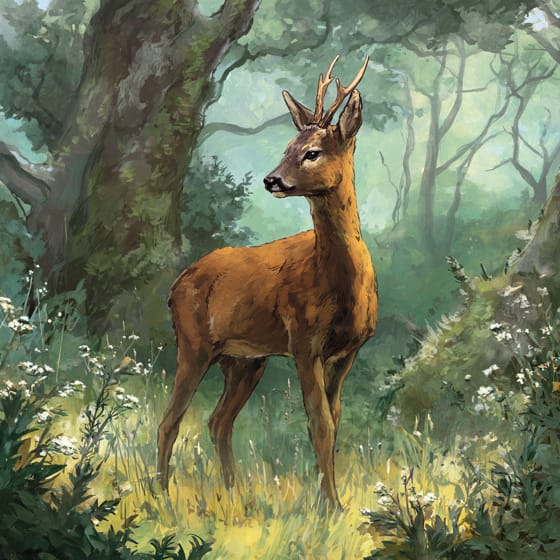
Capreolus capreolus
Browses on young leaves and tender bark.
Deciduous plants periodically shed all their leaves, typically during autumn or dry seasons.
Ornamental plants are cultivated primarily for their aesthetic appeal, enhancing landscapes and gardens with their attractive foliage, flowers, or form.
Broadleaf trees are angiosperms characterized by flat, wide leaves that are typically shed annually in temperate climates.
Fruit-bearing plants produce fruits, which are the mature ovaries of flowering plants containing seeds.

A fruit tree is a perennial tree that produces fruit, which is edible to humans or animals.

Fall color refers to the seasonal change in foliage pigmentation, primarily in deciduous plants, displaying vibrant hues.

This habitat trait identifies species found in mountainous regions, characterized by high elevation, steep slopes, and varying climate zones.
Danger
1/5 · Very low
Do not pick or eat anything you find. Some plants and mushrooms can be harmful.
The easiest way to identify Mountain Ash is to use the Snappit nature identifier app.
8-15 m
4-8 m
No
30-50 cm
80-120 years
Mountain regions and forests
Pome
Zoom in to split clusters and explore where this object has been snapped.
Recent snaps will appear here as new observations are added.
Take the discovery with you
Snap it with Snappit to identify it, learn what makes it special, and add the discovery to your collection.