





Roe Deer
Capreolus capreolus
Roe deer are small, shy deer found in Europe and parts of Asia. They are known for their short antlers and reddish-brown coats.
Habitat: Woodlands, farmland, and grasslands.
The Roe Deer is a small deer with a reddish-brown coat in summer, turning grey-brown in winter. It has a distinctive white rump patch and lacks a visible tail. Males grow short, ridged antlers that are shed annually.
Category
MammalsRarity
Common
Danger
2/5 · Low
Snaps
1
Male roe deer grow new antlers every year and shed them by late autumn!
Roe deer are one of the few mammals that can delay pregnancy on purpose!
Roe deer don't have a long tail, just a fluffy white patch called a 'rump mirror'!
They communicate using barks to warn others of danger, and even make 'squeaks'!
Roe deer have amazing hearing and smell that helps them detect danger from far away.
Roe deer can leap incredibly high and far, allowing them to quickly escape predators or obstacles.
Roe deer have delayed implantation, which helps them time fawn births for spring when food is plentiful.
These adaptable herbivores munch on tasty leaves, shoots, berries, and grasses throughout the day!
Canis lupus
Adult roe deer are a common prey for wolves.
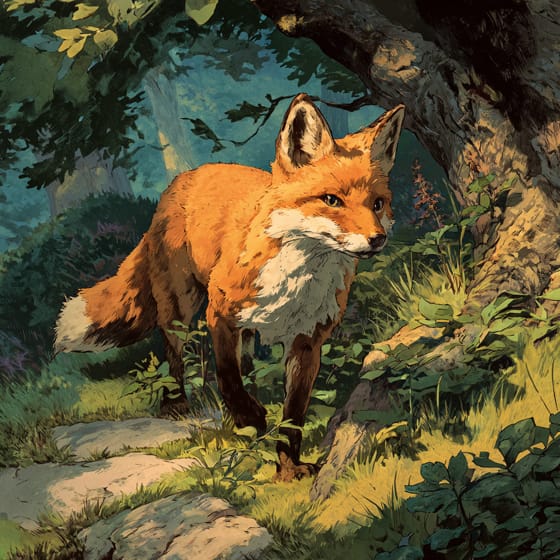
Vulpes vulpes
Fawns are often preyed upon by red foxes.
Quercus robur
Roe deer browse on the leaves and shoots of oak trees.

Aquila chrysaetos
Young fawns can be taken by large raptors like golden eagles.
Wildlife encompasses all undomesticated animal and plant life existing in their natural habitats.
Furry describes animals possessing a dense covering of soft hair or fur.
Antlered describes animals possessing antlers, which are bony, branching growths found predominantly on male deer and related species.
Camouflaged describes organisms that possess coloring or patterns that allow them to blend into their environment.

This trait characterizes organisms whose diet consists entirely or primarily of plant material.

Forest habitats are terrestrial environments dominated by dense tree cover, supporting a high diversity of plant and animal life.

This trait identifies organisms that exhibit exceptional swiftness in movement for hunting, escape, or travel.

Nocturnal animals are primarily active during the nighttime hours, typically resting or sleeping during the day.
Danger
2/5 · Low
Avoid getting close — they may kick if threatened.
The easiest way to identify Roe Deer is to use the Snappit nature identifier app.
95-135 cm
10-35 kg
7-15 years
70 km/h
These adaptable herbivores munch on tasty leaves, shoots, berries, and grasses throughout the day!
Woodlands, farmland, and grasslands.
Foraging
Zoom in to split clusters and explore where this object has been snapped.
Take the discovery with you
Snap it with Snappit to identify it, learn what makes it special, and add the discovery to your collection.






.jpg&width=800)

.JPG&width=800)


.jpg&width=800)
