





Sunda Slow Loris
Nycticebus coucang
The Sunda Slow Loris is a small, slow-moving primate with big eyes. It moves carefully in the trees at night, looking for insects to eat.
Habitat: Rainforest
The Sunda Slow Loris has large, round, forward-facing eyes, often with dark rings, for excellent night vision. It is covered in dense, woolly fur, typically reddish-brown to grey, with a distinctive dark stripe running down its back. This primate possesses a very short tail and small, hidden ears within its thick fur.
Category
MammalsRarity
Rare
Danger
4/5 · High
Snaps
Be the first to snap!
Baby lorises cling tightly to their mother's fur for months, riding on her back as she searches for food!
Sunda Slow Lorises leave strong scent marks on branches to chat with other lorises, telling them 'I was here!'
These furry friends are important pollinators, helping trees like the durian by sipping nectar from their flowers.
They have a special 'tooth comb' of long lower incisors used for grooming fur and scraping tree gum!
Sunda Slow Loris has venom glands in its elbows, which mix with saliva to create a toxic bite that deters predators.
Sunda Slow Loris has huge forward-facing eyes with a special reflective layer (tapetum lucidum) to see clearly in the dark.
Sunda Slow Loris can cling incredibly tight with strong hands and feet for hours, moving silently through trees to avoid being seen.
This shy primate enjoys a varied diet of fruit, nectar, tree sap, and tasty insects.
Nisaetus alboniger
A fierce raptor that hunts the slow-moving loris from above.
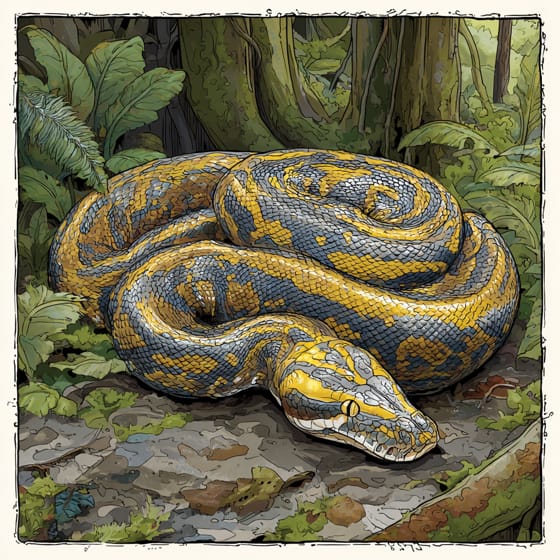
Python reticulatus
A large snake that ambushes lorises in their arboreal homes.
Durio zibethinus
Consumes nectar from its flowers, also aiding in pollination.
Oryctes rhinoceros
Feeds on larvae and adults of this common forest beetle.
Furry describes animals possessing a dense covering of soft hair or fur.
Arboreal animals live primarily in trees, utilizing them for shelter, food, and protection from predators.
This trait identifies organisms whose diet primarily consists of insects and other small invertebrates.
This habitat trait refers to species found in tropical rainforests, characterized by high annual rainfall, high biodiversity, and dense tree cover.

Toxic organisms contain substances that are poisonous and can cause adverse effects upon exposure.

Vampiric organisms are those that obtain nutrients by feeding on the blood or bodily fluids of other animals.

Nocturnal animals are primarily active during the nighttime hours, typically resting or sleeping during the day.

Venomous organisms produce toxins that are injected into another animal, typically through a bite or sting.
Danger
4/5 · High
Never try to touch or approach a Sunda Slow Loris in the wild. They are shy and can be dangerous.
The easiest way to identify Sunda Slow Loris is to use the Snappit nature identifier app.
27-38 cm
0.6-1.2 kg
15-20 years
1 km/h
This shy primate enjoys a varied diet of fruit, nectar, tree sap, and tasty insects.
Rainforest
Foraging
Zoom in to split clusters and explore where this object has been snapped.
Recent snaps will appear here as new observations are added.
Take the discovery with you
Snap it with Snappit to identify it, learn what makes it special, and add the discovery to your collection.




.jpg&width=800)




.JPG&width=800)



.jpg&width=800)
