




Kentucky Coffeetree
Gymnocladus dioicus (L.) K.Koch
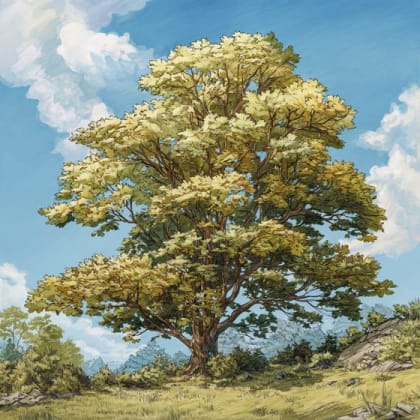
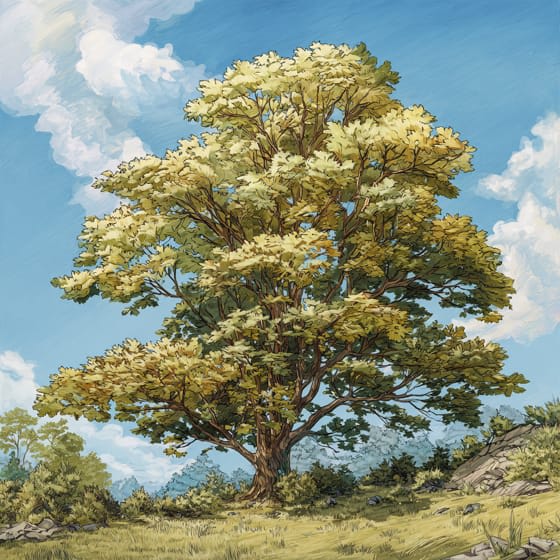
The Kentucky Coffeetree is a unique tree with large leaves and cool seed pods. It’s named because its seeds were once used to make coffee!
Habitat: Riverbanks and open fields
The Kentucky Coffeetree has a distinctive gray-brown, deeply ridged bark that looks scaly or flaky. It features unusually large, bipinnately compound leaves and large, leathery, dark reddish-brown seed pods that persist through winter, making it easily identifiable.
Category
TreesRarity
Common
Danger
1/5 · Very low
Snaps
9
It's one of the last trees to grow leaves in spring and one of the first to drop them.
Its leaves can grow up to three feet long, making them some of the largest of any tree!
Its name comes from pioneers who roasted its seeds to make a coffee substitute!
The Kentucky Coffeetree might have relied on giant mammoths to spread its seeds long ago!
Kentucky Coffeetree has tough, dark seed pods that cling to branches through winter, helping them disperse seeds far from the parent tree.
Kentucky Coffeetree can withstand dry conditions due to its deep root system, helping it survive in less-than-ideal soils.
Kentucky Coffeetree has thick, rough bark that helps protect its trunk from damage during moderate forest fires.
Apis mellifera
Bees visit its flowers for nectar.

Cyanocitta cristata
Jays use its branches for perching and nesting.
Didelphis virginiana
Opossums might den in its hollows.
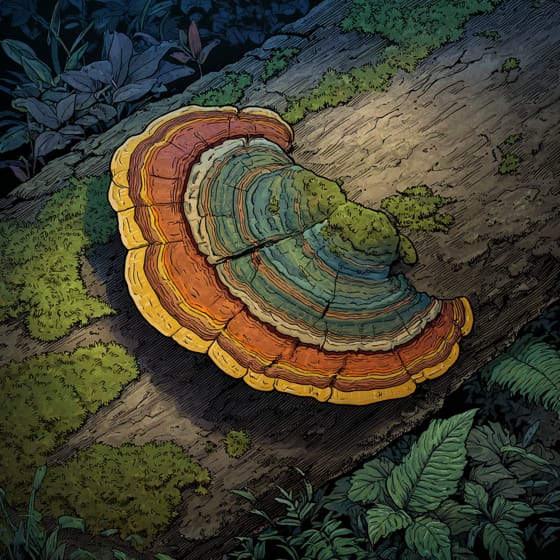
Trametes versicolor
This fungus decomposes dead wood.
Deciduous plants periodically shed all their leaves, typically during autumn or dry seasons.
Shade tolerant plants are adapted to grow and thrive in areas with low light levels, requiring less direct sunlight.
Broadleaf trees are angiosperms characterized by flat, wide leaves that are typically shed annually in temperate climates.
Fruit-bearing plants produce fruits, which are the mature ovaries of flowering plants containing seeds.

Forest habitats are terrestrial environments dominated by dense tree cover, supporting a high diversity of plant and animal life.
Danger
1/5 · Very low
Do not pick or eat anything you find. Some plants and mushrooms can be harmful.
The easiest way to identify Kentucky Coffeetree is to use the Snappit nature identifier app.
20-30 m
10-15 m
No
60-90 cm
80-150 years
Riverbanks and open fields
Pod
Zoom in to split clusters and explore where this object has been snapped.

Missouri, US
You might spot Common Eastern Bumble Bee and Brown-Belted Bumble Bee.
View guide →

Wisconsin, US
You might spot Turkey, White-Tailed Deer, and Dame's Rocket.
View guide →

Ohio, US
You might spot Brown-Belted Bumble Bee and Eastern Carpenter Bee.
View guide →

Ohio, US
You might spot Spotted Lanternfly, Virginia Springbeauty, and Blue Phlox.
View guide →

Kentucky, US
You might spot Eastern Gray Squirrel and American Pokeweed.
View guide →

Illinois, US
You might spot Cliff Swallow, Baldcypress, and Indian Heliotrope.
View guide →
Take the discovery with you
Snap it with Snappit to identify it, learn what makes it special, and add the discovery to your collection.