





Yacare Caiman
Caiman yacare
The Yacare Caiman is a smaller crocodilian that loves warm waters. They have a friendly appearance and enjoy basking in the sun.
Habitat: Wetlands and rivers
The Yacare Caiman has an olive-brown to yellowish-brown body, often with dark spots or bands, especially when young. Its most distinctive feature is its "piranha caiman" smile, with many lower teeth visible even when its mouth is closed, unlike other crocodilians.
Category
ReptilesRarity
Common
Danger
2/5 · Low
Snaps
Be the first to snap!
Baby Yacare Caimans stay with their mom for months, sometimes years!
Scientists can tell their age by counting growth rings on their bones.
Their name "Yacare" comes from the Guarani word for "alligator."
They are sometimes called 'Piranha Caimans' because they eat so many piranhas!
Yacare Caimans have incredibly powerful jaws to crush the shells of snails and bones of prey with ease.
Yacare Caimans have a clear third eyelid that helps them see clearly underwater while protecting their eyes.
Yacare Caimans can blend perfectly with muddy waters and riverbanks, helping them surprise their prey.
These reptile predators mostly eat fish, snails, and other small animals found in the water.
Age differences: Young caimans eat insects and smaller invertebrates; adults switch to larger fish and vertebrates.
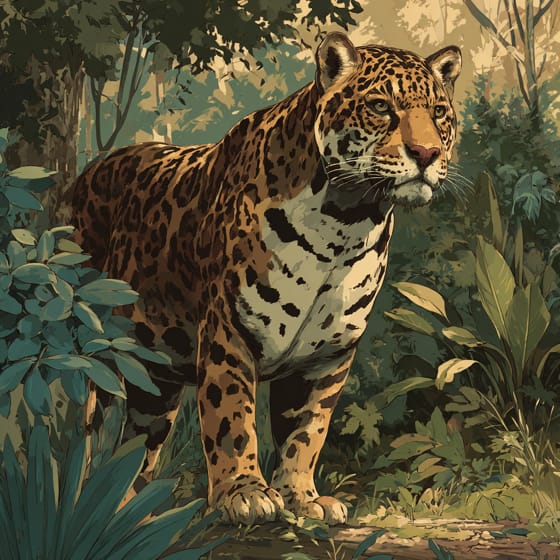
Panthera onca
Larger jaguars sometimes hunt adult caimans.
Eunectes murinus
Giant anacondas can prey on younger or smaller caimans.

Pygocentrus nattereri
Yacare Caimans regularly hunt and eat piranhas.
Pomacea canaliculata
Snails are a significant part of the Yacare Caiman's diet.
Wildlife encompasses all undomesticated animal and plant life existing in their natural habitats.
Social animals live in organized groups, cooperating for survival benefits such as foraging, defense, and raising offspring.
Piscivorous organisms are animals that primarily subsist on a diet of fish.
Freshwater habitats include non-saline aquatic environments such as rivers, lakes, ponds, and wetlands, vital for numerous species.

Aquatic habitats encompass environments where organisms live predominantly in water, including oceans, rivers, lakes, and wetlands.

Nocturnal animals are primarily active during the nighttime hours, typically resting or sleeping during the day.
Danger
2/5 · Low
Look but don’t touch. Keep a safe distance and wash hands after exploring.
The easiest way to identify Yacare Caiman is to use the Snappit nature identifier app.
140-300 cm
15-60 kg
25-50 years
15 km/h
These reptile predators mostly eat fish, snails, and other small animals found in the water.
25 km/h
Wetlands and rivers
Zoom in to split clusters and explore where this object has been snapped.
Recent snaps will appear here as new observations are added.
Take the discovery with you
Snap it with Snappit to identify it, learn what makes it special, and add the discovery to your collection.















