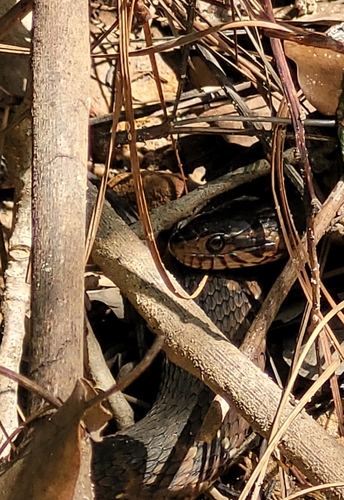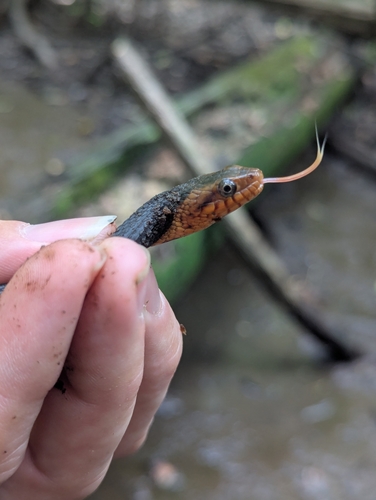




banded watersnake
Nerodia fasciata
banded watersnake は、水を泳ぐのが大好きな人懐っこいヘビです!周囲に溶け込む美しい縞模様があり、優れたスイマーであり、見つけるのが楽しい生き物です。
生息地: 湿地
banded watersnake は、太い体をしており、明るい背景(黄褐色、灰色、または黄色)に明瞭な暗い横縞(茶色、赤褐色、または黒色)があります。縞模様は通常、背中の中央で幅広くなっています。また、目から顎の角にかけて暗い縞模様が走っています。
カテゴリ
爬虫類レア度
Common
危険度
2/5 · 低い
スナップ
27
メスの banded watersnake は一度に最大50匹の赤ちゃんを産むことがあります!すごいですね!
多くの人が毒蛇のコットンマウスと間違えますが、彼らは無害です!
彼らはまるで潜水艦のハンターのように、水中で魚を捕まえます!
怖がると、匂いのある麝香を放って警告することがあります。
banded watersnake は優れたスイマーであり、長時間息を止めることができるため、水中で魚やカエルを狩ることができます。
banded watersnake は、泥だらけの葦の生えた岸辺や泥水の中に溶け込むような模様の横縞を持っており、捕食者や獲物から身を隠すのに役立ちます。
banded watersnake は、生まれてすぐに泳ぎ、自分で狩りができる赤ちゃんヘビ(ネオナート)を胎生で出産することができます。
banded watersnake は、脅かされたときに体と頭を扁平にして、自分を大きく威嚇的に見せ、潜在的な攻撃者を追い払うことができます。
これらの水生ヘビは優れたハンターで、主に淡水域の魚、カエル、サンショウウオを食べます。
年齢による違い: 若いヘビは、小型の魚やオタマジャクシなど、成体の獲物の小型版を食べます。
Gambusia holbrooki
南部水路で一般的な食料源です。
Lithobates sphenocephalus
水辺で待ち伏せされたり、泳いでいるところを捕まえられたりすることがよくあります。
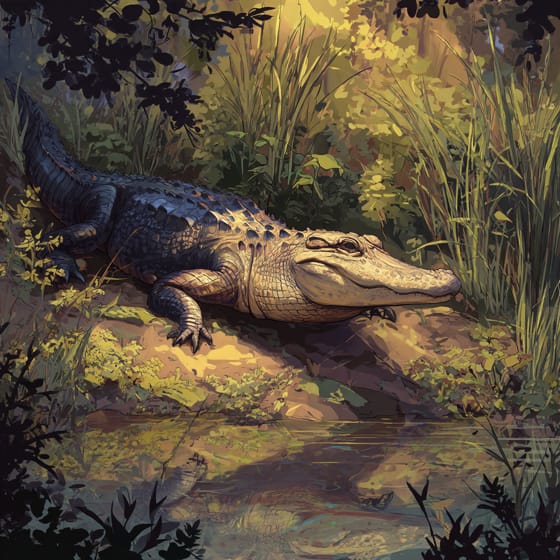
Alligator mississippiensis
大型のワニは、幼体および成体のミズヘビの捕食者です。
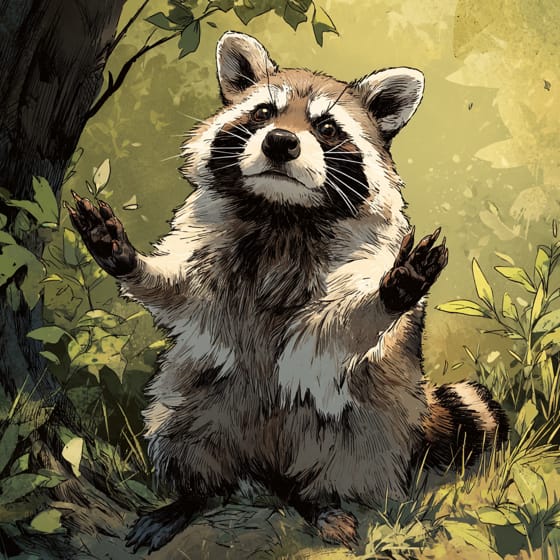
Procyon lotor
水域近くで遭遇したミズヘビを捕食します。
平行な色の帯や線があること。
単独行動をとる動物は、繁殖や子育ての時を除き、生涯のほとんどを1匹で生活します。
周囲の環境に溶け込むような色や模様を持つ生物の特徴を指します。
魚食性の生物とは、主に魚を食べて生活している動物のことです。

この生息地特性は、湿地(年間を通して、または季節的に水に浸かっている沼や湿原などの土地)で見られる種を示します。

昼行性の動物は主に日中に活動し、通常は夜間に休息や睡眠をとります。

この特徴は、食事のすべて、または大部分が動物の肉である生物を示します。

水生の生息地には、海、川、湖、湿地など、生物が主に水中で生活する環境が含まれます。
まだ別名はありません。
危険度
2/5 · 低い
ヘビを見かけたら、遠くから観察し、触らないのが一番です。
banded watersnakeを識別する最も簡単な方法は、Snappit自然識別アプリを使用することです。
60-150 cm
0.2-2 kg
5-10 年
3 km/h
これらの水生ヘビは優れたハンターで、主に淡水域の魚、カエル、サンショウウオを食べます。
5 km/h
湿地
ズームインしてクラスターを分割し、このオブジェクトが撮影された場所を探索しましょう。

Alabama, US
ここで見られるかも ゴシキノジコ, メキシコマシコ と カタアカノスリ.
ガイドを見る →

Texas, US
ここで見られるかも ブラウンアノール, ガルフフリチラリー と ミシシッピアカミミガメ.
ガイドを見る →

Louisiana, US
ここで見られるかも ナキハクチョウ, アメリカコガモ と カナダガン.
ガイドを見る →

Arkansas, US
ここで見られるかも ミズツペロ, Banded Watersnake と キイロズアメリカムシクイ.
ガイドを見る →

South Carolina, US
ここで見られるかも アメリカアリゲーター, オオアオサギ と アニンガ.
ガイドを見る →

South Carolina, US
ここで見られるかも ガルフフリチラリー, ポエイミゾハナバチ と グリーンアノール.
ガイドを見る →
発見を持ち帰ろう
Snappitで撮影して種類を調べ、発見をコレクションに残せます。