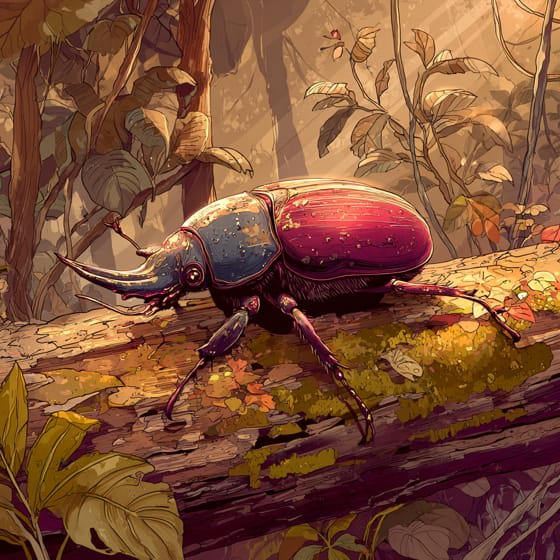





Elephant Beetle
Megasoma actaeon
The Elephant Beetle is a big and powerful beetle that looks like an elephant! Its unique shape helps it blend in with the forest.
Habitat: Central and South American forests
The Elephant Beetle is a large, bulky insect, often dark brown or black, covered in fine yellowish hairs giving it a fuzzy appearance. Males are easily identified by their impressive, curved horns resembling an elephant's tusks, one on the head and one on the thorax.
Category
InsectsRarity
Rare
Danger
2/5 · Low
Snaps
Be the first to snap!
An adult beetle might only live a few months, but the larval stage lasts for years!
Despite their size, these beetles are excellent climbers, often found high in trees.
Their giant white larvae spend years eating rotting wood before transforming!
They often make a loud hissing sound when they feel threatened by predators!
Elephant Beetles can lift objects many times their own body weight because of their powerful muscles.
Male Elephant Beetles use their massive horns to wrestle rivals for mating rights and territory.
Elephant Beetles can fly with surprising power through dense rainforests, finding food in the dark.
Adults sip tree sap and eat rotting fruit; larvae munch on decaying wood.
Age differences: Larvae feed exclusively on decaying wood, while adults consume tree sap and fermenting fruit.
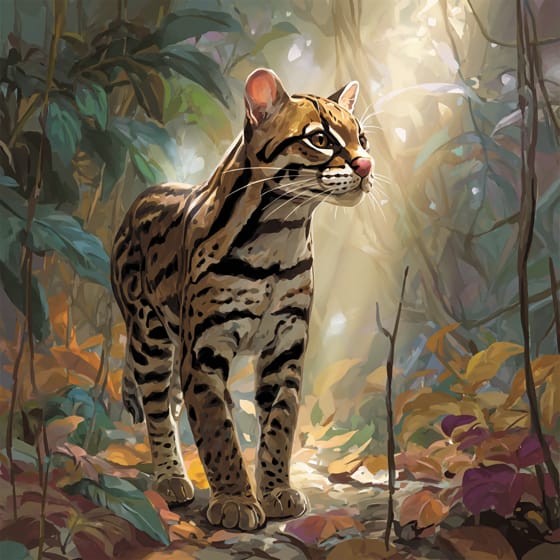
Leopardus pardalis
Ocelots prey on large forest insects.
Phyllostomus hastatus
This bat hunts large nocturnal insects.
Ficus insipida
Adults feed on sap from fig trees.
Attalea maripa
Adult beetles drink sap from palms.
Wildlife encompasses all undomesticated animal and plant life existing in their natural habitats.
Camouflaged describes organisms that possess coloring or patterns that allow them to blend into their environment.
This trait characterizes organisms whose diet consists entirely or primarily of plant material.
Forest habitats are terrestrial environments dominated by dense tree cover, supporting a high diversity of plant and animal life.

This habitat trait refers to species found in tropical rainforests, characterized by high annual rainfall, high biodiversity, and dense tree cover.

Giant describes organisms or objects of significantly larger size than average for their species or type.

Nocturnal animals are primarily active during the nighttime hours, typically resting or sleeping during the day.

Describes organisms that transfer pollen, enabling the fertilization and reproduction of plants.
No aliases listed yet.
Danger
2/5 · Low
Do not touch or pick up. Some insects sting or bite. Ask an adult for help.
150-200 mm
50-120 mm
60-120 days
Adults sip tree sap and eat rotting fruit; larvae munch on decaying wood.
Central and South American forests
Foraging
6
Zoom in to split clusters and explore where this object has been snapped.
Recent snaps will appear here as new observations are added.