





Arizona Bark Scorpion
Centruroides sculpturatus
The Arizona Bark Scorpion is small but mighty! They can climb walls and are often found in homes, so it's good to be careful around them.
Habitat: Deserts and arid areas
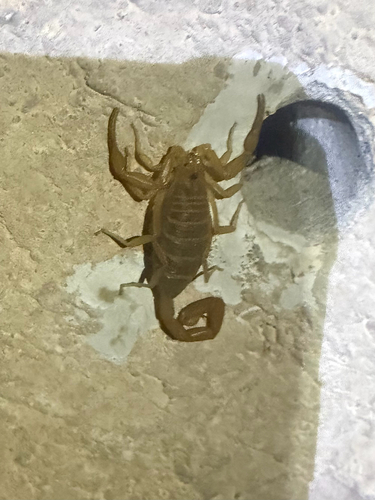
The Arizona Bark Scorpion is a small, slender scorpion, typically yellowish-tan to light brown in color. It often has two faint, darker stripes running down its back. Its distinguishing features include a noticeably thin tail and delicate pincers.
Category
InsectsRarity
Rare
Danger
3/5 · Moderate
Snaps
3
Baby scorpions ride on their mother's back after hatching!
If they lose a claw, they can grow a new one back!
Their venom can be used to make powerful pain medicines!
They can survive underwater for up to two days!
Arizona Bark Scorpion can deliver a highly potent neurotoxic venom that helps them quickly subdue prey and deter predators.
Arizona Bark Scorpion has specialized claws and body shape that helps them climb rough surfaces, trees, and even walls with ease.
Arizona Bark Scorpion has compounds in its exoskeleton that cause it to glow a bright blue-green under ultraviolet light.
Tiny hunters, these scorpions mostly eat other small invertebrates they can ambush!
Onychomys torridus
immune mouse eats dangerous scorpions.
Coleonyx variegatus
small gecko preys on scorpions.
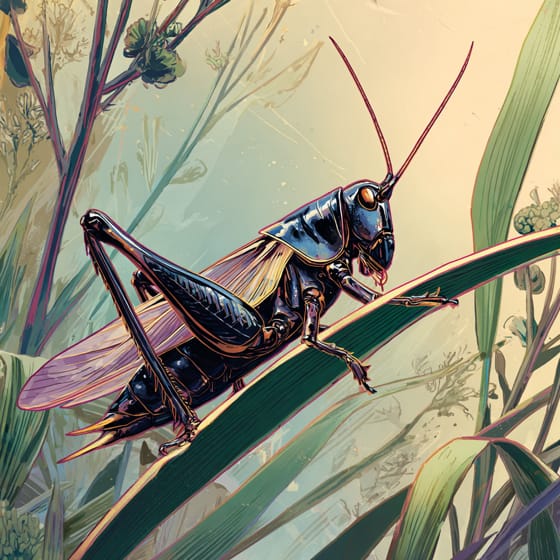
Gryllus assimilis
ambushes and stings crickets for food.
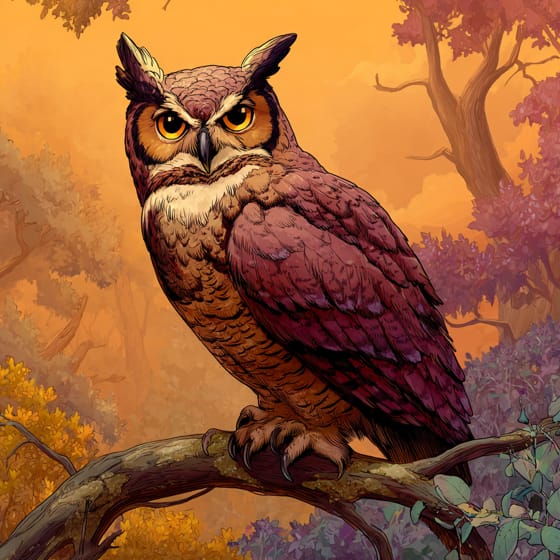
Bubo virginianus
night owl preys on many desert animals.
Wildlife encompasses all undomesticated animal and plant life existing in their natural habitats.
Desert habitats are arid regions characterized by extremely low precipitation and often extreme temperatures, supporting specialized flora and fauna.
This trait identifies organisms whose diet consists entirely or primarily of animal tissue.
Nocturnal animals are primarily active during the nighttime hours, typically resting or sleeping during the day.

Venomous organisms produce toxins that are injected into another animal, typically through a bite or sting.
Danger
3/5 · Moderate
Do not touch or pick up. Some insects sting or bite. Ask an adult for help.
The easiest way to identify Arizona Bark Scorpion is to use the Snappit nature identifier app.
25-70 mm
1825-2555 days
Tiny hunters, these scorpions mostly eat other small invertebrates they can ambush!
Deserts and arid areas
Ambush
8
Zoom in to split clusters and explore where this object has been snapped.
Jun 4, 2026
Las Vegas High School Neighborhood Historic DistrictPhoto attribution
(c) Katrina Smith, some rights reserved (CC BY)
License: CC BY 4.0 ↗
Image may be shown cropped inside the card frame.

Arizona, US
You might spot Saguaro and Graham's Nipple Cactus.
View guide →

Nevada, US
You might spot Barbary Macaque, Chimpanzee, and African Lion.
View guide →

Nevada, US
You might spot Great-Tailed Grackle and Northern Mockingbird.
View guide →

Arizona, US
You might spot Stinknet, Great-Tailed Grackle, and Rock Pigeon.
View guide →
Nevada, US
You might spot Northern Mockingbird and Great-Tailed Grackle.
View guide →

Nevada, US
You might spot Great-Tailed Grackle and Northern Mockingbird.
View guide →
Take the discovery with you
Snap it with Snappit to identify it, learn what makes it special, and add the discovery to your collection.











.jpg&width=800)




