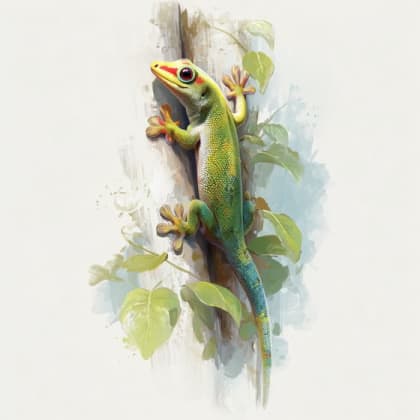
Frilled Lizard
Chlamydosaurus kingii
The Frilled Lizard is a special lizard with a big frill around its neck. When scared, it can open its frill to look bigger!
Habitat: Forests and woodlands
The Frilled Lizard is famous for its large, expandable neck frill, often brightly colored with reds, oranges, and yellows. Its body is typically earthy brown or grey, allowing it to blend seamlessly into tree bark, with a long, slender tail.
Category
ReptilesRarity
Common
Danger
2/5 · Low
Snaps
Be the first to snap!
Baby frilled lizards are completely independent from the moment they hatch.
Their frill can measure up to 30 cm across when fully expanded!
They get most of their water from the food they eat, rarely drinking directly.
When threatened, they often stand up on two legs and open their mouth wide!
Frilled Lizards can run on two legs to quickly escape danger, lifting their front limbs off the ground for speed.
Frilled Lizards have excellent camouflage with their bark-like skin tones that helps them blend perfectly into trees.
Frilled Lizards are bug-eating machines, feasting on all sorts of creepy crawlies!
Canis dingo
An apex predator in their habitat.
Pseudonaja textilis
A venomous snake that preys on lizards.
Dacelo novaeguineae
Large birds that hunt ground-dwelling animals.
Mastotermes darwiniensis
A common food source in their diet.
Oecophylla smaragdina
Often found in the same trees as the lizards.
Wildlife encompasses all undomesticated animal and plant life existing in their natural habitats.
Arboreal animals live primarily in trees, utilizing them for shelter, food, and protection from predators.
This trait identifies organisms whose diet primarily consists of insects and other small invertebrates.
Forest habitats are terrestrial environments dominated by dense tree cover, supporting a high diversity of plant and animal life.

This trait identifies organisms whose diet consists entirely or primarily of animal tissue.

Diurnal animals are primarily active during daylight hours, typically resting or sleeping at night.
Danger
2/5 · Low
Look but don’t touch. Keep a safe distance and wash hands after exploring.
60-90 cm
0.2-0.5 kg
5-15 years
40 km/h
Frilled Lizards are bug-eating machines, feasting on all sorts of creepy crawlies!
Forests and woodlands
Ambush
4-23
Zoom in to split clusters and explore where this object has been snapped.
Recent snaps will appear here as new observations are added.