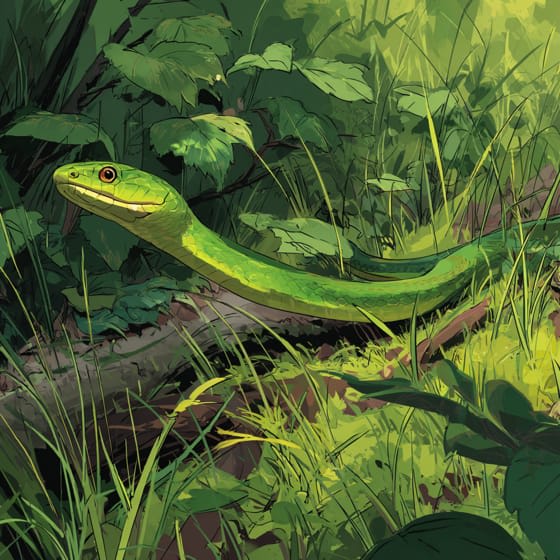





Smooth Green Snake
Opheodrys vernalis
Smooth Green Snakes are small and bright green! They are great at blending in with grass and love to eat insects.
Habitat: Meadows and grasslands
The Smooth Green Snake is a slender reptile, typically bright emerald green on its back with a pale yellow or whitish belly. Its scales are notably smooth, lacking the rough texture found on similar species, giving it a sleek appearance.
Category
ReptilesRarity
Common
Danger
2/5 · Low
Snaps
6
Did you know dead Smooth Green Snakes turn blue because their yellow pigment fades?
Females sometimes lay their eggs in communal nests with other green snakes.
These snakes get their vibrant green color from pigments in their skin and diet!
They feel soft and smooth to touch, unlike many snakes with keeled scales!
Smooth Green Snake can quickly climb through low shrubs and tall grasses because of their agile body, helping them escape danger or find food.
Smooth Green Snake can release a mild musk when threatened, which helps them deter predators by giving off a bad smell.
Smooth Green Snake has excellent eyesight that helps them spot tiny insects and spiders hidden among leaves and grass.
These shy snakes love to munch on small, juicy insects and spiders found in grassy areas.
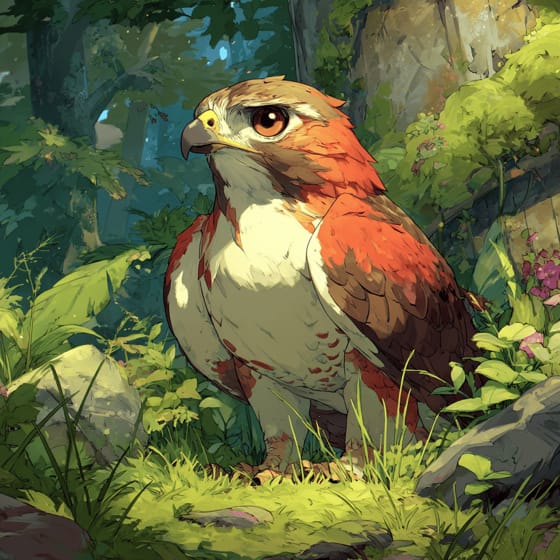
Buteo jamaicensis
A common avian predator in their habitat.
Coluber constrictor
Larger snakes prey on smaller species like the Smooth Green Snake.

Melanoplus differentialis
A primary food source found in their grassy habitat.
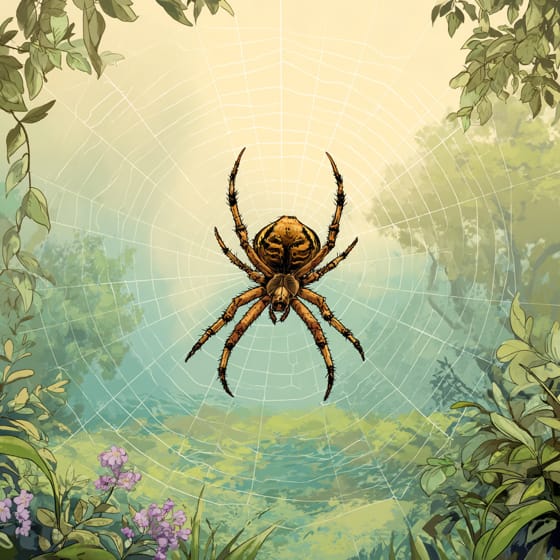
Argiope aurantia
Spiders are a common and important part of their diet.
Wildlife encompasses all undomesticated animal and plant life existing in their natural habitats.
Arboreal animals live primarily in trees, utilizing them for shelter, food, and protection from predators.
Camouflaged describes organisms that possess coloring or patterns that allow them to blend into their environment.
Grassland habitats are terrestrial biomes dominated by grasses and herbaceous plants, supporting a variety of grazing animals.

This trait identifies organisms whose diet primarily consists of insects and other small invertebrates.

This trait characterizes organisms with an exceptionally long lifespan compared to others of their kind.

Nocturnal animals are primarily active during the nighttime hours, typically resting or sleeping during the day.
No aliases listed yet.
Danger
2/5 · Low
Look but don’t touch. Keep a safe distance and wash hands after exploring.
The easiest way to identify Smooth Green Snake is to use the Snappit nature identifier app.
30-50 cm
0.01-0.03 kg
5-6 years
1.5 km/h
These shy snakes love to munch on small, juicy insects and spiders found in grassy areas.
Meadows and grasslands
Foraging
Zoom in to split clusters and explore where this object has been snapped.

Maine, US
You might spot Pink Lady's Slipper, Wood Lily, and Great Blue Heron.
View guide →

New York, US
You might spot Pine Grosbeak, Hydrangea Leaftier Moth, and Brown Trout.
View guide →

Maine, US
You might spot Wood Lily, Pink Lady's Slipper, and Eastern Bluebird.
View guide →

Indiana, US
You might spot Sweetfern, Blue-Spotted Salamander, and Sensitive Fern.
View guide →

Maine, US
You might spot Pink Lady's Slipper, Wood Lily, and Eastern Skunk Cabbage.
View guide →
South Dakota, US
You might spot Bighorn Sheep and Narrow-Leaved Purple Coneflower.
View guide →
Take the discovery with you
Snap it with Snappit to identify it, learn what makes it special, and add the discovery to your collection.














