




Swallowtail Butterfly
Papilio machaon
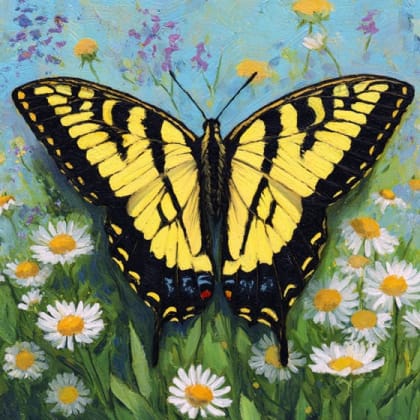
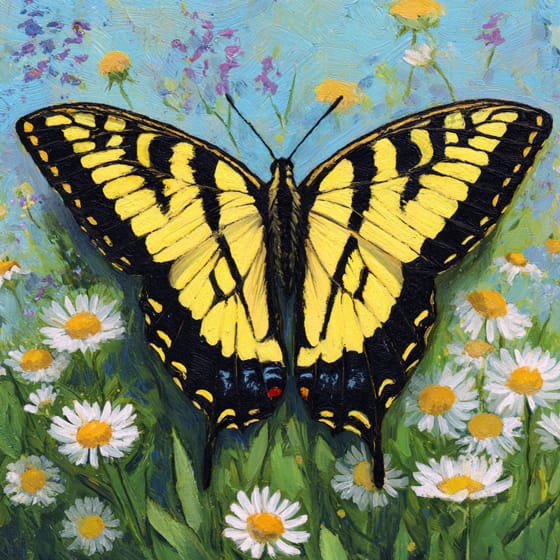
The Swallowtail Butterfly is large and colorful, with long tail-like extensions on its wings. It dances gracefully in the air!
Habitat: Gardens, meadows, and forests
The Swallowtail Butterfly has large, bright yellow wings with distinctive black stripes and veins, often adorned with blue and red eye-spots on the hindwings. Its hindwings famously feature tail-like extensions that make it visually unique from other butterflies.
Category
InsectsRarity
Common
Danger
2/5 · Low
Snaps
1
Adult swallowtails can taste plants with their feet to see if they are good for laying eggs!
Some swallowtail caterpillars change color dramatically just before they turn into a chrysalis!
Their beautiful wings are covered in tiny, overlapping scales, like shingles on a roof!
They fly with a distinctive, strong, and gliding flight pattern, not just fluttering around!
Swallowtail Butterfly larvae can unleash an orange, Y-shaped gland called an osmeterium that helps them scare away predators with a foul smell.
Swallowtail Butterflies have a long, coiled proboscis that helps them sip sweet nectar deeply from flowers, reaching hidden treats.
Young Swallowtail Butterfly caterpillars can camouflage as bird droppings, which helps them avoid becoming a tasty snack for hungry birds.
Adult butterflies drink nectar, while their caterpillars munch on specific leafy plants!
Age differences: Larvae (caterpillars) eat the leaves of host plants, while adults drink nectar from flowers.
Daucus carota
Larvae feed on its leaves for growth.
Parus major
Birds can prey on larvae and adult butterflies.
Trifolium pratense
Adults visit flowers for nectar, aiding pollination.
Pastinaca sativa
Another common host plant for its caterpillars.
Wildlife encompasses all undomesticated animal and plant life existing in their natural habitats.
Colorful describes organisms or objects displaying a wide range of bright and distinct colors.
This trait characterizes organisms whose diet consists entirely or primarily of plant material.
Diurnal animals are primarily active during daylight hours, typically resting or sleeping at night.

Describes organisms that transfer pollen, enabling the fertilization and reproduction of plants.
Danger
2/5 · Low
Do not touch or pick up. Some insects sting or bite. Ask an adult for help.
60-90 mm
32-38 mm
10-30 days
Adult butterflies drink nectar, while their caterpillars munch on specific leafy plants!
Gardens, meadows, and forests
Foraging
6
Zoom in to split clusters and explore where this object has been snapped.