white campion
Silene latifolia
White campion is a pretty flower with soft white petals. It often grows in fields and gardens, bringing beauty to nature with its cheerful blooms.
Habitat: Grasslands
The white campion has bright white, five-petaled flowers, often deeply notched at the tips, which emerge from a green, swollen calyx. Its stems and leaves are covered in fine hairs, giving the plant a slightly fuzzy texture that makes it visually distinct.
Category
PlantsRarity
Common
Danger
1/5 · Very low
Snaps
17
It's one of the few plants where you can have a whole patch of 'boy' flowers and a separate patch of 'girl' flowers!
Its bright white petals act like tiny beacons, reflecting moonlight to guide night-flying moths!
Rubbing its leaves with water creates foamy suds – a natural soap from a wild plant!
The swollen part beneath its petals reminded ancient botanists of a mythical forest god's belly!
White campion has a sweet, strong scent that gets more intense at night, helping it attract nocturnal moths for pollination.
Some white campion plants are only male, producing pollen, while others are only female, making seeds, ensuring genetic diversity.
White campion seeds can remain dormant in the soil for many years, waiting for the perfect conditions to sprout and grow.
Hadena bicruris
Main nocturnal pollinator.
Aglais io
Daytime nectar source.
Arion ater
Slugs and snails feed on leaves.
Flowering plants are any plants that produce flowers as part of their reproductive cycle.
Biennial plants complete their life cycle over two growing seasons, typically forming foliage in the first year and flowering/seeding in the second.
Cluster flowers are inflorescences where individual flowers are arranged closely together on a common stem.
Summer blooming plants produce their flowers during the summer season, often providing vibrant color when many other plants have finished.

Fragrant flowers emit a pleasant aroma, often to attract pollinators or for defense.

Grassland habitats are terrestrial biomes dominated by grasses and herbaceous plants, supporting a variety of grazing animals.

Describes plants that are particularly attractive and beneficial to a wide range of pollinating organisms.
No aliases listed yet.
Danger
1/5 · Very low
Always look but don't pick flowers unless an adult says it's okay.
30-100 cm
30-60 cm
2-3 cm
Late spring to fall
No
Mild
Biennial
Insect
Zoom in to split clusters and explore where this object has been snapped.
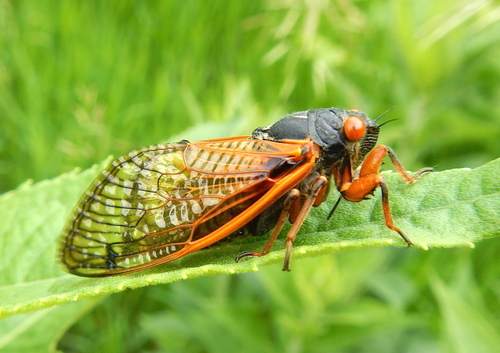
Ohio, US
You might spot Cassin's 17-Year Cicada, Pharaoh Cicada, and Leafcup.
View guide →

New York, US
You might spot Red Deadnettle, Common Milkweed, and Osprey.
View guide →

New York, US
You might spot Common Mugwort, Snow Goose × Brant, and Spotted Lanternfly.
View guide →
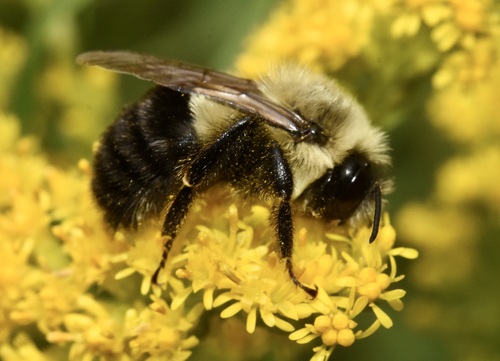
Michigan, US
You might spot Common Eastern Bumble Bee and Brown-Belted Bumble Bee.
View guide →

Pennsylvania, US
You might spot Partridgeberry, Eastern Hemlock, and American Beech.
View guide →

New York, US
You might spot Spotted Lanternfly, Common Reed, and Oriental Bittersweet.
View guide →