



Larch Bolete
Suillus grevillei
The Larch Bolete is a mushroom that grows under larch trees. It has a unique shape and is fun to find in the forest!
Habitat: Larch forests
The Larch Bolete has a shiny, often very slimy cap that ranges from golden yellow to orangey-brown, sometimes reddish. Its underside is covered with small, angular yellow pores instead of gills. The stem is yellowish and often features a distinct ring.
Category
FungiRarity
Common
Danger
1/5 · Very low
Snaps
Be the first to snap!
Instead of gills, it has a spongy yellow underside filled with tiny tubes!
Its shiny cap sometimes looks like it's been painted with a clear varnish!
Older Larch Boletes can turn reddish-brown when handled or bruised!
Tiny insect larvae often tunnel through its soft flesh for a tasty treat!
Larch Bolete can absorb nutrients from soil and share them with larch tree roots, helping the trees grow stronger.
Larch Bolete has a slimy cap that helps it stay moist and protects it from drying out in sunny weather.
Larch Bolete can release millions of tiny, dust-like spores from its pores that are carried by wind to new locations.
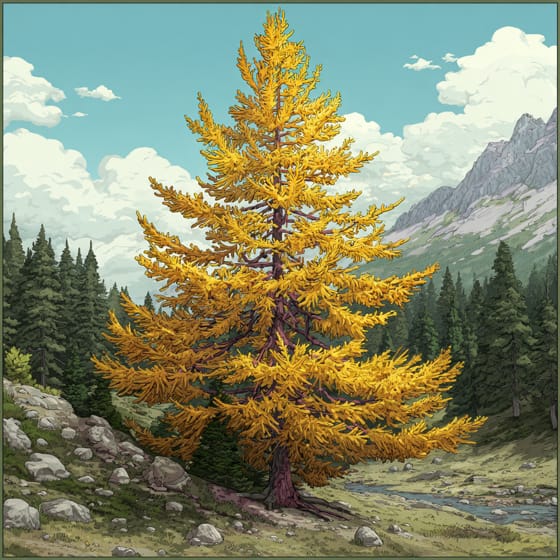
Larix decidua
Forms a crucial underground partnership for nutrient exchange.
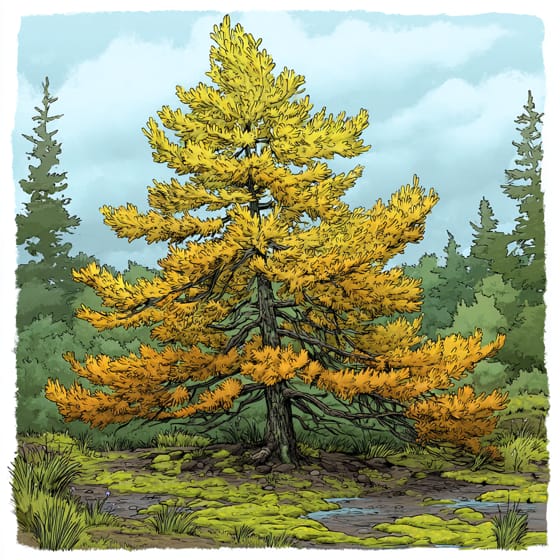
Larix laricina
Essential mycorrhizal partner in boggy North American habitats.
Arion ater
Slugs enjoy munching on its moist, fleshy cap and stem.
Sciurus vulgaris
Squirrels sometimes forage for and consume this mushroom.
Deciduous plants periodically shed all their leaves, typically during autumn or dry seasons.
Spore-producing organisms reproduce by releasing small, often single-celled, reproductive units called spores.
Edible plants are those parts of a plant that are considered safe for human consumption.
Forest habitats are terrestrial environments dominated by dense tree cover, supporting a high diversity of plant and animal life.
Danger
1/5 · Very low
Do not pick or eat anything you find. Some plants and mushrooms can be harmful.
5-12 cm
edible
5-15 cm
Larch forests
soil
Summer to late autumn
Olive-brown to rusty-brown
Zoom in to split clusters and explore where this object has been snapped.
Recent snaps will appear here as new observations are added.