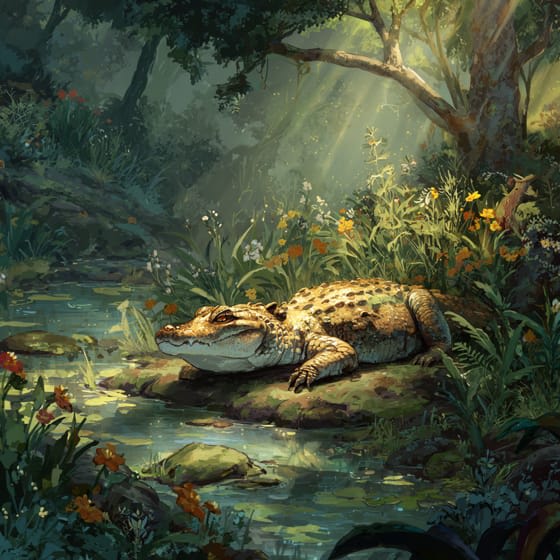





Dwarf Crocodile
Osteolaemus tetraspis
The Dwarf Crocodile is a small crocodile that likes to hide in the water. They are shy and prefer quiet places.
Habitat: Forests and swamps
The Dwarf Crocodile is a small, stocky reptile with extremely rough, heavily armored dark brown to black scales, sometimes with a lighter, mottled belly. It has a distinctive short, broad snout, unlike most other crocodiles, and prominent bumps behind its eyes.
Category
ReptilesRarity
Rare
Danger
5/5 · Extreme
Snaps
Be the first to snap!
Dwarf crocodiles communicate with growls, chirps, and even snorts to other crocs!
Female dwarf crocodiles guard their nests fiercely until the eggs hatch.
They are the smallest crocodile species in the entire world!
This croc holds its breath underwater for a long time using special valves!
Dwarf Crocodiles have excellent night vision that helps them spot prey even in the darkest swamp waters.
Dwarf Crocodiles have incredibly tough, bony plates under their skin, giving them strong protection from predators.
Dwarf Crocodiles can dig burrows along riverbanks, which helps them hide from danger and escape extreme heat.
This little croc loves to munch on small fish, frogs, crustaceans, and insects in its murky waters!
Oreochromis niloticus
A common fish prey in their habitat.
Phrynobatrachus fraterculus
Preys on small amphibians.
Python sebae
Large snakes may prey on young crocodiles.
Wildlife encompasses all undomesticated animal and plant life existing in their natural habitats.
Piscivorous organisms are animals that primarily subsist on a diet of fish.
Forest habitats are terrestrial environments dominated by dense tree cover, supporting a high diversity of plant and animal life.
This habitat trait identifies species found in wetlands, which are areas of land saturated with water, either permanently or seasonally, including marshes, swamps, and bogs.

Pertaining to species that are significantly smaller than typical or average for their kind.

Aquatic habitats encompass environments where organisms live predominantly in water, including oceans, rivers, lakes, and wetlands.

Giant describes organisms or objects of significantly larger size than average for their species or type.

Nocturnal animals are primarily active during the nighttime hours, typically resting or sleeping during the day.
Danger
5/5 · Extreme
Look but don’t touch. Keep a safe distance and wash hands after exploring.
150-190 cm
18-32 kg
25-50 years
15 km/h
This little croc loves to munch on small fish, frogs, crustaceans, and insects in its murky waters!
20 km/h
Forests and swamps
Ambush
Zoom in to split clusters and explore where this object has been snapped.
Recent snaps will appear here as new observations are added.