


Green Elfcup
Chlorociboria aeruginascens
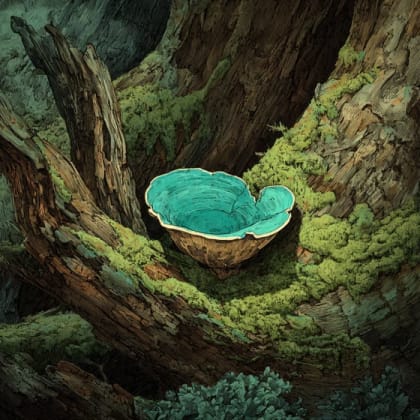
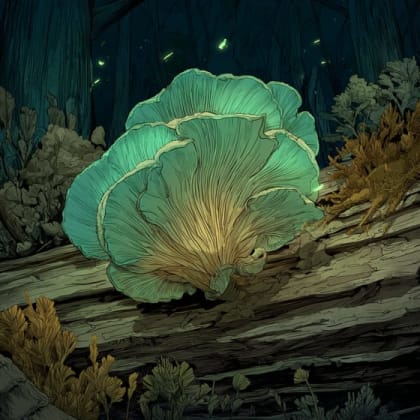
The Green Elfcup is a tiny, green mushroom that looks like a little cup! It loves to grow on decaying wood and is a fun find in the forest.
Habitat: Decaying wood in forests
The Green Elfcup is a tiny, cup-shaped mushroom, often appearing as a thin, vibrant turquoise-green stain on dead wood. Its small, disc-like caps have a slightly inrolled margin, making it look like a miniature, jewel-toned adornment on logs.
Category
FungiRarity
Epic
Danger
1/5 · Very low
Snaps
1
Ancient craftspeople used wood stained by this fungus to make beautiful artistic inlays.
Imagine a mushroom that doesn't just grow on wood, but actually *paints* it from the inside!
It's so small, you might think it's just moss, but look closer for its vibrant green cup!
This tiny fungus turns wood a vivid blue-green, even after the mushroom is gone!
Green Elfcup can stain wood a striking blue-green because it produces a special pigment, helping it recycle nutrients from decaying trees.
Green Elfcup can digest tough wood because it releases enzymes, which helps clean up the forest floor by breaking down old trees.
Green Elfcup has a leathery texture that helps it survive longer on logs, slowly transforming dead wood into artistic patterns.
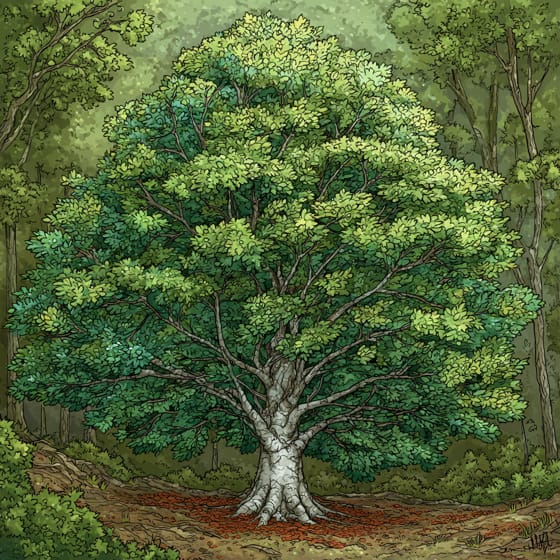
Fagus grandifolia
Green Elfcup depends on dead branches of Fagus grandifolia for nutrients.
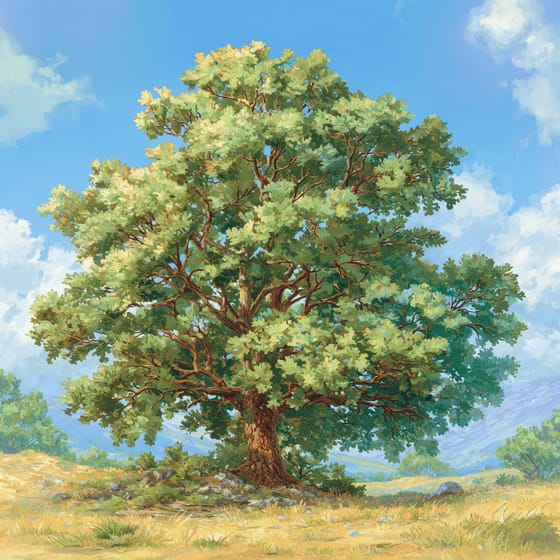
Quercus alba
This fungus needs decaying wood from Quercus alba to grow and reproduce.
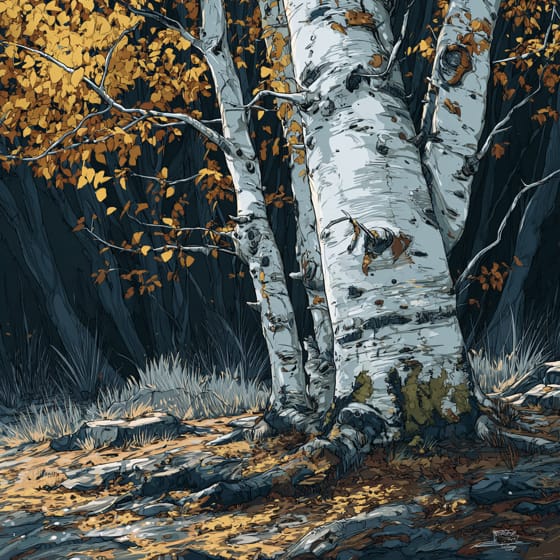
Betula papyrifera
Chlorociboria aeruginascens frequently colonizes fallen logs of Betula papyrifera.
Spore-producing organisms reproduce by releasing small, often single-celled, reproductive units called spores.
Forest habitats are terrestrial environments dominated by dense tree cover, supporting a high diversity of plant and animal life.
Pertaining to organisms that emit light through bioluminescence or fluorescence.
Danger
1/5 · Very low
Do not pick or eat anything you find. Some plants and mushrooms can be harmful.
0.2-1 cm
inedible
0.5-2 cm
Decaying wood in forests
wood
Fall
White
Zoom in to split clusters and explore where this object has been snapped.