Paper Birch
Betula papyrifera
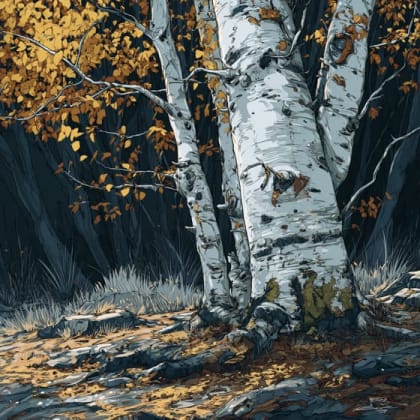
The Paper Birch is known for its smooth, white bark that peels away like paper! It grows tall and has lovely green leaves.
Habitat: Woodlands and along riverbanks
The Paper Birch has striking, papery white bark that peels off in thin layers, revealing a salmon-pink or reddish-brown inner bark. Its ovate, serrated leaves turn bright yellow in autumn, making it easy to spot against other trees.
Category
TreesRarity
Common
Danger
1/5 · Very low
Snaps
7
Ancient indigenous peoples used its strong bark to write messages and maps!
Its bark can be lit even when wet, making it a natural fire starter!
The wood is so tough it's used for making toothpicks and wooden spools!
You can tap its sap in spring to make syrup, just like maple syrup!
Paper Birch has waterproof bark that peels easily, helping it shed pests and protect itself from harsh weather like freezing temperatures.
Young Paper Birch bark contains chlorophyll, allowing it to perform some photosynthesis even in winter when its leaves have fallen.
Paper Birch can rapidly colonize open areas after fires or logging, quickly growing to help new forests establish.
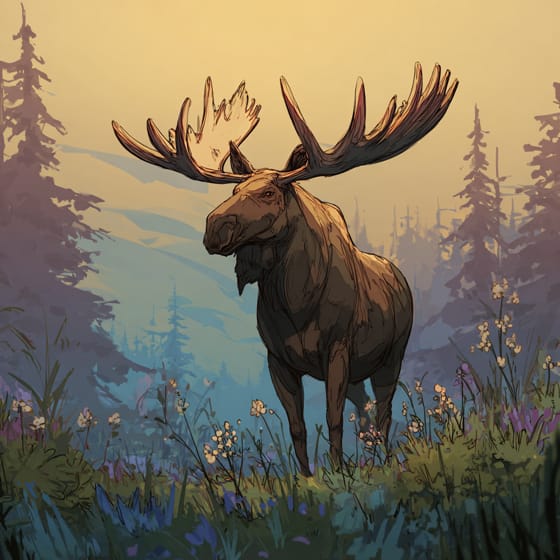
Alces alces
browses on twigs, bark, and leaves, especially in winter.
Erethizon dorsatum
gnaws on the nutritious inner bark, often girdling young trees.
_female.JPG&width=800)
Sphyrapicus varius
drills holes to drink sap, creating feeding sites for other animals.
Fomes fomentarius
grows on dead or dying trees, helping with decomposition.
Deciduous plants periodically shed all their leaves, typically during autumn or dry seasons.
Shade tolerant plants are adapted to grow and thrive in areas with low light levels, requiring less direct sunlight.
Broadleaf trees are angiosperms characterized by flat, wide leaves that are typically shed annually in temperate climates.
Fruit-bearing plants produce fruits, which are the mature ovaries of flowering plants containing seeds.

Forest habitats are terrestrial environments dominated by dense tree cover, supporting a high diversity of plant and animal life.
Danger
1/5 · Very low
Do not pick or eat anything you find. Some plants and mushrooms can be harmful.
The easiest way to identify Paper Birch is to use the Snappit nature identifier app.
20-35 m
7-15 m
Yes
30-60 cm
50-100 years
Woodlands and along riverbanks
Samara
Zoom in to split clusters and explore where this object has been snapped.

Maine, US
You might spot Ghost Pipe, Pink Lady's Slipper, and Bluebead Lily.
View guide →

Vermont, US
You might spot Eastern White Pine, Staghorn Sumac, and Box Elder.
View guide →

Wisconsin, US
You might spot Sundial Lupine, Aurora Damsel, and Lancet Clubtail.
View guide →
Massachusetts, US
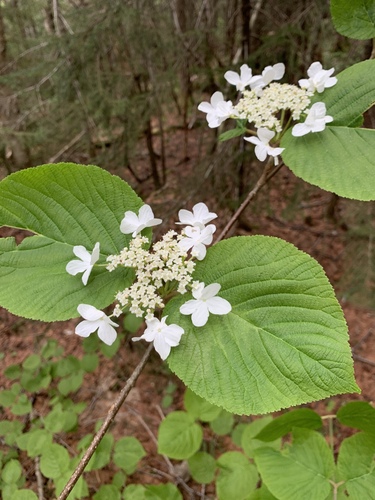
You might spot Hobblebush, Red Trillium, and Eastern Newt.
View guide →

Minnesota, US
You might spot American White Pelican and Painted Turtle.
View guide →

Maine, US
You might spot American Toad, Spring Peeper, and Eastern Teaberry.
View guide →
Take the discovery with you
Snap it with Snappit to identify it, learn what makes it special, and add the discovery to your collection.