Rhode Island Red
Gallus gallus domesticus
The Rhode Island Red is a friendly chicken known for its beautiful, dark red feathers. They are great for farms and love to peck around looking for bugs and seeds.
The Rhode Island Red is known for its stunning, deep mahogany-red plumage, often with darker blackish tail feathers. Its sturdy build and bright red comb and wattles give it a robust appearance, distinguishing it from many lighter-feathered chicken breeds.
Category
BirdsRarity
Common
Danger
1/5 · Very low
Snaps
Be the first to snap!
Rhode Island Red roosters are famous for their loud, proud morning crow that greets the day!
Their beautiful brown eggs are a breakfast favorite found on tables worldwide.
These chickens helped create many other popular breeds, like the Black Star hybrid!
They were developed in the USA, named after Rhode Island and nearby Massachusetts.
Rhode Island Red has specialized genes that help them lay many large, brown eggs consistently.
Rhode Island Red can thrive in various climates because of its robust build, helping it endure diverse conditions.
Rhode Island Red has keen senses that help them tirelessly search for food, making them active foragers.
They are omnivores, eating seeds, insects, and kitchen scraps to grow big and strong.
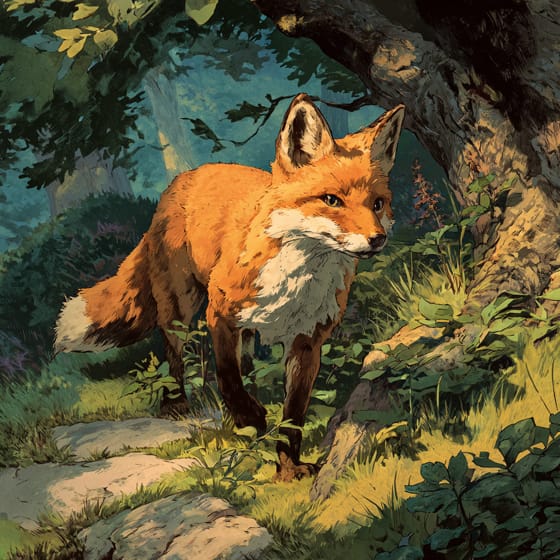
Vulpes vulpes
A clever predator for backyard chickens.
Lumbricus terrestris
A favorite protein-rich food.
Wildlife encompasses all undomesticated animal and plant life existing in their natural habitats.
Feathered describes animals, primarily birds, possessing a covering of feathers.
Social animals live in organized groups, cooperating for survival benefits such as foraging, defense, and raising offspring.
This trait identifies organisms whose diet includes both plant and animal matter.

This trait signifies organisms belonging to a very old evolutionary group with ancestors dating back millions of years.

This trait characterizes organisms with an exceptionally long lifespan compared to others of their kind.

Describes a species whose presence and role have a disproportionately large effect on its environment.

This habitat trait indicates species that can coexist with humans in urban and suburban environments, utilizing man-made structures and green spaces.
No aliases listed yet.
Danger
1/5 · Very low
Always ask an adult before getting close to chickens. They are usually friendly but can be startled.
40-55 cm
70-90 cm
2.5-4 kg
5-8 years
20 km/h
They are omnivores, eating seeds, insects, and kitchen scraps to grow big and strong.
Foraging
6-12
Zoom in to split clusters and explore where this object has been snapped.
Recent snaps will appear here as new observations are added.