





Green Peafowl
Pavo muticus
The Green Peafowl is another amazing bird with shining green feathers. They are less common than the Indian Peafowl and are known for their unique colors.
Habitat: Tropical forests
The Green Peafowl is a large, striking bird with iridescent green-bronze body plumage and a tall, pointed crest. Males have an impressively long tail 'train' adorned with metallic blue-green 'eyespot' feathers, distinct from the rounder crest and bluer body of its Indian cousin.
Category
BirdsRarity
Rare
Danger
2/5 · Low
Snaps
Be the first to snap!
A group of peafowl is called a "party" or a "pride"!
Despite their size, they often roost high in trees at night to stay safe.
Peafowl can 'sing' to each other, making up to 11 different kinds of calls!
Young peafowl chicks can walk and feed themselves almost immediately after hatching.
Green Peafowl can unfurl their huge tail train into a dazzling fan to attract mates because of its specialized, elongated feathers.
Green Peafowl has powerful, piercing calls that help them communicate across long distances in dense forests.
Green Peafowl can blend surprisingly well into dense undergrowth because of their iridescent green and brown feathers.
Green Peafowl has strong legs and short, powerful wings that help them run fast and make quick, short flights to escape danger.
These omnivores munch on seeds, berries, insects, and even small critters found on the forest floor.
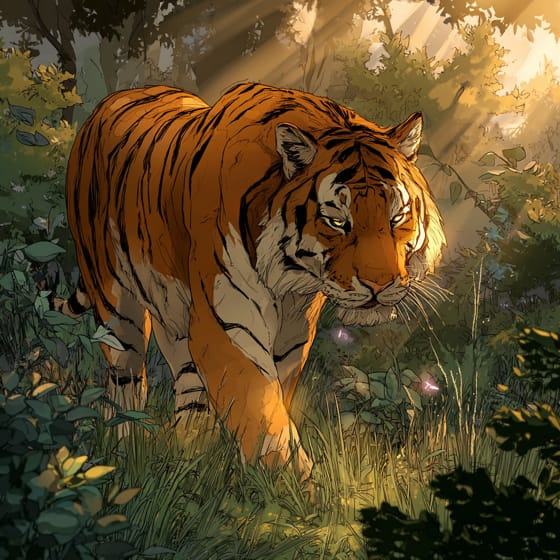
Panthera tigris
Tigers are major predators, preying on peafowl.
Python molurus
Large pythons are known to prey on adult peafowl.

Oryza sativa
Forages for fallen grains in rice paddies.
Ficus benghalensis
Consumes fruits and seeds dropped by fig trees.
Wildlife encompasses all undomesticated animal and plant life existing in their natural habitats.
Feathered describes animals, primarily birds, possessing a covering of feathers.
This trait identifies organisms whose diet includes both plant and animal matter.
Singing animals produce complex vocalizations, often for purposes of attracting mates, defending territory, or communicating within their species.

Arboreal animals live primarily in trees, utilizing them for shelter, food, and protection from predators.

This habitat trait refers to species found in tropical rainforests, characterized by high annual rainfall, high biodiversity, and dense tree cover.

Nocturnal animals are primarily active during the nighttime hours, typically resting or sleeping during the day.
Danger
2/5 · Low
Watch quietly from a distance and never try to feed or chase wild animals.
The easiest way to identify Green Peafowl is to use the Snappit nature identifier app.
100-300 cm
130-160 cm
1-5 kg
10-25 years
45 km/h
These omnivores munch on seeds, berries, insects, and even small critters found on the forest floor.
Tropical forests
Zoom in to split clusters and explore where this object has been snapped.
Recent snaps will appear here as new observations are added.
Take the discovery with you
Snap it with Snappit to identify it, learn what makes it special, and add the discovery to your collection.




.jpg&width=800)










