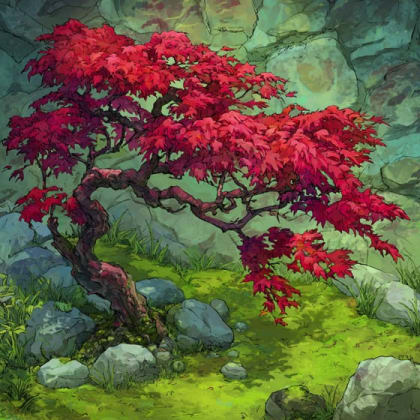
Crabapple Tree
Malus coronaria
Crabapple Trees have beautiful flowers and small, tart apples! They look lovely in gardens and parks.
Habitat: Gardens and parks
The Crabapple Tree is a small, often gnarled deciduous tree with a rounded canopy. It bursts with fragrant white, pink, or red blossoms in spring, followed by tiny, brightly colored fruits that often persist through winter.
Category
TreesRarity
Common
Danger
1/5 · Very low
Snaps
Be the first to snap!
Many crabapple varieties boast highly fragrant flowers that can perfume an entire springtime garden!
Some ancient crabapple trees can live for over 100 years, becoming majestic garden features!
The smallest crabapples can be no bigger than a blueberry, yet still hold several seeds inside!
Their tiny, tart fruits are packed with pectin, perfect for making yummy jelly!
Crabapple Tree's tiny fruits cling to branches, providing crucial food for birds and wildlife through harsh winter months.
Crabapple Tree produces abundant, often fragrant flowers, acting as a vibrant beacon for bees and other vital pollinators.
Crabapple Tree's small, edible fruits are eaten by animals, helping disperse its seeds far and wide to grow new trees.
Apis mellifera
Visits abundant flowers for nectar.
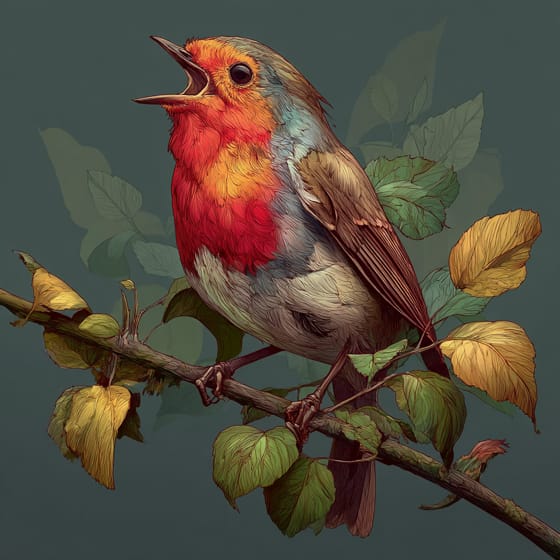
Turdus migratorius
Consumes persistent fruits in winter.

Odocoileus virginianus
Browses on young twigs, leaves, and fallen fruit.
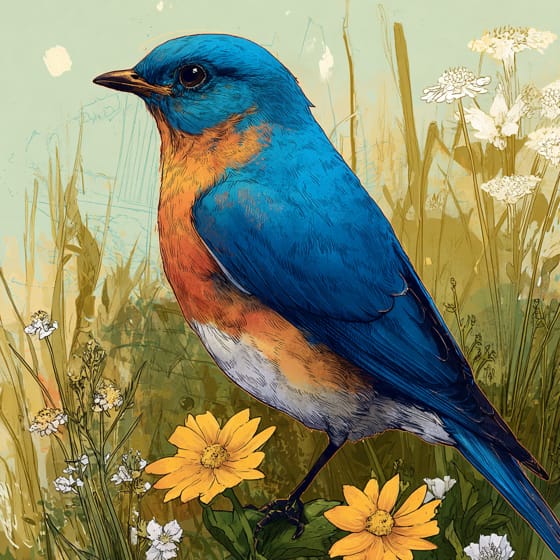
Sialia sialis
Nests in cavities or dense branches.
Deciduous plants periodically shed all their leaves, typically during autumn or dry seasons.
Spring blooming plants produce their flowers during the spring season, often signifying the end of winter and the start of new growth.
Broadleaf trees are angiosperms characterized by flat, wide leaves that are typically shed annually in temperate climates.
Fruit-bearing plants produce fruits, which are the mature ovaries of flowering plants containing seeds.

A fruit tree is a perennial tree that produces fruit, which is edible to humans or animals.

Edible plants are those parts of a plant that are considered safe for human consumption.

This habitat trait indicates species that can coexist with humans in urban and suburban environments, utilizing man-made structures and green spaces.
Danger
1/5 · Very low
Do not pick or eat anything you find. Some plants and mushrooms can be harmful.
4.5-9 m
4-8 m
Yes
15-30 cm
30-70 years
Gardens and parks
Pome
Medium
Zoom in to split clusters and explore where this object has been snapped.
Recent snaps will appear here as new observations are added.