Ball Python
Python regius
The Ball Python is a small, friendly snake that loves to curl up in a ball when scared. They are popular pets because of their gentle nature!
Habitat: Grasslands and savannas
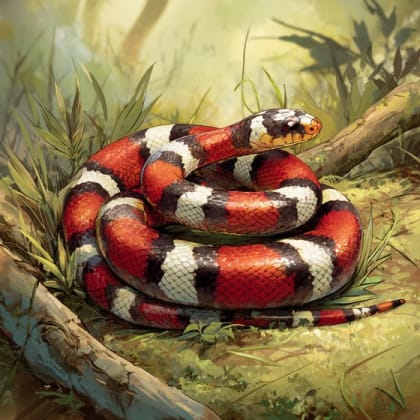
The Ball Python has a thick, muscular body, typically adorned with dark brown or black patterns on a lighter brown or tan background. Its head is distinct from its neck, and it often has irregular, blotchy markings unique to each individual, setting it apart from uniformly colored snakes.
Category
ReptilesRarity
Common
Danger
4/5 · High
Snaps
Be the first to snap!
A Ball Python sheds its entire skin several times a year to grow bigger and stay healthy!
Their scales are incredibly smooth and cool to the touch, like polished stone!
These snakes don't chew; they swallow their entire meal in one amazing, big gulp!
They are also known as Royal Pythons, because African chiefs once wore them as jewelry!
Ball Pythons can curl into a tight, impenetrable ball because it helps them shield their head and vital organs from predators.
Ball Pythons have special heat-sensing pits on their face that help them 'see' warm-blooded prey in total darkness.
Ball Pythons can constrict their prey very tightly, because it helps them subdue and swallow small animals whole.
Ball Pythons are carnivores, meaning they hunt and eat other animals to survive.
Rattus rattus
Main food source in many areas.
Arvicanthis niloticus
Common prey item in their African habitat.
Bubo africanus
Predates on young or smaller Ball Pythons.
Naja nigricollis
Larger snakes can occasionally prey on smaller ones.
Wildlife encompasses all undomesticated animal and plant life existing in their natural habitats.
Solitary animals live alone for most of their lives, only interacting with others for mating or parental care.
Grassland habitats are terrestrial biomes dominated by grasses and herbaceous plants, supporting a variety of grazing animals.
This trait characterizes organisms with an exceptionally long lifespan compared to others of their kind.

This trait identifies organisms whose diet consists entirely or primarily of animal tissue.

Nocturnal animals are primarily active during the nighttime hours, typically resting or sleeping during the day.
Danger
4/5 · High
Look but don’t touch. Keep a safe distance and wash hands after exploring.
90-150 cm
1.5-3 kg
20-30 years
1 km/h
Ball Pythons are carnivores, meaning they hunt and eat other animals to survive.
Grasslands and savannas
Ambush
4-10
Zoom in to split clusters and explore where this object has been snapped.
Recent snaps will appear here as new observations are added.