Torpedo Ray
Tetronarce formosa
The Torpedo Ray is a fascinating fish that can deliver electric shocks to stun its prey. It has a flat body and hides in the sand to ambush passing fish.
Habitat: Coastal areas
The Torpedo Ray has a flat, disc-shaped body that is nearly circular, with small eyes on its upper surface. Its skin is typically smooth, brownish-grey to reddish-brown, often without prominent markings, helping it blend perfectly with the seabed. Unlike many other rays, it has no stinging barb on its tail.
Category
FishRarity
Common
Danger
3/5 · Moderate
Snaps
Be the first to snap!
Some Torpedo Rays can generate up to 220 volts of electricity, enough to power a lightbulb!
They often 'hug' their prey with their large pectoral fins before delivering an electric shock.
Torpedo Rays have tiny teeth, but they don't chew; they swallow their stunned prey whole!
Unlike most rays, the Torpedo Ray does not have a venomous stinger on its tail.
Torpedo Ray can generate strong electric shocks because of specialized organs that help them stun prey and defend against predators.
Torpedo Ray can hide perfectly on the seabed because of its flat, drab coloration and ability to bury itself, helping it ambush unsuspecting prey.
Torpedo Ray has a special sense that helps them detect the weak electrical fields of hidden prey, even when they can't see them.
Torpedo Rays eat other fish and small creatures found on the seafloor.
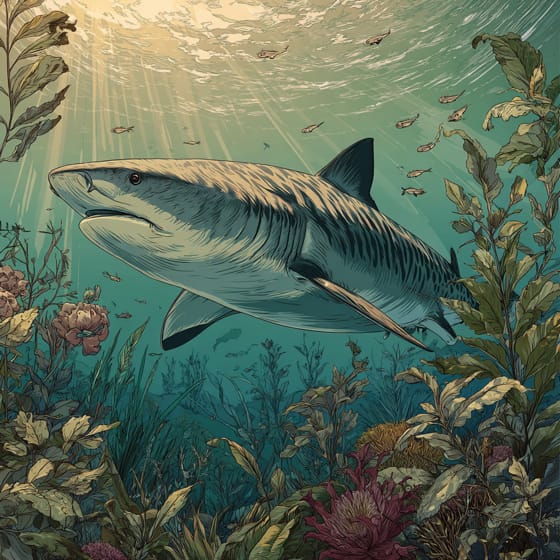
Galeocerdo cuvier
Large sharks sometimes prey on electric rays.
Pagrus major
Stuns and consumes bottom-dwelling fish.
Paralichthys olivaceus
Ambush predator of various flatfish.
Camouflaged describes organisms that possess coloring or patterns that allow them to blend into their environment.
Piscivorous organisms are animals that primarily subsist on a diet of fish.
An ambush predator hunts by patiently waiting and concealing itself, then launching a sudden attack when unsuspecting prey comes within range.
This trait signifies organisms belonging to a very old evolutionary group with ancestors dating back millions of years.

Coastal habitats are dynamic environments located along the interface between land and sea, influenced by tides, waves, and saltwater.

This trait describes organisms capable of generating electric fields or electric shocks.

Aquatic habitats encompass environments where organisms live predominantly in water, including oceans, rivers, lakes, and wetlands.

Venomous organisms produce toxins that are injected into another animal, typically through a bite or sting.
Danger
3/5 · Moderate
Avoid touching or disturbing Torpedo Rays in the wild to stay safe.
30-90 cm
2-20 kg
8-15 years
Torpedo Rays eat other fish and small creatures found on the seafloor.
5 km/h
Coastal areas
Ambush
400 m
Zoom in to split clusters and explore where this object has been snapped.
Recent snaps will appear here as new observations are added.