
Black Ghost Knifefish
Apteronotus albifrons
The Black Ghost Knifefish is a unique fish with a long, dark body that looks like a ghost swimming in the water. It's known for its electric abilities and graceful movements.
Habitat: Freshwater
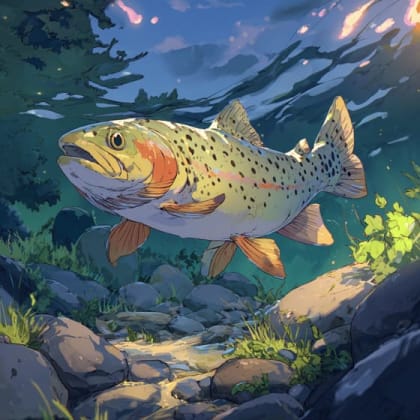
The Black Ghost Knifefish has a sleek, velvety black body with two distinct white bands near its tail. Its unique long, undulating anal fin runs almost the entire length of its body, giving it a ghost-like, flowing appearance without a visible dorsal or caudal fin.
Category
FishRarity
Rare
Danger
2/5 · Low
Snaps
Be the first to snap!
It's called 'ghost' because it only appears at night!
Its body is completely black, except for two white tail stripes!
They use electricity to talk to other knifefish!
This fish can hover perfectly still in the water, like magic!
Black Ghost Knifefish can produce weak electric fields because of specialized organs that help them navigate and hunt in total darkness.
Black Ghost Knifefish has a unique undulating anal fin that helps them swim forward and backward with incredible grace and precision.
Black Ghost Knifefish can detect tiny electrical disturbances because of sensitive receptors that help them find hidden prey.
They hunt small insects and tiny aquatic creatures in the dark.
Age differences: Younger knifefish eat smaller invertebrates, while adults may hunt larger prey.

Pygocentrus nattereri
hunts young knifefish
Cichla ocellaris
preys on knifefish
Chironomus plumosus
prefers their larvae
Daphnia pulex
hunts for these tiny crustaceans
Wildlife encompasses all undomesticated animal and plant life existing in their natural habitats.
Piscivorous organisms are animals that primarily subsist on a diet of fish.
This trait signifies organisms belonging to a very old evolutionary group with ancestors dating back millions of years.
This trait describes organisms capable of generating electric fields or electric shocks.

Freshwater habitats include non-saline aquatic environments such as rivers, lakes, ponds, and wetlands, vital for numerous species.

Aquatic habitats encompass environments where organisms live predominantly in water, including oceans, rivers, lakes, and wetlands.

Nocturnal animals are primarily active during the nighttime hours, typically resting or sleeping during the day.
Danger
2/5 · Low
Avoid touching this fish in the wild as it may get stressed. Always observe from a safe distance.
The easiest way to identify Black Ghost Knifefish is to use the Snappit nature identifier app.
15-50 cm
0.1-0.3 kg
5-15 years
They hunt small insects and tiny aquatic creatures in the dark.
8 km/h
Freshwater
Ambush
Zoom in to split clusters and explore where this object has been snapped.
Recent snaps will appear here as new observations are added.
Take the discovery with you
Snap it with Snappit to identify it, learn what makes it special, and add the discovery to your collection.