






Eastern Indigo Snake
Drymarchon couperi
The Eastern Indigo Snake is one of the longest snakes in North America! They are gentle giants and love to bask in the sun.
Habitat: Dry uplands and wetlands
The Eastern Indigo Snake is a long, slender snake with smooth, glossy, iridescent black scales covering its entire body. It often has a distinct orange or reddish chin, throat, and sometimes sides of the head, making it visually unique.
Category
ReptilesRarity
Common
Danger
2/5 · Low
Snaps
Be the first to snap!
Baby indigo snakes are born looking just like mini versions of their parents!
These gentle giants are the longest native snake in the United States!
They sometimes flatten their head and hiss loudly to scare away predators!
Unlike many snakes, they are active during the day, even on hot summer days!
Eastern Indigo Snakes can eat venomous snakes because they have some immunity to their venom, helping them thrive.
Eastern Indigo Snakes have powerful muscles that allow them to constrict and overpower various prey, from small birds to other snakes.
Eastern Indigo Snakes often use burrows dug by gopher tortoises for shelter and warmth, especially during cooler weather.
A mighty hunter, this snake eats many different animals, even other snakes!
Gopherus polyphemus
Uses their burrows for shelter and overwintering.
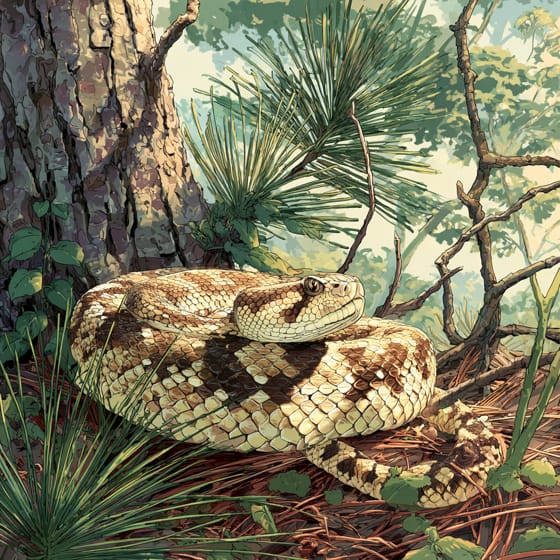
Crotalus adamanteus
Preys on this venomous snake, making it a natural controller.
Anolis carolinensis
Eats lizards found in its habitat.
Wildlife encompasses all undomesticated animal and plant life existing in their natural habitats.
This human use trait indicates species from which natural dyes can be extracted and used to color textiles, food, or other materials.
This trait signifies organisms belonging to a very old evolutionary group with ancestors dating back millions of years.
Forest habitats are terrestrial environments dominated by dense tree cover, supporting a high diversity of plant and animal life.

This trait characterizes organisms with an exceptionally long lifespan compared to others of their kind.

This trait identifies organisms whose diet consists entirely or primarily of animal tissue.

Diurnal animals are primarily active during daylight hours, typically resting or sleeping at night.

Describes a species whose presence and role have a disproportionately large effect on its environment.
Danger
2/5 · Low
Look but don’t touch. Keep a safe distance and wash hands after exploring.
170-220 cm
0.9-4.5 kg
15-25 years
2 km/h
A mighty hunter, this snake eats many different animals, even other snakes!
Dry uplands and wetlands
Pursuit
5-15
Zoom in to split clusters and explore where this object has been snapped.
Recent snaps will appear here as new observations are added.
















