





Hawksbill Sea Turtle
Eretmochelys imbricata
The Hawksbill Sea Turtle has a stunning shell and loves to eat jellyfish. They are very graceful swimmers in the ocean!
Habitat: Coral reefs and tropical waters
The Hawksbill Sea Turtle has a distinctive, pointed beak-like mouth and a flattened body. Its beautiful carapace is uniquely patterned with amber, brown, and black streaks, featuring overlapping scutes along its back, making it appear jagged.
Category
ReptilesRarity
Rare
Danger
2/5 · Low
Snaps
Be the first to snap!
Baby hawksbills are tiny, fitting in your palm when they hatch!
Eating toxic sponges makes them unappetizing to most predators!
Their unique beaks are perfect for prying food from coral crevices!
They travel thousands of miles between feeding and nesting sites!
Hawksbill Sea Turtle can eat glass sponges because of its powerful beak and specialized esophagus that helps them avoid injury.
Hawksbill Sea Turtle has a diet of poisonous sponges that makes its own flesh toxic, helping them avoid predators.
Hawksbill Sea Turtle can skillfully navigate complex coral reefs because of its agile flippers, helping them find food and shelter.
They mostly munch on sponges and other squishy sea creatures found on coral reefs.
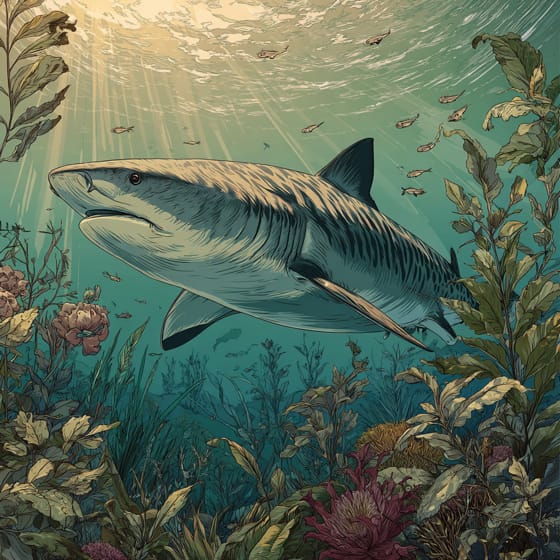
Galeocerdo cuvier
A major predator of adult Hawksbill Sea Turtles.
Chondrilla nucula
A primary food source for their specialized diet.
Porites lutea
Provides critical habitat and crevices for shelter.
Ocypode quadrata
Feeds on eggs and vulnerable hatchlings.
This trait signifies organisms belonging to a very old evolutionary group with ancestors dating back millions of years.
This trait characterizes organisms with an exceptionally long lifespan compared to others of their kind.
Coastal habitats are dynamic environments located along the interface between land and sea, influenced by tides, waves, and saltwater.
Armored describes animals protected by a hard, external covering or shell for defense.

This trait identifies organisms whose diet consists entirely or primarily of animal tissue.

Diurnal animals are primarily active during daylight hours, typically resting or sleeping at night.

Describes a species whose presence and role have a disproportionately large effect on its environment.

Aquatic habitats encompass environments where organisms live predominantly in water, including oceans, rivers, lakes, and wetlands.

Marine habitats encompass all saltwater environments of the Earth's oceans, supporting an immense diversity of aquatic life.

Protected status signifies a species or area is safeguarded by legal measures and conservation efforts to prevent harm or loss.

Endangered status indicates a species is at a very high risk of extinction in the wild in the near future.
Danger
2/5 · Low
Look but don’t touch. Keep a safe distance and wash hands after exploring.
The easiest way to identify Hawksbill Sea Turtle is to use the Snappit nature identifier app.
60-90 cm
45-75 kg
30-50 years
25 km/h
They mostly munch on sponges and other squishy sea creatures found on coral reefs.
2.5 km/h
Coral reefs and tropical waters
Zoom in to split clusters and explore where this object has been snapped.
Recent snaps will appear here as new observations are added.
Take the discovery with you
Snap it with Snappit to identify it, learn what makes it special, and add the discovery to your collection.
















