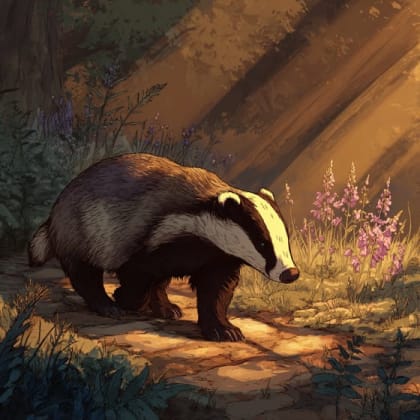
European Badger
Meles meles
European badgers are sturdy, burrowing animals with black-and-white faces. They live in family groups called clans.
Habitat: Woodlands, farmland, and grasslands.
The European Badger has a distinctive black and white striped face, a grey body, and short, powerful legs. Its stocky build and small head with prominent ears make it easily recognizable. The white stripe running from its nose over its head is a key identifying feature.
Category
MammalsRarity
Common
Danger
3/5 · Moderate
Snaps
4
Badgers clean their underground homes, called setts, even digging special latrine pits outside!
Badgers communicate using over 16 different sounds, from purrs to growls!
Sometimes, badgers share their huge underground setts with foxes!
They have super-strong jaws that can crush tough insects and even small bones!
European Badger can dig vast underground networks called setts because of their powerful claws and strong forelimbs, which helps them create homes.
European Badger has an amazing sense of smell and hearing that helps them find food and detect danger in the dark.
European Badger can detect earthworms moving underground, a skill that helps them find their favorite food efficiently.
European Badgers are omnivores, enjoying earthworms, fruits, insects, and small animals.

Lumbricus terrestris
A primary and favorite food source.
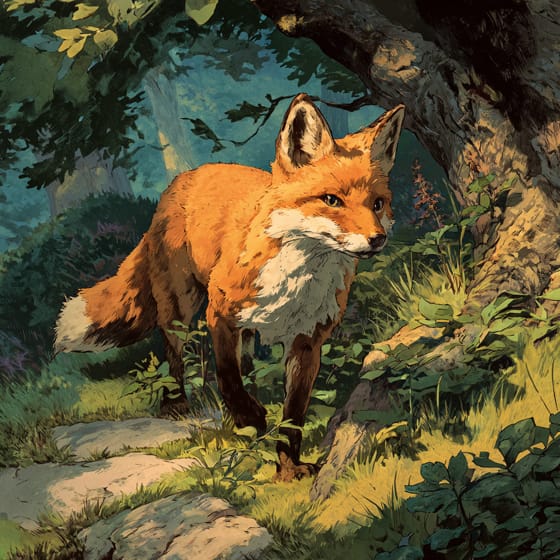
Vulpes vulpes
Foxes sometimes share sett tunnels with badgers.
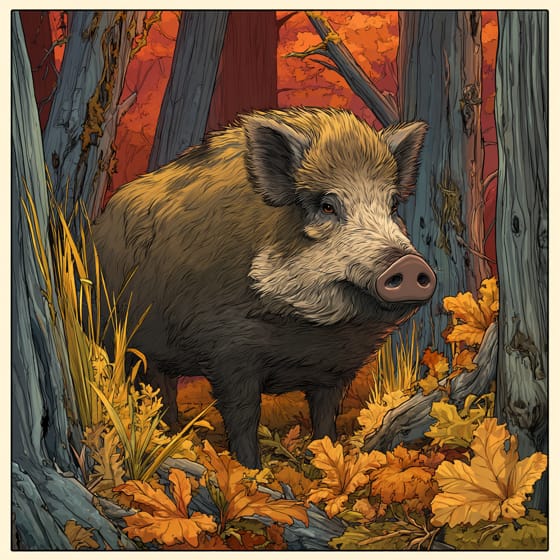
Sus scrofa
Wild boar may prey on badger cubs.
Apis mellifera
Badgers consume honey and bee larvae from nests.
Wildlife encompasses all undomesticated animal and plant life existing in their natural habitats.
Furry describes animals possessing a dense covering of soft hair or fur.
Social animals live in organized groups, cooperating for survival benefits such as foraging, defense, and raising offspring.
This trait identifies organisms whose diet includes both plant and animal matter.

Burrowing animals dig tunnels and chambers in the ground, using these subterranean structures for shelter, hunting, or breeding.

Forest habitats are terrestrial environments dominated by dense tree cover, supporting a high diversity of plant and animal life.

Nocturnal animals are primarily active during the nighttime hours, typically resting or sleeping during the day.
Danger
3/5 · Moderate
Do not approach — badgers can be fierce if threatened.
60-80 cm
8-17 kg
5-10 years
30 km/h
European Badgers are omnivores, enjoying earthworms, fruits, insects, and small animals.
Woodlands, farmland, and grasslands.
Foraging
1-5
Zoom in to split clusters and explore where this object has been snapped.

Normandy, FR
You might spot African Lion, Domestic Chicken, and Pig.
View guide →

Wales, UK
You might spot Macaques.
View guide →

Andalusia, ES
You might spot House Sparrow, Eurasian Eagle-Owl, and Spongy Moth.
View guide →

Spain, ES
You might spot Yellow Rock Rose and Sage-Leaved Rock-Rose.
View guide →