Tuatara
Sphenodon punctatus
The Tuatara is a special reptile that looks a bit like a lizard but is actually very different! They have a unique third eye on top of their head.
Habitat: Islands and coastal areas
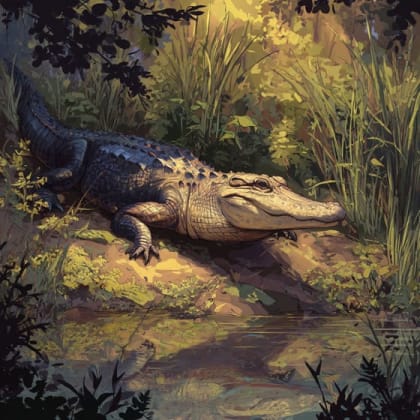
The Tuatara is a medium-sized reptile with a rough, olive-green to grey-brown skin, often speckled. It has a distinctive spiny crest of soft scales running down its back, more prominent in males, and a large, wedge-shaped head with powerful jaws. Its small, beady eyes have a fixed stare.
Category
ReptilesRarity
Rare
Danger
2/5 · Low
Snaps
Be the first to snap!
Wow! An adult Tuatara can hold its breath underwater for almost an hour!
Wow! Their unique teeth are fused to their jawbone and can't be replaced if broken!
Wow! Tuatara are the last survivors of an entire ancient reptile group called Rhynchocephalia!
Wow! Tuatara eggs take over a year to hatch, the longest incubation of any reptile!
Tuatara has a light-sensitive 'third eye' on its head that helps them regulate their body temperature and understand day-night cycles.
Tuatara can stay active in colder temperatures than most reptiles because of their slow metabolism, helping them hunt at night.
Tuatara has unique genetic traits that link them directly to prehistoric reptiles, helping scientists understand dinosaur-era life.
These ancient reptiles primarily feast on insects and other small animals found on their island homes.
Age differences: Young tuatara eat smaller insects, while adults can hunt larger prey like lizards and bird chicks.
Hemideina crassidens
A large, flightless insect often eaten by tuatara.
Pterodroma macroptera
Tuatara often share burrows with this seabird.
Rattus exulans
Introduced rats were a major threat, preying on tuatara eggs and juveniles.
Wildlife encompasses all undomesticated animal and plant life existing in their natural habitats.
This trait identifies organisms whose diet primarily consists of insects and other small invertebrates.
This trait signifies organisms belonging to a very old evolutionary group with ancestors dating back millions of years.
This trait characterizes organisms with an exceptionally long lifespan compared to others of their kind.

Coastal habitats are dynamic environments located along the interface between land and sea, influenced by tides, waves, and saltwater.

Nocturnal animals are primarily active during the nighttime hours, typically resting or sleeping during the day.
No aliases listed yet.
Danger
2/5 · Low
Look but don’t touch. Keep a safe distance and wash hands after exploring.
50-80 cm
0.5-1.5 kg
60-100 years
2 km/h
These ancient reptiles primarily feast on insects and other small animals found on their island homes.
Islands and coastal areas
Ambush
1-19
Zoom in to split clusters and explore where this object has been snapped.
Recent snaps will appear here as new observations are added.