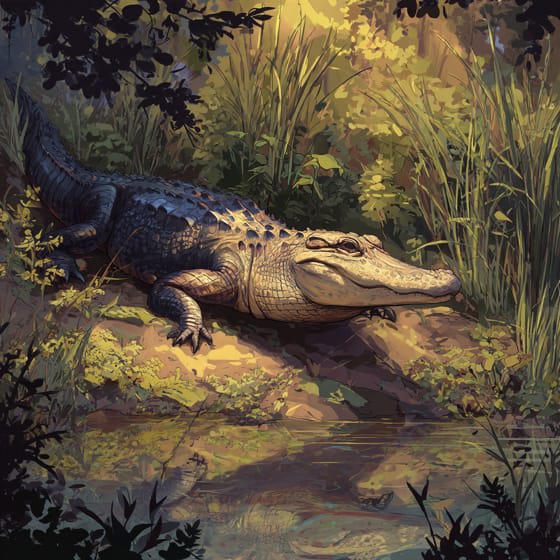




American Alligator
Alligator mississippiensis
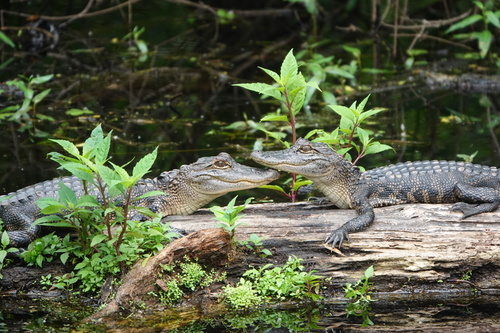
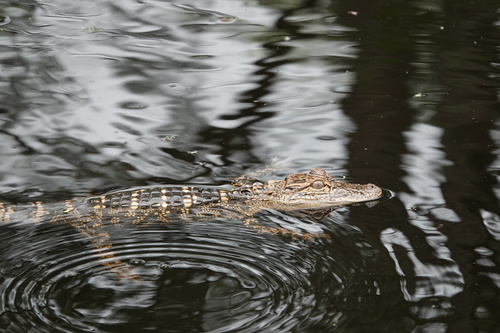
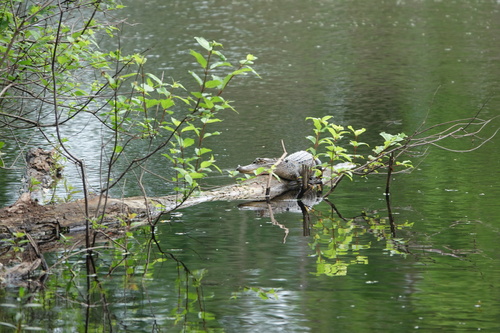
American alligators are large reptiles with armored bodies and powerful jaws. They live in swamps and rivers, swimming quietly to catch fish and birds.
Habitat: Swamps, Rivers
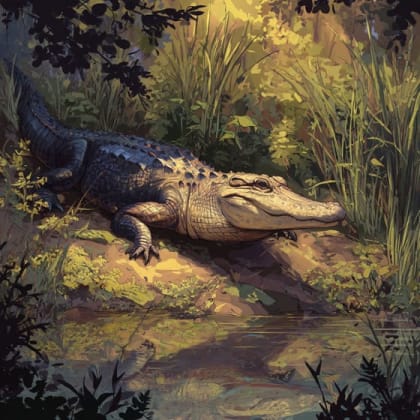
The American Alligator is a large, dark grayish-black reptile with a broad, rounded snout, setting it apart from crocodiles. It has a yellowish-white belly and powerful tail, perfectly adapted for aquatic life.
Category
ReptilesRarity
Common
Danger
4/5 · High
Snaps
133
Alligators can replace their teeth over 2,000 times in their lifetime!
An alligator's powerful tail, half its length, helps them swim and even jump!
Female alligators build huge nests of mud and plants, sometimes two meters wide!
They have special valves that seal their ears and nostrils completely underwater!
American Alligator can violently spin prey underwater because of its powerful body, helping it tear off chunks.
American Alligator has an incredibly powerful bite force that helps them crush bone and hold onto large prey.
American Alligator has a special transparent eyelid (nictitating membrane) that helps them see clearly underwater.
American Alligator can determine the sex of its hatchlings based on the temperature inside its nest.
Top predators eating almost anything they can catch in the water or near it.
Age differences: Juveniles mainly eat insects and small fish; adults prey on larger animals.
Lepisosteus oculatus
Alligators hunt this common freshwater fish.
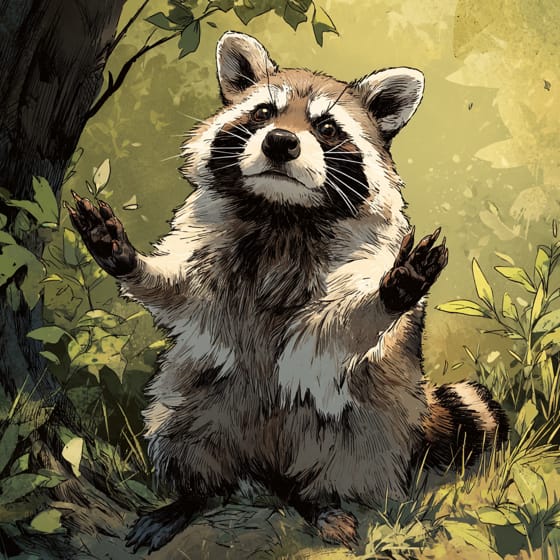
Procyon lotor
A common mammal prey for alligators near water.
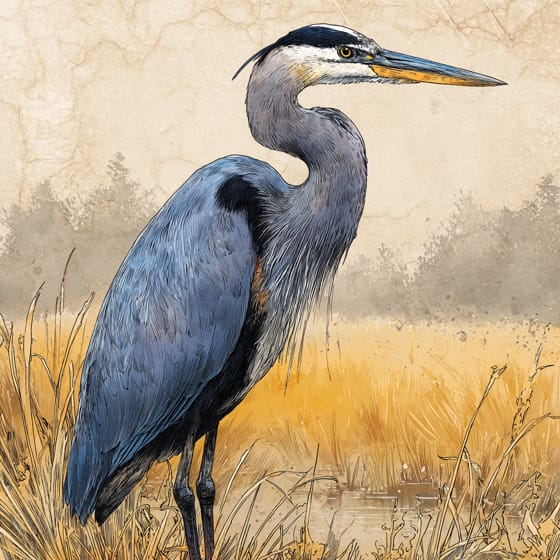
Ardea herodias
Alligators prey on wading birds.
Nerodia fasciata
Alligators consume various types of snakes.
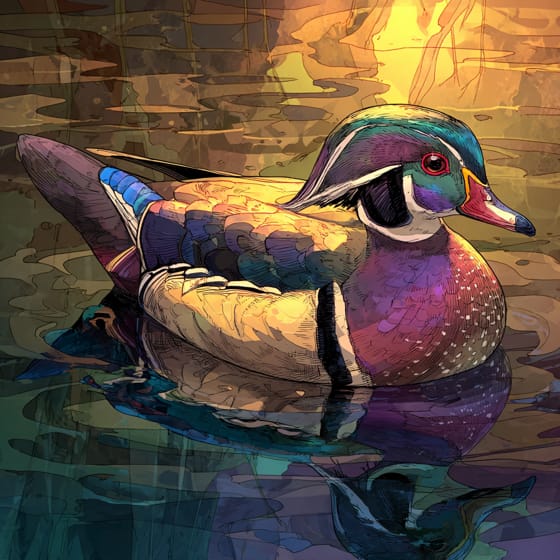
Aix sponsa
Ducks are common prey for alligators.
Thermoregulating organisms maintain a stable internal body temperature despite fluctuations in the external environment.
An ambush predator hunts by patiently waiting and concealing itself, then launching a sudden attack when unsuspecting prey comes within range.
This trait signifies organisms belonging to a very old evolutionary group with ancestors dating back millions of years.
This trait characterizes organisms with an exceptionally long lifespan compared to others of their kind.

This trait identifies organisms whose diet consists entirely or primarily of animal tissue.

Freshwater habitats include non-saline aquatic environments such as rivers, lakes, ponds, and wetlands, vital for numerous species.

Describes a species whose presence and role have a disproportionately large effect on its environment.

Protected status signifies a species or area is safeguarded by legal measures and conservation efforts to prevent harm or loss.

Nocturnal animals are primarily active during the nighttime hours, typically resting or sleeping during the day.
Danger
4/5 · High
Never approach or feed wild alligators. Always stay a safe distance away.
The easiest way to identify American Alligator is to use the Snappit nature identifier app.
260-460 cm
90-500 kg
30-50 years
56 km/h
Top predators eating almost anything they can catch in the water or near it.
32 km/h
Swamps, Rivers
Zoom in to split clusters and explore where this object has been snapped.
May 11, 2023
Pomme de Terre Wildlife Management AreaPhoto attribution
(c) Jacob Saucier, some rights reserved (CC BY)
License: CC BY 4.0 ↗
Image may be shown cropped inside the card frame.
May 11, 2023
Pomme de Terre Wildlife Management AreaPhoto attribution
(c) Jacob Saucier, some rights reserved (CC BY)
License: CC BY 4.0 ↗
Image may be shown cropped inside the card frame.
May 11, 2023
Pomme de Terre Wildlife Management AreaPhoto attribution
(c) Jacob Saucier, some rights reserved (CC BY)
License: CC BY 4.0 ↗
Image may be shown cropped inside the card frame.

South Carolina, US
You might spot American Alligator, Anole, and Great Blue Heron.
View guide →

South Carolina, US
You might spot Brown Pelican, Boat-Tailed Grackle, and Great Egret.
View guide →

Alabama, US
You might spot Anole, Eastern Box Turtle, and Resurrection Fern.
View guide →

Florida, US
You might spot American Alligator, Brown Anole, and Red-Shouldered Hawk.
View guide →

Georgia, US
You might spot Baldcypress, Anole, and American Alligator.
View guide →

US
You might spot Brown Pelican, Boat-Tailed Grackle, and Great Egret.
View guide →
Take the discovery with you
Snap it with Snappit to identify it, learn what makes it special, and add the discovery to your collection.