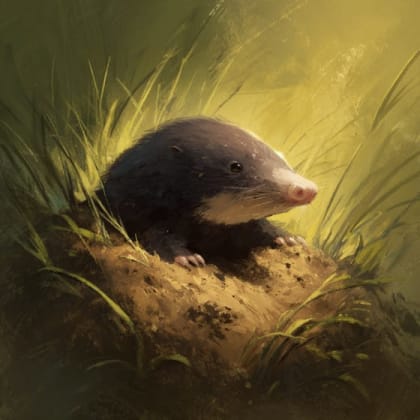


Addax
Addax
The Addax is a special type of antelope that lives in the desert. It has long, twisted horns and a beautiful light-colored coat that helps it stay cool in the hot sun.
Habitat: Desert
The Addax is a medium-sized antelope with a pale, sandy-white coat in summer that darkens to grayish-brown in winter. It has a distinctive white 'X' shape on its face and long, slender, spiraled horns on both males and females. Its broad, flat hooves are unique for navigating soft desert sand.
Category
MammalsRarity
Rare
Danger
2/5 · Low
Snaps
Be the first to snap!
Addaxes can survive scorching desert heat by changing their body temperature!
Both male and female Addaxes grow amazing corkscrew horns that spiral upwards!
Their special broad hooves are like built-in snowshoes, but for desert sand!
They are one of the rarest mammals on Earth, with very few left in the wild!
Addax can survive long periods without water because they get almost all their moisture from the plants they eat.
Addax has broad, flat hooves that help them walk easily over soft desert sand without sinking.
Addax can actually raise its own body temperature, which helps reduce water loss in extreme desert heat.
Addaxes are herbivores that graze on sparse desert grasses and browse leaves and shrubs.
Aristida pungens
A primary food source in its desert habitat.
Acacia tortilis
Browses on the leaves of this hardy desert tree.
Hyaena hyaena
Potential natural predator, though rare due to Addax scarcity.
Furry describes animals possessing a dense covering of soft hair or fur.
Social animals live in organized groups, cooperating for survival benefits such as foraging, defense, and raising offspring.
Characterized by having one or more hard, permanent, pointed projections on the head.
This trait characterizes organisms whose diet consists entirely or primarily of plant material.

Desert habitats are arid regions characterized by extremely low precipitation and often extreme temperatures, supporting specialized flora and fauna.

Diurnal animals are primarily active during daylight hours, typically resting or sleeping at night.

This trait identifies organisms that exhibit exceptional swiftness in movement for hunting, escape, or travel.

Endangered status indicates a species is at a very high risk of extinction in the wild in the near future.
Danger
2/5 · Low
Always watch from a distance and never try to touch wild animals like the Addax.
120-130 cm
60-125 kg
15-20 years
56 km/h
Addaxes are herbivores that graze on sparse desert grasses and browse leaves and shrubs.
Desert
Grazing
1
Zoom in to split clusters and explore where this object has been snapped.
Recent snaps will appear here as new observations are added.