





Eastern Gray Squirrel
Sciurus carolinensis
Gray squirrels are quick, tree-dwelling rodents. They collect nuts and seeds to store for winter.
Habitat: Forests, parks, and gardens.
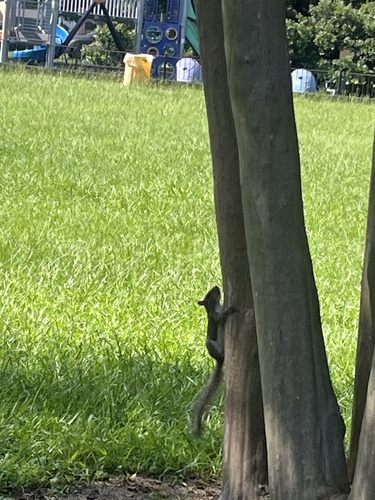
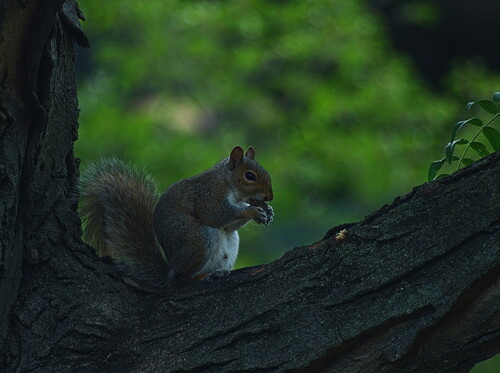
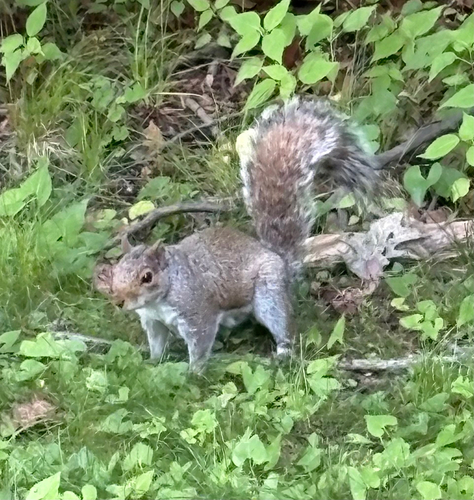
The Eastern Gray Squirrel is a medium-sized squirrel with a predominantly gray coat, often with brownish hues on its back and sides, and a distinctive white belly. It has a large, bushy tail and prominent ears, differing visually from the reddish fur of a Red Squirrel.
Category
MammalsRarity
Common
Danger
2/5 · Low
Snaps
1,558
A group of squirrels is sometimes called a 'scurry' – what a fun name!
Their front teeth never stop growing, so they constantly chew to keep them short.
They can find nuts buried under a foot of snow using their amazing sense of smell.
They sometimes pretend to bury nuts to trick other animals watching them!
Eastern Gray Squirrel can rotate its hind ankles 180 degrees, allowing it to grip bark and descend trees headfirst with ease.
Eastern Gray Squirrel has an incredible memory that helps them remember the locations of thousands of buried nuts, even months later.
Eastern Gray Squirrel uses its long, bushy tail as a counterweight and rudder, enabling amazing balance and quick, agile turns.
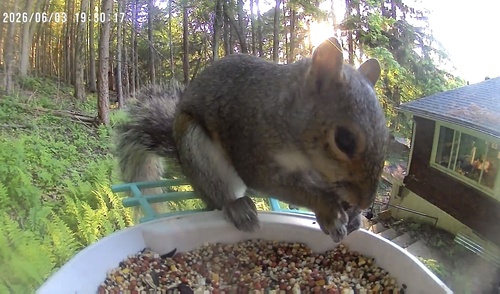
These fuzzy foragers munch on nuts, seeds, fruits, and sometimes even insects or bird eggs!
Furry describes animals possessing a dense covering of soft hair or fur.
Social animals live in organized groups, cooperating for survival benefits such as foraging, defense, and raising offspring.
Arboreal animals live primarily in trees, utilizing them for shelter, food, and protection from predators.
Gliding animals move through the air by launching themselves and maintaining flight with specialized body structures, without flapping wings.

This trait characterizes organisms whose diet consists entirely or primarily of plant material.

This trait describes organisms that manipulate external objects to achieve a specific goal.

Forest habitats are terrestrial environments dominated by dense tree cover, supporting a high diversity of plant and animal life.

Diurnal animals are primarily active during daylight hours, typically resting or sleeping at night.
Danger
2/5 · Low
Do not feed squirrels — they may bite.
The easiest way to identify Eastern Gray Squirrel is to use the Snappit nature identifier app.
35-48 cm
0.3-0.7 kg
2-5 years
20 km/h
These fuzzy foragers munch on nuts, seeds, fruits, and sometimes even insects or bird eggs!
Forests, parks, and gardens.
Foraging
Zoom in to split clusters and explore where this object has been snapped.
Jun 19, 2026
BroadmoorPhoto attribution
(c) Elliot Greiner, some rights reserved (CC BY)
License: CC BY 4.0 ↗
Image may be shown cropped inside the card frame.
Jun 11, 2026
Four CornersPhoto attribution
(c) Yoatzin Peñaflor, some rights reserved (CC BY)
License: CC BY 4.0 ↗
Image may be shown cropped inside the card frame.
Jun 6, 2026
St. Augustine's UniversityPhoto attribution
no rights reserved
License: CC0 1.0 ↗
Image may be shown cropped inside the card frame.
Jun 5, 2026
New York Botanical GardenPhoto attribution
(c) eml23, some rights reserved (CC BY)
License: CC BY 4.0 ↗
Image may be shown cropped inside the card frame.
Jun 4, 2026
Binghamton Zoo at Ross ParkPhoto attribution
(c) David Weisenbeck, some rights reserved (CC BY)
License: CC BY 4.0 ↗
Image may be shown cropped inside the card frame.

Ohio, US
You might spot Eastern Fox Squirrel and Spotted Lanternfly.
View guide →

Georgia, US
You might spot Common Vetch, Tiny Bluet, and Carolina Crane's-Bill.
View guide →
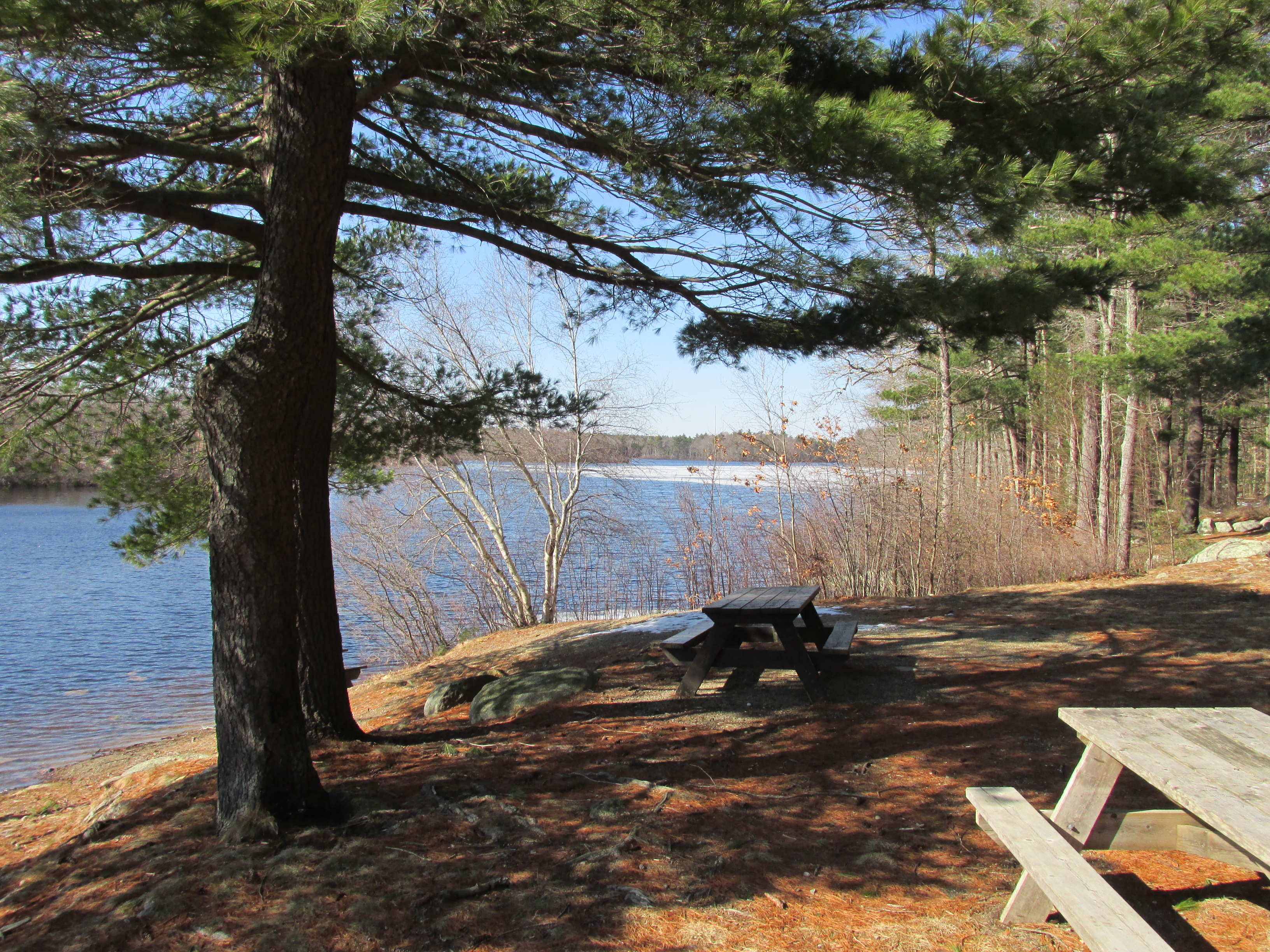
Massachusetts, US
You might spot Eastern White Pine and Common Eastern Bumble Bee.
View guide →

South Carolina, US
You might spot Anole, Green Treefrog, and Eastern Gray Squirrel.
View guide →

Michigan, US
You might spot Eastern Gray Squirrel, Tree-Of-Heaven, and House Sparrow.
View guide →

Massachusetts, US
You might spot Eastern Cottontail and American Robin.
View guide →
Take the discovery with you
Snap it with Snappit to identify it, learn what makes it special, and add the discovery to your collection.





.jpg&width=800)

.JPG&width=800)


.jpg&width=800)
