Amerikanische Auster
crassostrea virginica
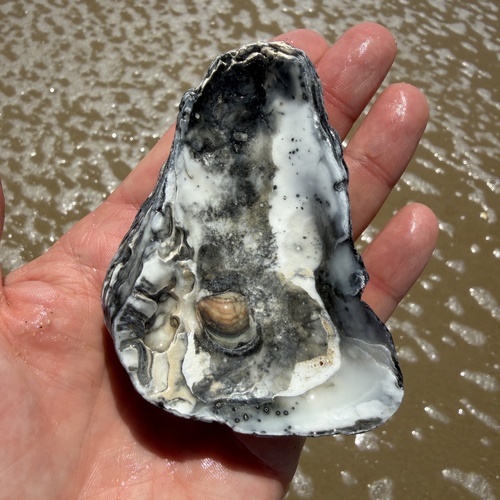
Amerikanische Austern sind erstaunliche Lebewesen, die im Ozean leben und helfen, das Wasser sauber zu halten! Sie können wunderschöne Muschelschalen bilden, die oft an Stränden gefunden werden.
Lebensraum: Flache Küstengewässer, insbesondere in Buchten und Flussmündungen.
Die Amerikanische Auster hat eine unregelmäßige, raue, graubraune Schale, die oft länger und schmaler ist als die anderer Austernarten. Ihre obere Schale ist flacher, während die untere Schale schalenförmig ist und an einer Oberfläche befestigt ist, oft von Algen grünlich im Inneren erscheinend.
Kategorie
InvertebrateSeltenheit
Common
Gefahr
1/5 · Sehr gering
Snaps
7
Jede Auster bildet eine Perle, aber die meisten sind zu klein oder nicht glänzend genug für Schmuck.
Austernriffe sind natürliche Küstenschutzanlagen, die Küstenlinien vor Erosion bei Stürmen schützen!
Manche Austern können über 20 Jahre alt werden und wachsen still und leise auf dem Meeresboden!
Diese Austern können in einem breiten Salzgehaltbereich leben, von Brackwasserflüssen bis hin zu vollem Meerwasser!
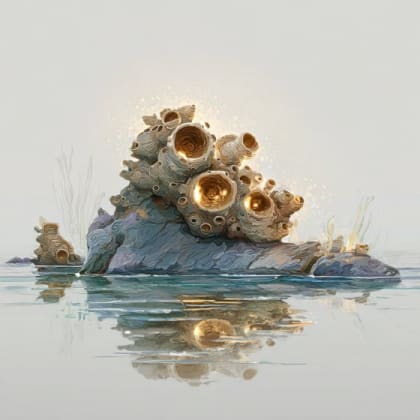
Die Amerikanische Auster kann Wasser durch Filterfütterung reinigen, da sie spezialisierte Kiemen besitzt, die winzige Partikel aus der Umgebung filtern.
Die Amerikanische Auster hat eine starke Schale, die zum Bau großer, komplexer Riffe beiträgt und anderen Meeresbewohnern Schutz und Lebensraum bietet.
Die Amerikanische Auster kann im Laufe ihres Lebens ihr Geschlecht ändern, was ihr hilft, sich anzupassen und sich unter verschiedenen Bedingungen effektiver fortzupflanzen.
Dieser Filterfresser filtert mit seinen speziellen Kiemen winzige Nahrungspartikel aus dem Wasser.
Urosalpinx cinerea
Diese Schnecke bohrt durch die Austernschale, um ihren weichen Körper zu fressen.
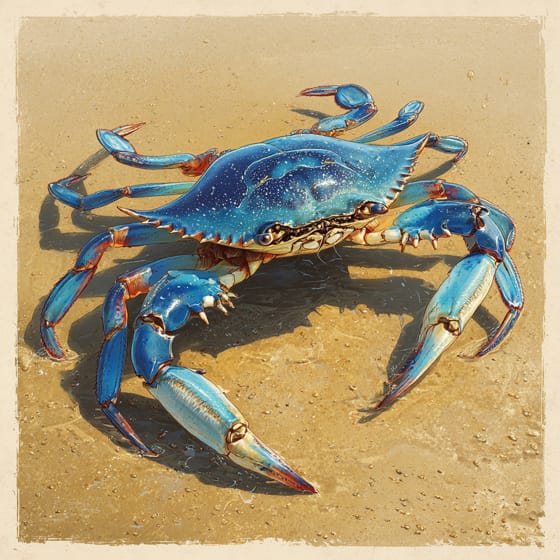
Callinectes sapidus
Blaukrabben nutzen ihre kräftigen Scheren, um Austernschalen zu knacken.
.jpg&width=800)
Haematopus palliatus
Diese Vögel benutzen ihre starken Schnäbel, um Austernschalen aufzuhebeln oder aufzuhämmern.
Panopeus herbstii
Schlammkrabben fressen junge Austern, indem sie deren sich entwickelnde Schalen zerquetschen.
Gobiosoma bosci
Viele kleine Fische und Wirbellose finden Schutz in komplexen Austernriffen.
Soziale Tiere leben in organisierten Gruppen und kooperieren, um ihr Überleben zu sichern, beispielsweise bei der Nahrungssuche, Verteidigung und Aufzucht der Jungen.
Filtrierer nehmen Nährstoffe auf, indem sie schwebende Nahrungspartikel und kleine Organismen aus dem Wasser filtern.
Beschreibt Organismen, die totes organisches Material abbauen und Nährstoffe in das Ökosystem zurückführen.
Aquatische Lebensräume umfassen Umgebungen, in denen Organismen überwiegend im Wasser leben, darunter Ozeane, Flüsse, Seen und Feuchtgebiete.

Marine Lebensräume umfassen alle Salzwasserumgebungen der Ozeane der Erde und beherbergen eine immense Vielfalt an Wasserlebewesen.
Gefahr
1/5 · Sehr gering
Vorsicht vor scharfen Muschelschalen am Strand!
Der einfachste Weg, Amerikanische Auster zu bestimmen, ist die Verwendung der Naturführer-App Snappit.
5 cm
3 cm
20 g
10 Jahre
Dieser Filterfresser filtert mit seinen speziellen Kiemen winzige Nahrungspartikel aus dem Wasser.
Flache Küstengewässer, insbesondere in Buchten und Flussmündungen.
Filterfütterung
Zoome hinein, um Cluster aufzulösen und zu sehen, wo dieses Objekt fotografiert wurde.
03.06.2026
Bodie Island Lifesaving and Coast Guard StationBildnachweis
(c) Conway Hawn, some rights reserved (CC BY)
Lizenz: CC BY 4.0 ↗
Das Bild wird möglicherweise zugeschnitten im Kartenrahmen angezeigt.

US
Hier kann man sehen Firewheel, Hauspferd und Atlantic Horseshoe Crab.
Führer anzeigen →

South Carolina, US
Hier kann man sehen Brauner Pelikan, Bootschwanzgrackel und Silberreiher.
Führer anzeigen →
North Carolina, US
Hier kann man sehen Sanderling, Lachmöwe und Brauner Pelikan.
Führer anzeigen →

Maryland, US
Hier kann man sehen Dreilappige Papau und Schnaken-Orchidee.
Führer anzeigen →

US
Hier kann man sehen Amerikanische Silbermöwe und Rundschwanzsperber.
Führer anzeigen →

Connecticut, US
Hier kann man sehen östliche Erdhummel, Fischadler und Monarch.
Führer anzeigen →
Nimm die Entdeckung mit
Fotografiere deinen Fund mit Snappit, bestimme die Art und füge die Entdeckung deiner Sammlung hinzu.