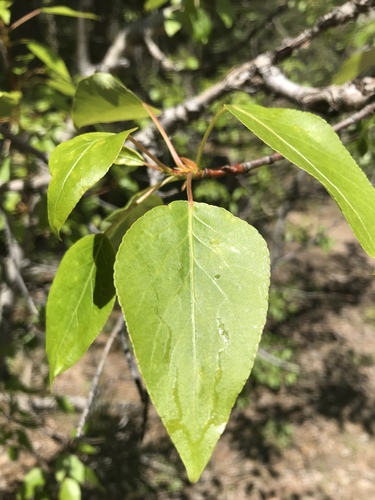





Bead-like Cottonwood Gall aphid
Thecabius populimonilis
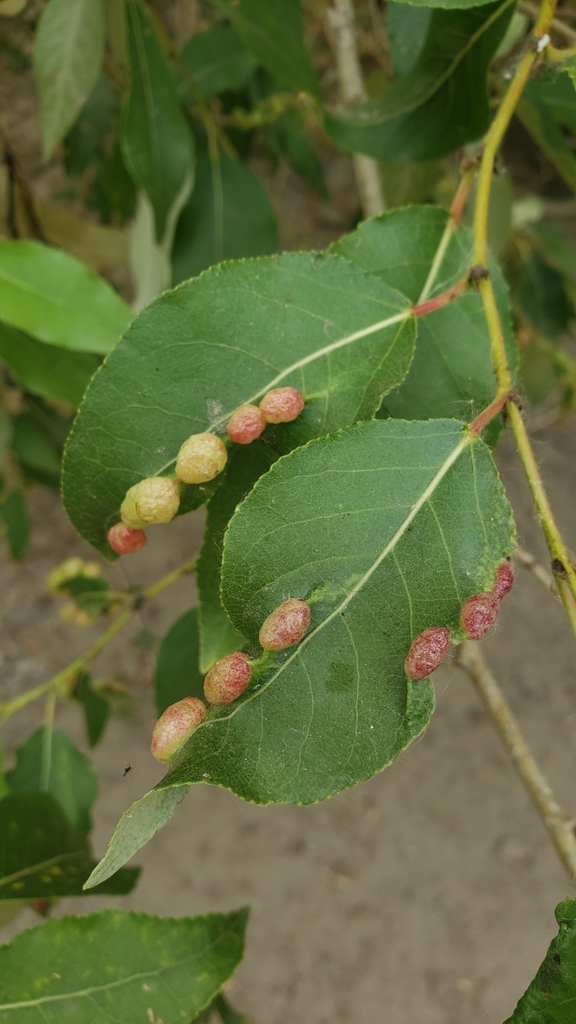
The Bead-like Cottonwood Gall aphid is a tiny insect that makes round, bead-like galls on cottonwood trees. These galls are like little homes for the aphids, where they can stay safe and feed on the tree's juices.
Lebensraum: Forests
The Bead-like Cottonwood Gall aphid is a tiny, soft-bodied insect, typically yellowish-green in color. Its pear-shaped body is often hidden inside distinctive, bead-like growths on cottonwood leaves. These aphids lack prominent wings in their gall-dwelling stage.
Kategorie
InsektenSeltenheit
Common
Gefahr
1/5 · Sehr gering
Snaps
Mach den ersten Snap!
Some aphid babies are born already pregnant!
These aphids create their own living 'house' inside a leaf!
They change forms throughout their life, like a secret identity!
They drink sugary sap like tiny juice boxes!
Bead-like Cottonwood Gall aphid can create protective galls because of special chemicals injected into leaves that force the tree to grow a shelter.
Bead-like Cottonwood Gall aphid can multiply quickly because females can reproduce without a mate, filling galls with many offspring.
Bead-like Cottonwood Gall aphid has the ability to manipulate cottonwood plants by forcing them to grow a home for its colony.
These tiny insects drink the sugary sap directly from cottonwood leaves, their leafy homes.

Populus deltoides
relies on for food and to create its protective gall.
Hippodamia convergens
preys on aphids, helping control their populations.
Chrysoperla carnea
larvae are voracious predators of aphids.
Aphidius colemani
lays eggs inside the aphid, leading to its demise.
Einzelgänger leben den größten Teil ihres Lebens allein und interagieren mit Artgenossen nur zur Paarung oder zur Aufzucht der Jungen.
Dieses Merkmal kennzeichnet Lebewesen, deren Ernährung vollständig oder hauptsächlich aus pflanzlichem Material besteht.
Waldlebensräume sind terrestrische Lebensräume, die von dichtem Baumbestand dominiert werden und eine große Vielfalt an Pflanzen- und Tierarten beherbergen.
Bezieht sich auf Arten, die deutlich kleiner sind als der Durchschnitt oder das Typische ihrer Art.

Beschreibt Organismen, die Pollen übertragen und so die Befruchtung und Fortpflanzung von Pflanzen ermöglichen.
Noch keine Alternativnamen vorhanden.
Gefahr
1/5 · Sehr gering
It's best to look at insects from a distance and not touch them, as some can be delicate.
1-3 mm
20-30 Tage
These tiny insects drink the sugary sap directly from cottonwood leaves, their leafy homes.
Forests
6
1000
Zoome hinein, um Cluster aufzulösen und zu sehen, wo dieses Objekt fotografiert wurde.
Neueste Snaps erscheinen hier, wenn neue Beobachtungen hinzukommen.