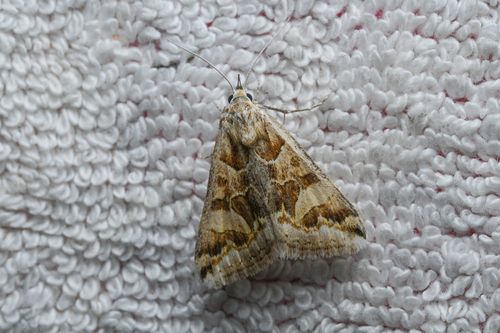


Cerocala Scapulosa
cerocala scapulosa
Die Cerocala scapulosa ist eine faszinierende Nachtfalterart aus der Familie der Erebidae, die hauptsächlich in den trockenen und halbtrockenen Regionen Afrikas vorkommt. Dieser widerstandsfähige nachtaktive Schmetterling, der gut an das Leben in trockenen Buschlandschaften, Savannen und Wüsten angepasst ist, spielt eine wichtige Rolle in seinem lokalen Ökosystem. Als erwachsenes Tier dient er als Bestäuber und besucht nachtblühende Wüstenpflanzen, während sich seine Larven von widerstandsfähigen Wildsträuchern ernähren. Für Naturfreunde ist es eine lohnende Herausforderung, ihn zu entdecken, da seine Rinden-imitierende Tarnung außergewöhnlich ist. Er bleibt ein faszinierendes Studienobjekt für Entomologen, die sich für Wüstenanpassung, Insektenüberlebensmechanismen und die reiche, oft übersehene Biodiversität trockener Landschaften interessieren. Seine Anwesenheit ist ein Indikator für gesunde, ungestörte Trockenbusch-Habitate, in denen seine Larvenwirtspflanzen gedeihen.
Lebensraum: Typischerweise in trockenen Savannen, trockenen Buschlandschaften und Wüstenrändern mit spärlicher Vegetation in ganz Afrika zu finden.
Dieser mittelgroße Nachtfalter besitzt Vorderflügel, die kunstvoll mit gesprenkelten Grau-, Braun- und Cremetönen gemustert sind und trockene Baumrinde oder Flechten imitieren. Die Flügelspannweite beträgt typischerweise 3 bis 5 Zentimeter. Im Ruhezustand bilden seine Flügel ein flaches, dreieckiges Dach über seinem Körper und verbergen die Hinterflügel vollständig. Wird er jedoch gestört, enthüllt er Hinterflügel, die mit kontrastierenden dunkelbraunen und gelblich-weißen Bändern gezeichnet sind, was einen überraschenden visuellen Blitz erzeugt. Sein Thorax ist dicht mit gräulichen Schuppen behaart, und seine Fühler sind fein und fadenförmig, typisch für weibliche Motten, oder bei Männchen mäßig gefiedert.
Kategorie
InsektenSeltenheit
Gewöhnlich
Gefahr
1/5 · Sehr gering
Snaps
Mach den ersten Snap!
Seine kryptische Färbung ist so effektiv, dass er sich auf Akazienrinde gut sichtbar verstecken kann, indem er sowohl Farbe als auch Textur lokaler Flechten nachahmt.
Wie viele Nachtfalter der Familie Erebidae besitzt die Cerocala scapulosa Ohren am Metathorax, die darauf abgestimmt sind, die Echoortungsrufe jagender Fledermäuse zu hören.
Der Gattungsname 'Cerocala' stammt aus dem Griechischen und deutet auf 'Wachs' und 'schön' hin, was sich wahrscheinlich auf das glatte, wachsartige Aussehen der Zeichnungen einiger Arten bezieht.
Die aufwendige Musterung seiner Vorderflügel ermöglicht es dem Nachtfalters, nahtlos mit rauer Baumrinde und Felsen zu verschmelzen, wodurch er für tagaktive Raubtiere praktisch unsichtbar wird.
Bei Bedrohung enthüllt er plötzlich seine gebänderten Hinterflügel, was einen plötzlichen Musterblitz erzeugt, der Raubtiere vorübergehend verwirrt und eine schnelle Flucht ermöglicht.
Ausgestattet mit spezialisierten Tympanalorganen kann dieser Nachtfalter die Echoortungsrufe insektenfressender Fledermäuse wahrnehmen, was ihn dazu veranlasst, ausweichende Tauchmanöver durchzuführen.
Larven ernähren sich von den Blättern holziger Sträucher und Hülsenfrüchtlern, während erwachsene Tiere Blütennektar von nachtblühenden Pflanzen aufnehmen.
Altersunterschiede: Raupen besitzen beißende Mundwerkzeuge zum Verzehr zäher Blätter, während erwachsene Tiere einen eingerollten Rüssel haben, der auf das Saugen flüssigen Nektars spezialisiert ist.
Vachellia karroo
Die Raupen ernähren sich von den Blättern dieser Wirtspflanze.
Neoromicia capensis
Erwachsene Nachtfalter werden im Flug von nachtaktiven insektenfressenden Fledermäusen gejagt.
Trichonephila senegalensis
Spinnen, die auf Rinde oder in der Nähe von Lichtern lauern, überfallen ruhende Nachtfalter.
Für dieses Objekt sind noch keine Merkmal-Badges vergeben.
Noch keine Alternativnamen vorhanden.
Sammlungen für dieses Objekt erscheinen hier, wenn weitere Themen hinzugefügt werden.
Gefahr
1/5 · Sehr gering
Noch keine besonderen Sicherheitshinweise.
Vergleiche die Flügelform in Ruhe, die Zeichnung der Vorderflügel, die Fühler und den Körperbau. Bei kleinen braunen Faltern kommt es oft auf feine Details an, die ein Handyfoto nicht immer einfängt. Nachtfalter bestimmen: Lade ein Foto hoch und vergleiche die sichtbaren Merkmale.
1+ cm
3+ cm
0.0001+ kg
0+ Jahre
15 km/h
Larven ernähren sich von den Blättern holziger Sträucher und Hülsenfrüchtlern, während erwachsene Tiere Blütennektar von nachtblühenden Pflanzen aufnehmen.
Typischerweise in trockenen Savannen, trockenen Buschlandschaften und Wüstenrändern mit spärlicher Vegetation in ganz Afrika zu finden.
Zoome hinein, um Cluster aufzulösen und zu sehen, wo dieses Objekt fotografiert wurde.
Neueste Snaps erscheinen hier, wenn neue Beobachtungen hinzukommen.
Nimm die Entdeckung mit
Fotografiere deinen Fund mit Snappit, bestimme die Art und füge die Entdeckung deiner Sammlung hinzu.