Dicyrtomina Ornata
dicyrtomina ornata
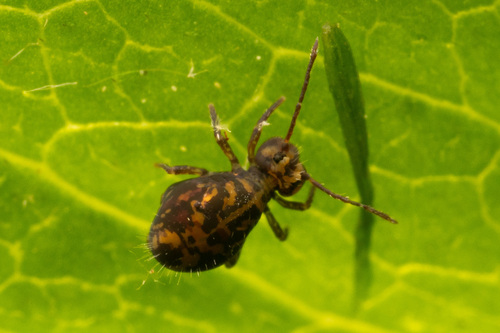
Dicyrtomina Ornata ist ein winziger, faszinierender Springschwanz, der es liebt, im Boden herumzuhüpfen. Sie tragen dazu bei, die Erde gesund zu halten, indem sie verrottende Materialien abbauen!
Lebensraum: Feuchter Boden und Laubstreu in Wäldern und Gärten.
Die Dicyrtomina Ornata ist ein winziger, kugelförmiger Springschwanz, was bedeutet, dass sie eine deutlich runde Körperform hat. Sie zeigt typischerweise ein schönes Muster aus Gelb oder Orange mit dunklen, oft bräunlichen oder schwarzen Markierungen und Bändern. Ihre kugelförmige Gestalt hebt sie visuell von vielen anderen länglichen Springschwanzarten ab.
Kategorie
InvertebrateSeltenheit
Common
Gefahr
0/5 · Keine bekannte Gefahr
Snaps
2
Wussten Sie, dass Springschwänze zu den zahlreichsten Tieren der Erde gehören?
Springschwänze benutzen eine spezielle 'Bauchröhre', um Wasser aufzunehmen!
Diese winzigen Hüpfer gibt es seit über 400 Millionen Jahren!
Sie können eisige Temperaturen überleben, indem sie ein natürliches Frostschutzmittel produzieren!
Dicyrtomina Ornata kann sich mit einem speziellen 'Furcula'-Schwanzanhängsel in die Luft katapultieren, was ihnen hilft, Fressfeinden schnell zu entkommen.
Dicyrtomina Ornata hat eine wachsartige Kutikula, die ihr hilft, Wasser abzuweisen und auch in sehr feuchten Lebensräumen trocken zu bleiben.
Dicyrtomina Ornata kann sich mit winzigen Krallen und Haftpolstern an ihren Füßen an glatten Oberflächen festhalten, wodurch sie leicht klettern kann.
Sie knabbern an winzigen Resten von verrottenden Pflanzen und Pilzen und helfen so, Nährstoffe zu recyceln!
Penicillium chrysogenum
Weidet auf Pilzhyphen und Sporen in ihrem Lebensraum.
Bacillus subtilis
Ernährt sich von Bakterienkolonien in feuchten Böden.
Myrmica rubra
Ameisen können Springschwänze im Boden und Laubstreu jagen.
Einzelgänger leben den größten Teil ihres Lebens allein und interagieren mit Artgenossen nur zur Paarung oder zur Aufzucht der Jungen.
Farbenfroh beschreibt Organismen oder Objekte, die eine große Vielfalt an leuchtenden und deutlich erkennbaren Farben aufweisen.
Grabende Tiere heben Tunnel und Kammern im Erdboden aus und nutzen diese unterirdischen Strukturen als Unterschlupf, zur Jagd oder zur Fortpflanzung.
Beschreibt Organismen, die totes organisches Material abbauen und Nährstoffe in das Ökosystem zurückführen.

Aquatische Lebensräume umfassen Umgebungen, in denen Organismen überwiegend im Wasser leben, darunter Ozeane, Flüsse, Seen und Feuchtgebiete.
Gefahr
0/5 · Keine bekannte Gefahr
Noch keine besonderen Sicherheitshinweise.
Der einfachste Weg, Dicyrtomina Ornata zu bestimmen, ist die Verwendung der Naturführer-App Snappit.
1.5 mm
6 Monate
Sie knabbern an winzigen Resten von verrottenden Pflanzen und Pilzen und helfen so, Nährstoffe zu recyceln!
Feuchter Boden und Laubstreu in Wäldern und Gärten.
Futtersuche
15 cm
Zoome hinein, um Cluster aufzulösen und zu sehen, wo dieses Objekt fotografiert wurde.
22.05.2026
CheshamBildnachweis
(c) Jack Forrester, some rights reserved (CC BY)
Lizenz: CC BY 4.0 ↗
Das Bild wird möglicherweise zugeschnitten im Kartenrahmen angezeigt.

New Hampshire, US
Hier kann man sehen Rotrücken-Salamander und Grünlicher Wassermolch.
Führer anzeigen →

Massachusetts, US
Hier kann man sehen Schneeleopard, Jaguar und Canis Lupus Baileyi.
Führer anzeigen →

Washington, US
Hier kann man sehen Kreuzspinne, Ente und Zottiges Weidenröschen.
Führer anzeigen →
Nimm die Entdeckung mit
Fotografiere deinen Fund mit Snappit, bestimme die Art und füge die Entdeckung deiner Sammlung hinzu.