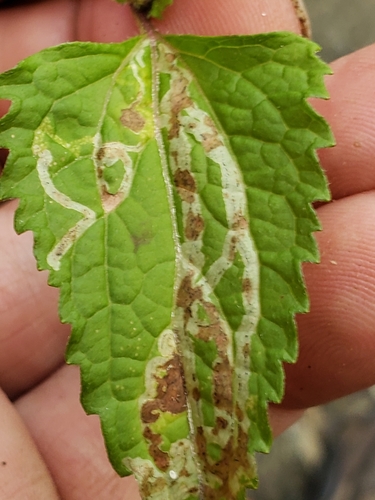





Liriomyza cracentis
Liriomyza cracentis
Die Liriomyza cracentis ist eine winzige Fliege, die gerne an Pflanzenblättern knabbert. Sie machen kleine Gänge in den Blättern, die wie winzige Labyrinthe aussehen können. Diese Fliegen sind wichtig für die Natur, da sie Pflanzen helfen, stark zu wachsen.
Lebensraum: Städtische Gebiete, Gärten
Die Liriomyza cracentis ist eine winzige, dunkel bodied Fliege, oft schwarz oder dunkelgrau erscheinend, mit subtilen gelben Markierungen, besonders am Kopf oder Thorax. Sie hat klare, zarte Flügel und kurze Antennen. Ihre winzige Größe macht sie ohne genaue Untersuchung schwer zu erkennen.
Kategorie
InsektenSeltenheit
Gewöhnlich
Gefahr
1/5 · Sehr gering
Snaps
Mach den ersten Snap!
Blattminierer erzeugen einzigartige geschwungene Muster auf Blättern, wie winzige geheime Karten!
Mutterfliegen machen winzige Fressstiche, aber nur ein Ei pro Stich wird gelegt.
Ihre komplizierten Blattgänge werden 'Minen' genannt und sind von außen am Blatt zu sehen!
Sie entwickeln sich so schnell, dass sie ihren gesamten Lebenszyklus in nur zwei Wochen abschließen können!
Liriomyza cracentis Larven können dank ihrer spezialisierten Mundwerkzeuge, die ihnen beim Kauen und Erzeugen gewundener 'Minen' im Pflanzengewebe helfen, Blätter durchtunneln.
Erwachsene weibliche Liriomyza cracentis können Pflanzenblätter mit ihrem Legebohrer durchstechen, um sich von nahrhaftem Saft zu ernähren, was ihnen hilft, Energie für die Eiablage zu gewinnen.
Winzige Pflanzenfresser, ihre Larven knabbern in Blättern, während Erwachsene Pflanzensaft und Nektar schlürfen.
Altersunterschiede: Larven ernähren sich ausschließlich von den inneren Geweben der Wirtspflanzenblätter, während erwachsene Tiere hauptsächlich Pflanzensaft und etwas Nektar konsumieren.
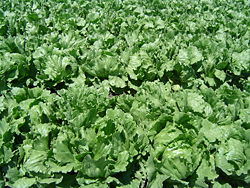
Lactuca sativa
Larven tunneln in Blättern und verursachen Schäden an Nutzpflanzen

Helianthus annuus
Larven erzeugen charakteristische Minen in den Blättern
Diglyphus isaea
Wespenlarven entwickeln sich in oder auf den Blattminiererlarven
Orius insidiosus
räuberische Wanzen ernähren sich von erwachsenen Blattminierern und Larven
Einzelgänger leben den größten Teil ihres Lebens allein und interagieren mit Artgenossen nur zur Paarung oder zur Aufzucht der Jungen.
Dieses Merkmal kennzeichnet Lebewesen, deren Ernährung vollständig oder hauptsächlich aus pflanzlichem Material besteht.
Bezieht sich auf Arten, die deutlich kleiner sind als der Durchschnitt oder das Typische ihrer Art.
Beschreibt eine Art, deren Anwesenheit und Rolle einen unverhältnismäßig großen Einfluss auf ihre Umwelt haben.
Tagaktive Tiere sind hauptsächlich bei Tageslicht aktiv und ruhen oder schlafen in der Regel nachts.
Dieses Lebensraummerkmal weist auf Arten hin, die in städtischen und vorstädtischen Umgebungen mit Menschen zusammenleben können und von Menschen geschaffene Strukturen sowie Grünflächen nutzen.
Beschreibt Organismen, die Pollen übertragen und so die Befruchtung und Fortpflanzung von Pflanzen ermöglichen.
Noch keine Alternativnamen vorhanden.
Gefahr
1/5 · Sehr gering
Diese Fliegen sind für Menschen nicht schädlich, aber es ist am besten, sie in der Natur in Ruhe zu lassen.
Achte auf sechs Beine, Fühler, drei Körperabschnitte und die Form der Flügel. Käfer haben gehärtete Vorderflügel, Fliegen nur ein funktionierendes Flügelpaar. Winzige Insekten müssen oft aus der Nähe betrachtet werden, bevor ihre Gruppe klar wird. Insekten bestimmen: Lade ein Foto hoch und vergleiche die sichtbaren Merkmale.
2-4 mm
1-3 mm
15-30 Tage
Winzige Pflanzenfresser, ihre Larven knabbern in Blättern, während Erwachsene Pflanzensaft und Nektar schlürfen.
Städtische Gebiete, Gärten
Futtersuche
6
Zoome hinein, um Cluster aufzulösen und zu sehen, wo dieses Objekt fotografiert wurde.
Neueste Snaps erscheinen hier, wenn neue Beobachtungen hinzukommen.
Nimm die Entdeckung mit
Fotografiere deinen Fund mit Snappit, bestimme die Art und füge die Entdeckung deiner Sammlung hinzu.