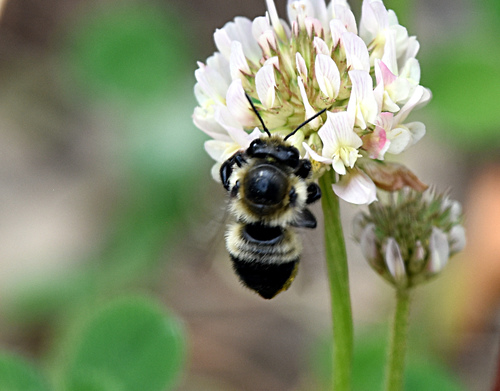





Xanthosarus
xanthosarus
"Xanthosarus" ist eine faszinierende Untergattung der Blattschneiderbienen innerhalb der vielfältigen Gattung Megachile. Diese solitären Wunder sind bekannt für ihre akribischen architektonischen Fähigkeiten, indem sie mit ihren kräftigen Mandibeln perfekte kreisrunde oder ovale Stücke aus Pflanzenblättern schneiden. Anstatt Honig in einem geschäftigen Bienenstock zu produzieren, fungiert jedes Weibchen als Alleinerziehende und baut komplizierte, zigarrenförmige Nester in hohlen Stängeln, verrottetem Holz oder Bodenhöhlen, um ihre Jungen aufzuziehen. Neben ihren unglaublichen Nistgewohnheiten sind Xanthosarus-Bienen außergewöhnliche Bestäuber. Da ihnen die für Honigbienen typischen Pollenkörbchen an den Hinterbeinen fehlen, tragen sie Pollen in einem dichten Haarbüschel spezialisierter Haare unter ihrem Hinterleib, bekannt als Scopa oder Bauchbürste. Diese einzigartige Tragemethode führt dazu, dass mehr Pollen beim Besuch von Blüten abfällt, was sie zu sehr effizienten Bestäubern von einheimischen Wildblumen und wichtigen landwirtschaftlichen Nutzpflanzen macht.
Lebensraum: Typischerweise in sonnigen offenen Lebensräumen wie Prärien, Wiesen, offenen Wäldern und Hausgärten zu finden, wo sowohl faserige Blätter als auch vielfältige Blütenpflanzen reichlich vorhanden sind.
Xanthosarus-Bienen sind robuste, stämmige Insekten, die im Allgemeinen zwischen 1 und 2 Zentimeter lang sind und oft etwas größer und behaarter wirken als die gewöhnliche Honigbiene. Sie sind typischerweise dunkel gefärbt, aber mit dichten Bändern aus hellen, gelblichen oder goldbraunen Haaren bedeckt, besonders um den Thorax und das Abdomen. Ein wichtiges visuelles Erkennungsmerkmal für Weibchen ist die „Scopa“ – eine dicke, bürstenartige Matte aus steifen Haaren an der Unterseite ihres Hinterleibs, die oft leuchtend gelb oder orange glänzt, wenn sie mit Pollen beladen ist. In Ruhestellung liegen ihre Flügel flach auf dem Rücken, und ihre großen, prominenten Mandibeln, die perfekt zum Schneiden von Blättern entwickelt sind, sind bei genauerer Betrachtung oft sichtbar.
Kategorie
InsektenSeltenheit
Gewöhnlich
Gefahr
1/5 · Sehr gering
Snaps
Mach den ersten Snap!
Da sie Pollen an ihrem Bauch statt an den Beinen tragen, kann eine einzelne Blattschneiderbiene die Bestäubungsarbeit von bis zu 20 Honigbienen leisten.
Blattschneiderbienen sind wie die Lochstanzer der Natur; sie können in nur wenigen Sekunden einen perfekten Kreis aus einem Blatt schneiden.
Sie produzieren keinen Honig und leben nicht in Bienenstöcken; jedes Weibchen ist eine 'alleinerziehende Mutter', die die gesamte Arbeit des Nestbaus und der Nahrungssuche selbst erledigt.
Beim Bau eines Nestes kreiert die Mutterbiene einen 'Bienenlaib' – eine klebrige Kugel aus Pollen und Nektar –, legt ein Ei darauf und versiegelt es in eine kuschelige Blatthülle.
Erwachsene ernähren sich ausschließlich von Blütennektar zur Energiegewinnung und sammeln Pollen, um ihre Nestzellen für die sich entwickelnden Larven zu versorgen.
Altersunterschiede: Larven verzehren eine feste Mischung aus Pollen und Nektar, die von der Mutter bereitgestellt wird, während Erwachsene hauptsächlich flüssigen Nektar konsumieren.

Rosa acicularis
Stellt essentielle Nistmaterialien zur Verfügung.

Medicago sativa
Ist auf diese Bienen für die entscheidende Bestäubung angewiesen.
Coelioxys spp.
Legt ihre Eier in die Nester von Blattschneiderbienen, um deren Vorräte zu stehlen.
Mit Flecken oder farblich abgesetzten Bereichen gezeichnet.
Einzelgänger leben den größten Teil ihres Lebens allein und interagieren mit Artgenossen nur zur Paarung oder zur Aufzucht der Jungen.
Baumbewohnende Tiere leben hauptsächlich in Bäumen und nutzen diese als Unterschlupf, Nahrungsquelle und zum Schutz vor Raubtieren.
Farbenfroh beschreibt Organismen oder Objekte, die eine große Vielfalt an leuchtenden und deutlich erkennbaren Farben aufweisen.
Dieses Merkmal kennzeichnet Organismen, deren Ernährung vollständig oder hauptsächlich aus tierischem Gewebe besteht.
Noch keine Alternativnamen vorhanden.
Sammlungen für dieses Objekt erscheinen hier, wenn weitere Themen hinzugefügt werden.
Gefahr
1/5 · Sehr gering
Noch keine besonderen Sicherheitshinweise.
Achte auf sechs Beine, Fühler, drei Körperabschnitte und die Form der Flügel. Käfer haben gehärtete Vorderflügel, Fliegen nur ein funktionierendes Flügelpaar. Winzige Insekten müssen oft aus der Nähe betrachtet werden, bevor ihre Gruppe klar wird. Insekten bestimmen: Lade ein Foto hoch und vergleiche die sichtbaren Merkmale.
1-2 cm
1-3 cm
0.0001-0.0003 kg
1 Jahre
32 km/h
Erwachsene ernähren sich ausschließlich von Blütennektar zur Energiegewinnung und sammeln Pollen, um ihre Nestzellen für die sich entwickelnden Larven zu versorgen.
Typischerweise in sonnigen offenen Lebensräumen wie Prärien, Wiesen, offenen Wäldern und Hausgärten zu finden, wo sowohl faserige Blätter als auch vielfältige Blütenpflanzen reichlich vorhanden sind.
Zoome hinein, um Cluster aufzulösen und zu sehen, wo dieses Objekt fotografiert wurde.
Neueste Snaps erscheinen hier, wenn neue Beobachtungen hinzukommen.
Nimm die Entdeckung mit
Fotografiere deinen Fund mit Snappit, bestimme die Art und füge die Entdeckung deiner Sammlung hinzu.