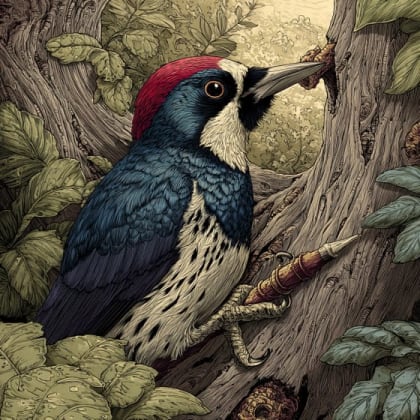
Curlew Sandpiper
Calidris ferruginea
The Curlew Sandpiper is a small, beautiful bird with long legs and a curved beak. It loves to run along the shore and search for tiny food in the sand and mud.
Hábitat: Coastal areas
The Curlew Sandpiper has a long, slender, downward-curved bill and relatively long dark legs. In breeding season, it sports striking brick-red underparts and a dark mottled back, while non-breeding birds are a plainer grey-brown above and white below.
Categoría
AvesRareza
Common
Peligro
1/5 · Muy bajo
Snaps
¡Sé la primera persona en hacer un snap!
Sometimes, thousands of them flock together during migration!
The male often cares for the chicks all by himself!
Their nesting grounds are in the very cold Arctic tundra!
They can drink saltwater, thanks to special glands!
Curlew Sandpiper can fly thousands of miles because they have incredible stamina that helps them migrate from the Arctic to southern continents.
Curlew Sandpiper can find hidden worms deep in the mud because of their long, sensitive, curved bill that acts like a precise detector.
Curlew Sandpiper has drab gray and white feathers in winter that help them disappear against muddy shores, hiding from predators.
They munch on tiny worms and insects found hiding in mud and sand.
Falco peregrinus
hunts them during their long migration flights
Larus marinus
preys on eggs, chicks, and sometimes adults
Vulpes lagopus
eats their eggs and chicks in the Arctic
Hediste diversicolor
probes mudflats to find these marine worms
Hydrobia ulvae
sucks tiny snails from the surface of mudflats
Describe a los animales, principalmente aves, que poseen una cubierta de plumas.
El camuflaje describe a los organismos que poseen colores o patrones que les permiten mezclarse con su entorno.
Colorido describe a organismos u objetos que exhiben una amplia variedad de colores brillantes y distintivos.
Este rasgo identifica a los organismos cuya dieta consiste principalmente en insectos y otros pequeños invertebrados.

Los hábitats costeros son entornos dinámicos situados a lo largo de la interfaz entre la tierra y el mar, influenciados por las mareas, las olas y el agua salada.

Este rasgo identifica a los organismos que exhiben una rapidez excepcional en sus movimientos para cazar, escapar o desplazarse.

Los animales migratorios emprenden movimientos estacionales de una región a otra, típicamente en respuesta a cambios en el clima o la disponibilidad de alimentos.

El estado de peligro de extinción indica que una especie corre un riesgo muy alto de extinguirse en estado silvestre en un futuro próximo.
Todavía no hay alias listados.
Peligro
1/5 · Muy bajo
Always watch birds from a distance and don't try to catch them.
18-23 cm
38-46 cm
0.04-0.11 kg
5-10 años
70 km/h
They munch on tiny worms and insects found hiding in mud and sand.
Coastal areas
Foraging
Acércate para separar los grupos y explorar dónde se ha fotografiado este objeto.
Los snaps recientes aparecerán aquí a medida que se añadan nuevas observaciones.