
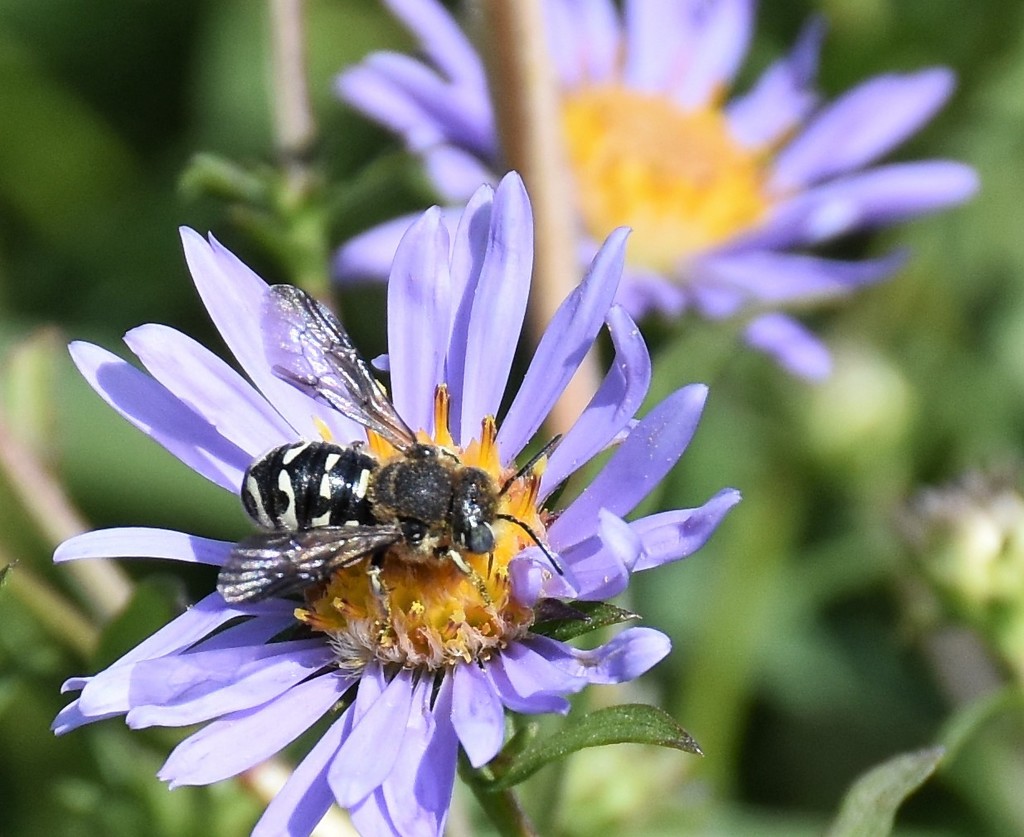





Variable Pebble Bee
Dianthidium subparvum
The Variable Pebble Bee is a small, fuzzy bee that loves to collect pollen from flowers. They are important for helping plants grow by spreading pollen while they visit flowers.
Hábitat: Grasslands
The Variable Pebble Bee is a small, robust bee with a black body marked with distinct yellow or white bands on its abdomen. Its head and thorax are covered in pale, fuzzy hairs, contrasting with its darker, segmented body. The specific patterns can vary, making each bee subtly unique.
Categoría
InsectosRareza
Common
Peligro
2/5 · Bajo
Snaps
¡Sé la primera persona en hacer un snap!
Each tiny nest cell gets a perfect ball of pollen and nectar for the baby bee to eat.
Their fuzzy bodies accidentally help plants make seeds as they fly from flower to flower.
They are solitary bees, meaning each female builds her own nest all by herself, no queen!
This bee uses tiny pebbles and sticky plant resin to build waterproof nests for its babies!
Variable Pebble Bee can build unique nests from small pebbles and plant resins because of their specialized mandibles that help them create sturdy homes for their young.
Variable Pebble Bee has specialized hairs on its underside that form a 'pollen brush' that helps them efficiently collect and transport pollen for their offspring.
Variable Pebble Bee can blend into its rocky surroundings because of its varied color patterns that help them hide from predators while nesting.
These busy bees sip nectar for energy and gather pollen to feed their growing babies.
Diferencias por edad: Larvae consume a pollen and nectar provision ball left by the mother bee, unlike adults.
.jpg&width=800)
Tyrannus tyrannus
catches flying insects for food
Helianthus annuus
transfers pollen between flowers
Coelioxys coturnix
lays eggs in its nest to steal food
Solidago canadensis
helps plant reproduce by moving pollen
Peludo describe a los animales que poseen una cubierta densa de pelo o pelaje suave.
Los animales sociales viven en grupos organizados, cooperando para obtener beneficios de supervivencia como la búsqueda de alimento, la defensa y la cría de descendencia.
Colorido describe a organismos u objetos que exhiben una amplia variedad de colores brillantes y distintivos.
Este rasgo caracteriza a los organismos cuya dieta consiste total o principalmente en material vegetal.

Describe plantas que son particularmente atractivas y beneficiosas para una amplia variedad de organismos polinizadores.

Los hábitats de pastizales son biomas terrestres dominados por pastos y plantas herbáceas, que sustentan a una variedad de animales de pastoreo.

Los animales diurnos están activos principalmente durante el día y suelen descansar o dormir por la noche.

Describe una especie cuya presencia y papel tienen un efecto desproporcionadamente grande en su entorno.

Describe organismos que transfieren polen, permitiendo la fertilización y reproducción de las plantas.
Todavía no hay alias listados.
Peligro
2/5 · Bajo
Stay calm and quiet around bees; they usually won't bother you if you don't bother them.
10-18 mm
6-9 mm
20-60 días
12 km/h
These busy bees sip nectar for energy and gather pollen to feed their growing babies.
Grasslands
Foraging
6
Acércate para separar los grupos y explorar dónde se ha fotografiado este objeto.
Los snaps recientes aparecerán aquí a medida que se añadan nuevas observaciones.





.jpg&width=800)


.jpg&width=800)




