





Baird'S Tapir
tapirus bairdii
Baird's Tapirs are large, gentle animals that love to roam in the rainforests of Central America. They have a unique snout that helps them reach tasty leaves and fruits high up in the trees!
Habitat: Rainforests and wetlands of Central America
The Baird's Tapir is a large mammal with a dark brown to grayish-brown body, a white chin and throat, and white-tipped ears. It has a distinctive flexible, prehensile snout, which makes its face unique, resembling a pig with a short trunk.
Category
MammalsRarity
Common
Danger
1/5 · Very low
Snaps
Be the first to snap!
Baird's Tapirs are related to rhinos and horses, even though they look more like pigs!
Tapir babies are born with amazing striped and spotted camouflage to hide them in the jungle!
They are like 'living fossils' because tapir ancestors have roamed Earth for millions of years!
They communicate using whistles, snorts, and even a special clicking sound through their powerful snouts!
Baird's Tapir can swim and dive expertly, using its snout like a snorkel to breathe underwater when escaping danger.
Baird's Tapir has a flexible, prehensile snout that helps them grasp leaves and branches while foraging in dense forests.
Baird's Tapir has incredibly thick skin, especially on its neck and shoulders, that helps them protect against predators and thorny plants.
Baird's Tapir can detect food and predators using its excellent sense of smell, navigating the dense forest even in the dark.
This big forest animal loves to munch on many different plants, fruits, and leaves.
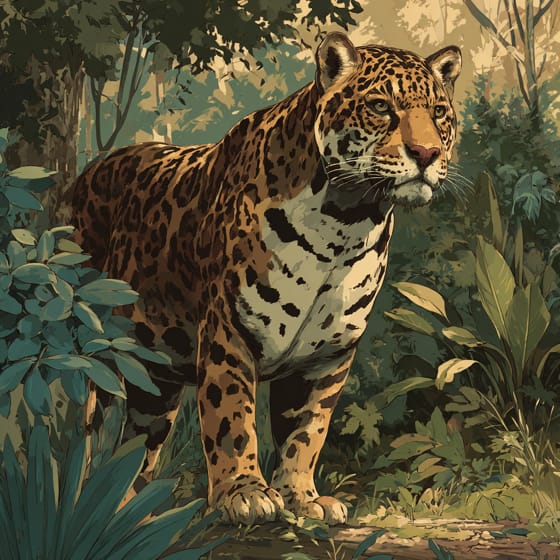
Panthera onca
Main predator of tapirs, especially young ones.
Puma concolor
Another significant predator, particularly of calves.
Ficus insipida
Tapirs eat its fruits, helping to disperse seeds.
Spondias mombin
A common fruit eaten by tapirs, aiding seed dispersal.
Solitary animals live alone for most of their lives, only interacting with others for mating or parental care.
This trait characterizes organisms whose diet consists entirely or primarily of plant material.
Forest habitats are terrestrial environments dominated by dense tree cover, supporting a high diversity of plant and animal life.
Nocturnal animals are primarily active during the nighttime hours, typically resting or sleeping during the day.

Endangered status indicates a species is at a very high risk of extinction in the wild in the near future.
Danger
1/5 · Very low
No special safety notes yet.
The easiest way to identify Baird'S Tapir is to use the Snappit nature identifier app.
180-250 cm
220-300 kg
25-30 years
45 km/h
This big forest animal loves to munch on many different plants, fruits, and leaves.
Rainforests and wetlands of Central America
Foraging
Zoom in to split clusters and explore where this object has been snapped.
Recent snaps will appear here as new observations are added.
Take the discovery with you
Snap it with Snappit to identify it, learn what makes it special, and add the discovery to your collection.





.jpg&width=800)



.JPG&width=800)


.jpg&width=800)
