





balsam fir
Abies balsamea
The balsam fir is a tall tree with soft, fragrant needles. It's often used as a Christmas tree because of its lovely shape and smell. This tree is home to many animals and provides shade in the forest.
Habitat: Forests
The balsam fir has flat, soft, dark green needles with two silvery-white lines on their undersides. Its classic conical shape tapers to a narrow top, making it look like a perfect Christmas tree.
Category
PlantsRarity
Common
Danger
1/5 · Very low
Snaps
10
Each tiny needle has two white stripes on its underside, making them look like secret racing stripes!
Indigenous peoples once used balsam fir resin as a natural glue and even as a type of chewing gum!
These trees can stay fresh as Christmas trees for weeks after being cut, much longer than many others!
When you pop a resin blister on its bark, it's like a tiny, sticky, natural bandage for the tree!
Balsam fir has resin-filled blisters that burst to release sticky sap, helping it heal wounds and deter pests.
Its strong, flexible branches and conical shape help the balsam fir shed heavy snow, preventing breakage in winter.
The balsam fir has highly aromatic needles and bark, releasing a fresh, characteristic scent that repels some insects.
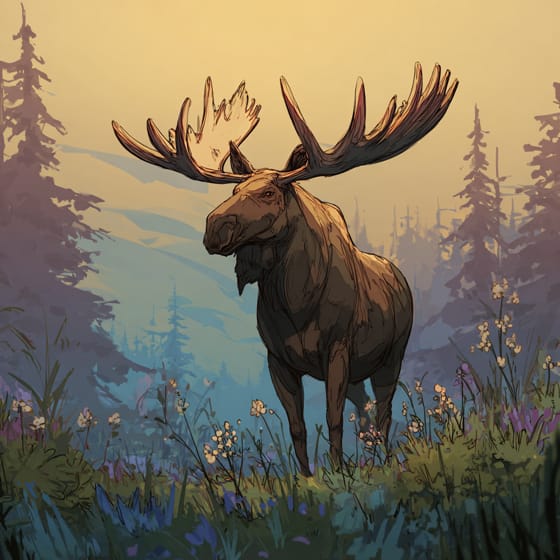
Alces alces
Young trees are a winter food source for browsing.
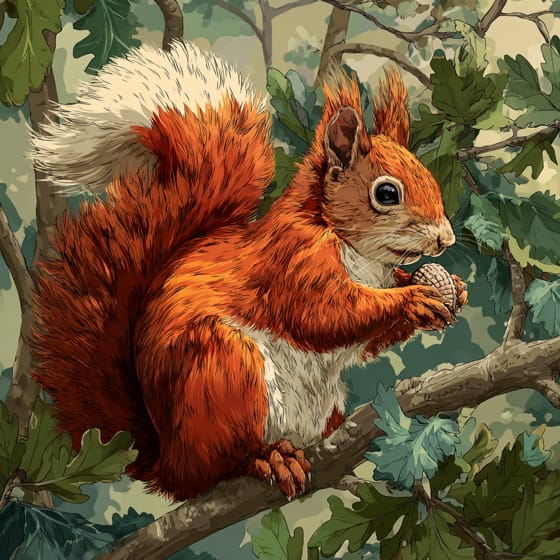
Tamiasciurus hudsonicus
Eats seeds from its cones, storing them for winter.
Choristoneura fumiferana
Larvae heavily defoliate new growth, causing significant damage.
Picoides arcticus
Nests in dead or dying firs, foraging for insects.
Shade tolerant plants are adapted to grow and thrive in areas with low light levels, requiring less direct sunlight.
Broadleaf trees are angiosperms characterized by flat, wide leaves that are typically shed annually in temperate climates.
Coniferous plants are typically evergreen, bearing needles or scales and reproductive cones.
Evergreen plants retain their foliage throughout the year, never shedding all their leaves at once.
Timber refers to wood that has been prepared for use in building and carpentry.

Forest habitats are terrestrial environments dominated by dense tree cover, supporting a high diversity of plant and animal life.

This trait characterizes organisms with an exceptionally long lifespan compared to others of their kind.

Describes a species whose presence and role have a disproportionately large effect on its environment.
No aliases listed yet.
Danger
1/5 · Very low
Always stay on paths when exploring forests and watch for falling branches.
The easiest way to identify balsam fir is to use the Snappit nature identifier app.
1500-2500 cm
600-900 cm
Spring
Yes
None
Perennial
Wind
Zoom in to split clusters and explore where this object has been snapped.

Maine, US
You might spot Pink Lady's Slipper, Wood Lily, and Great Blue Heron.
View guide →

New Hampshire, US
You might spot Common Shiner, Tree Lungwort, and Creek Chub.
View guide →

Maine, US
You might spot Jack Pine, Lingonberry, and Sheep Laurel.
View guide →

Minnesota, US
You might spot American White Pelican and Painted Turtle.
View guide →

Vermont, US
You might spot Common Eastern Bumble Bee and Red Trillium.
View guide →

Maine, US
You might spot Himalayan Balsam, Snowy Egret, and New England Aster.
View guide →
Take the discovery with you
Snap it with Snappit to identify it, learn what makes it special, and add the discovery to your collection.









.jpg&width=800)


_001.jpg&width=800)

