




Colorado Potato Beetle
Leptinotarsa decemlineata
The Colorado Potato Beetle is a little beetle that loves to eat potato plants. Farmers watch out for these hungry critters!
Habitat: Potato fields and gardens
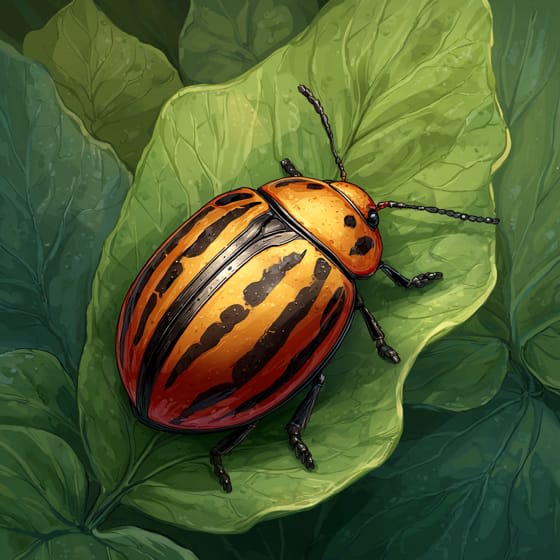
The Colorado Potato Beetle is an oval-shaped insect, easily recognized by its bright yellow-orange body adorned with ten prominent black stripes running down its wing covers. Its head is orange with black spots, making it stand out from green leaves.
Category
InsectsRarity
Common
Danger
2/5 · Low
Snaps
8
A single female beetle can lay over 500 tiny orange-yellow eggs in her short lifetime!
Its plump, reddish larva looks like a tiny slug with two rows of black spots down its back!
These striped beetles can overwinter by burying themselves up to 20 cm deep in the soil!
They were first described in Nebraska, not Colorado, causing a bit of a name mix-up!
Colorado Potato Beetle can produce bitter-tasting chemicals because of specialized glands that make them unappetizing to predators.
Colorado Potato Beetle can rapidly develop resistance to pesticides, which helps them survive control efforts.
Colorado Potato Beetle can fly between fields and gardens, helping them find new food sources and spread to new areas.
Colorado Potato Beetle has a high reproductive rate, allowing females to lay hundreds of eggs that hatch quickly.
These striped beetles are herbivorous, munching on leaves and stems of specific plants.

Solanum tuberosum
Beetles and larvae feed on the plant's foliage.

Solanum lycopersicum
This beetle is also a significant pest of tomato plants.
Perillus bioculatus
This predatory stink bug preys on Colorado Potato Beetle larvae.
Coleomegilla maculata
Lady beetle larvae and adults consume the beetle's eggs.
Wildlife encompasses all undomesticated animal and plant life existing in their natural habitats.
Marked with parallel bands or lines of color.
Grassland habitats are terrestrial biomes dominated by grasses and herbaceous plants, supporting a variety of grazing animals.
This trait characterizes organisms whose diet consists entirely or primarily of plant material.

Nocturnal animals are primarily active during the nighttime hours, typically resting or sleeping during the day.

Describes organisms that transfer pollen, enabling the fertilization and reproduction of plants.
Danger
2/5 · Low
Do not touch or pick up. Some insects sting or bite. Ask an adult for help.
The easiest way to identify Colorado Potato Beetle is to use the Snappit nature identifier app.
15-25 mm
6-11 mm
40-50 days
15 km/h
These striped beetles are herbivorous, munching on leaves and stems of specific plants.
Potato fields and gardens
Foraging
Zoom in to split clusters and explore where this object has been snapped.

Illinois, US
You might spot Viceroy, Common Wood-Nymph, and Acadian Hairstreak.
View guide →

Wisconsin, US
You might spot Common Eastern Bumble Bee, Monarch, and Bee.
View guide →

Illinois, US
You might spot American Robin, Canada Goose, and House Sparrow.
View guide →

Georgia, US
You might spot Asian Lady Beetle, Anole, and Joro Spider.
View guide →

New Jersey, US
You might spot Wild Teasel, Monarch, and Large Milkweed Bug.
View guide →
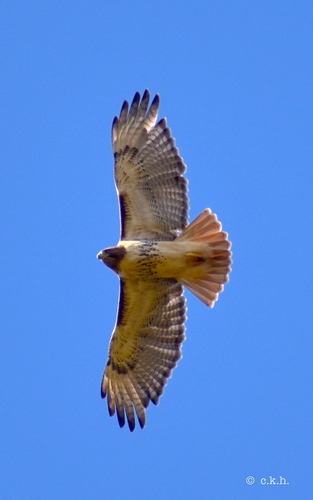
Tennessee, US
You might spot Red-Tailed Hawk, Red-Shouldered Hawk, and Canada Goose.
View guide →
Take the discovery with you
Snap it with Snappit to identify it, learn what makes it special, and add the discovery to your collection.








.jpg&width=800)




