





Bee
Apis mellifera
Bees are small flying insects that live in hives. They collect nectar from flowers to make sweet honey. Bees are important pollinators that help plants grow.
Habitat: Forests, Grasslands, Urban areas
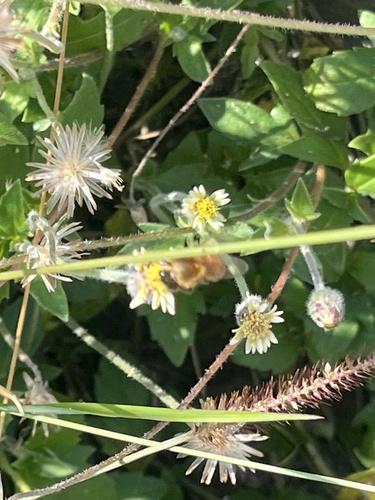
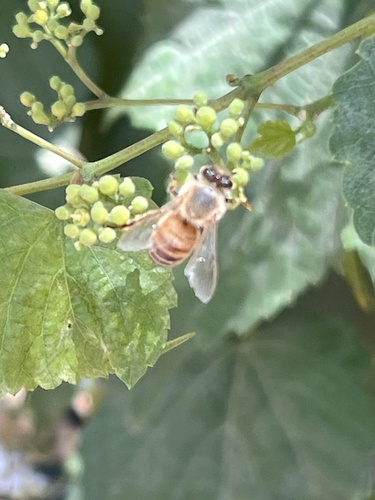
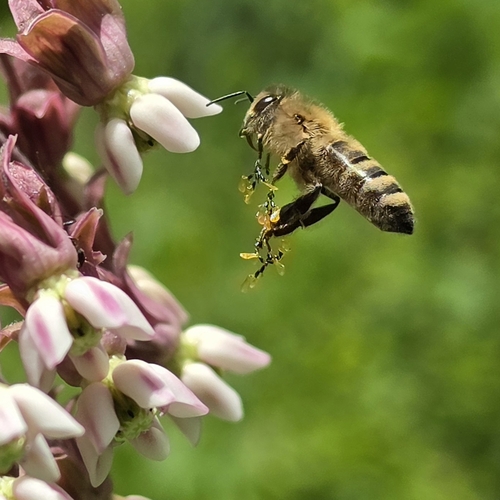
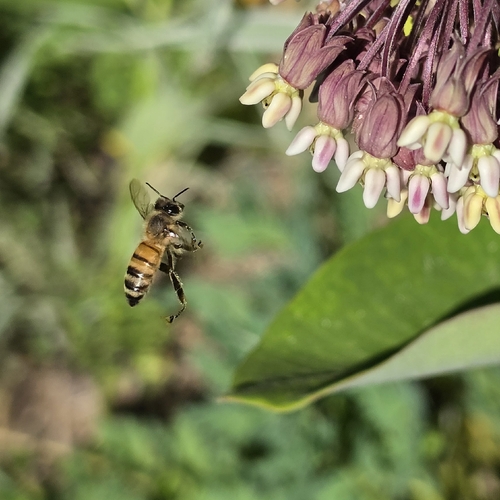
The Bee is a fuzzy insect, typically striped with alternating bands of black and bright yellow or orange. It has two pairs of clear wings and six legs. Its stout, hairy body distinguishes it from sleek, less-hairy wasps.
Category
InsectsRarity
Common
Danger
2/5 · Low
Snaps
812
A queen bee can lay up to 2,000 eggs every single day during peak season!
Bees have five eyes: two large compound eyes and three simple eyes on top of their head.
To make just one pound of honey, bees must visit about two million flowers!
Worker bees are all female, and they do all the jobs like foraging, cleaning, and caring for young.
Bee can pollinate plants because of its hairy body and flight, helping flowers make seeds and fruits for ecosystems.
Bee can build intricate hexagonal wax comb structures because of special glands, which helps store honey and care for young.
Bee has a unique 'waggle dance' communication method that helps them share directions to food sources with hive mates.
Bees sip nectar for energy and collect pollen for protein, helping plants grow and thrive.

Helianthus annuus
Helps the sunflower produce seeds.
Varroa destructor
Feeds on bee's blood, weakening colony.
Vespa velutina
Hornets hunt and kill bees near their hives.

Homo sapiens
Humans manage hives for honey and pollination.
Social animals live in organized groups, cooperating for survival benefits such as foraging, defense, and raising offspring.
Grassland habitats are terrestrial biomes dominated by grasses and herbaceous plants, supporting a variety of grazing animals.
This trait characterizes organisms whose diet consists entirely or primarily of plant material.
Describes a relationship between two different species where they live in close association, often benefiting one or both.
This trait describes organisms that manipulate external objects to achieve a specific goal.

Forest habitats are terrestrial environments dominated by dense tree cover, supporting a high diversity of plant and animal life.

Venomous organisms produce toxins that are injected into another animal, typically through a bite or sting.

Describes organisms that transfer pollen, enabling the fertilization and reproduction of plants.
Danger
2/5 · Low
Bees are usually not dangerous but avoid disturbing their hives. If a bee comes near, stay calm and still.
The easiest way to identify Bee is to use the Snappit nature identifier app.
20-25 mm
10-15 mm
15-150 days
30 km/h
Bees sip nectar for energy and collect pollen for protein, helping plants grow and thrive.
Forests, Grasslands, Urban areas
Foraging
Zoom in to split clusters and explore where this object has been snapped.
Jun 19, 2026
BroadmoorPhoto attribution
(c) Elliot Greiner, some rights reserved (CC BY)
License: CC BY 4.0 ↗
Image may be shown cropped inside the card frame.
Jun 19, 2026
BloomingdalePhoto attribution
(c) Frederick Nunley, some rights reserved (CC BY)
License: CC BY 4.0 ↗
Image may be shown cropped inside the card frame.
Jun 19, 2026
Rockdale Common Housing DistrictPhoto attribution
(c) Betsy Lambert, some rights reserved (CC BY)
License: CC BY 4.0 ↗
Image may be shown cropped inside the card frame.
Jun 18, 2026
Rockdale Common Housing DistrictPhoto attribution
(c) Betsy Lambert, some rights reserved (CC BY)
License: CC BY 4.0 ↗
Image may be shown cropped inside the card frame.
Jun 15, 2026
ProfessorvillePhoto attribution
no rights reserved
License: CC0 1.0 ↗
Image may be shown cropped inside the card frame.

Virginia, US
You might spot Eastern Box Turtle and White-Tailed Deer.
View guide →

Tennessee, US
You might spot House Sparrow, Northern Mockingbird, and Gulf Fritillary.
View guide →

South Carolina, US
You might spot Anole, Green Treefrog, and Eastern Gray Squirrel.
View guide →

California, US
You might spot California Poppy and Common Side-Blotched Lizard.
View guide →

California, US
You might spot Redwood Sorrel, Redwood, and Button's Banana Slug.
View guide →

Massachusetts, US
You might spot Eastern Cottontail and American Robin.
View guide →
Take the discovery with you
Snap it with Snappit to identify it, learn what makes it special, and add the discovery to your collection.







.jpg&width=800)



