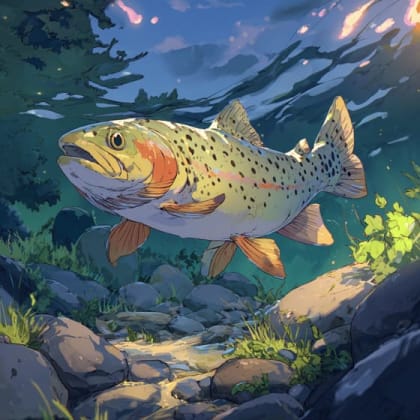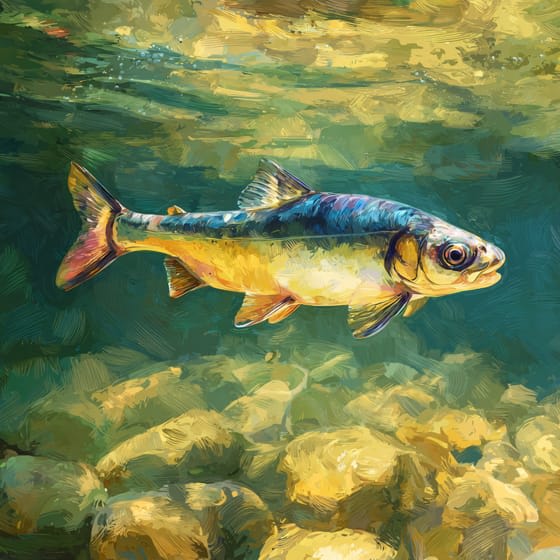




Dace
Leuciscus leuciscus
Dace are sleek fish that like to dart around in the water. They are fast swimmers and enjoy hanging out in groups.
Habitat: Rivers and streams
The Dace has a slender, torpedo-shaped body, typically sporting a drab olive-brown back and silvery sides. A distinct dark stripe often runs along its body, helping it blend into its streambed habitat. Its small mouth is usually located underneath its snout.
Category
FishRarity
Common
Danger
2/5 · Low
Snaps
Be the first to snap!
A group of Dace is often called a 'school' or 'shoal' as they swim together.
Dace are like tiny underwater gardeners, often munching on algae that grows on rocks.
Some Dace species build tiny pebble nests on the riverbed for their eggs!
They can sometimes change their skin color slightly to match the riverbed perfectly!
Dace has a streamlined body and strong fins that help them hold their position in fast-flowing river currents.
Dace can detect tiny water movements because of their lateral line, helping them find food or avoid danger.
Dace has dappled colors that help them blend with rocky riverbeds to hide from hungry predators.
Dace enjoy a varied diet of tiny insects, larvae, and plant matter found in the water.
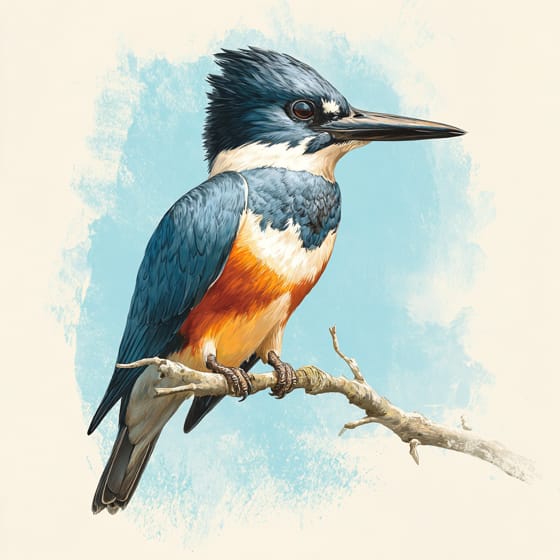
Megaceryle alcyon
Kingfishers dive swiftly to catch Dace.
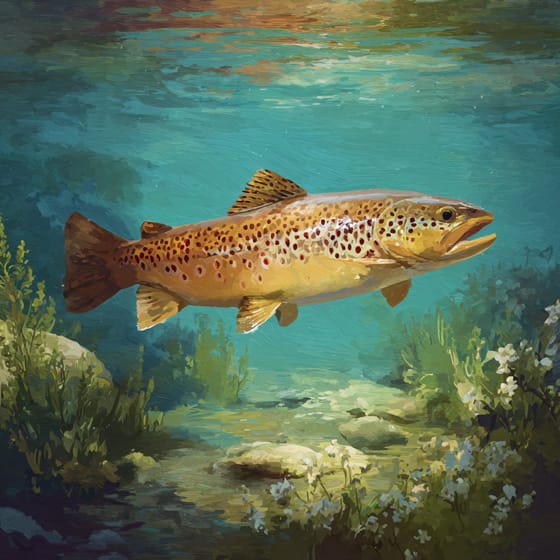
Salmo trutta
Larger trout frequently prey on smaller Dace.
Ephemera danica
Dace forage for mayfly larvae on riverbeds.
No aliases listed yet.
Danger
2/5 · Low
Watch quietly from a distance and never try to feed or chase wild animals.
The easiest way to identify Dace is to use the Snappit nature identifier app.
7-15 cm
0.005-0.05 kg
3-7 years
Dace enjoy a varied diet of tiny insects, larvae, and plant matter found in the water.
10 km/h
Rivers and streams
Foraging
Zoom in to split clusters and explore where this object has been snapped.
Recent snaps will appear here as new observations are added.
Take the discovery with you
Snap it with Snappit to identify it, learn what makes it special, and add the discovery to your collection.