Southern Stingray
Dasyatis americana
Southern Stingrays have flat bodies and long tails! They like to hide in the sand and can be found in warm waters.
Habitat: Shallow coastal waters
The Southern Stingray has a distinctive flat, diamond-shaped body, typically brown or gray on top for camouflage, with a pale underside. Its long, whip-like tail, which is often longer than its body, contains a sharp, venomous barb, making it visually unique among its bottom-dwelling neighbors.
Category
FishRarity
Common
Danger
2/5 · Low
Snaps
1
Female stingrays give birth to live, fully formed young, not eggs, after a long pregnancy!
Southern Stingrays can sometimes be seen 'stacking' on top of each other in piles to rest.
They are relatives of sharks, both having skeletons made of flexible cartilage instead of bone!
They flap their large, wing-like fins to glide gracefully through the water, looking like flying carpets.
Southern Stingrays can quickly bury themselves in sand using their fins, helping them hide from predators or ambush prey.
Southern Stingrays have special organs called ampullae of Lorenzini that help them detect the tiny electric fields of hidden prey.
Southern Stingrays have a sharp, venomous barb on their whip-like tail that helps them defend against threats.
Southern Stingrays are bottom-feeding hunters, expertly digging up tasty crustaceans and small fish from the seafloor.
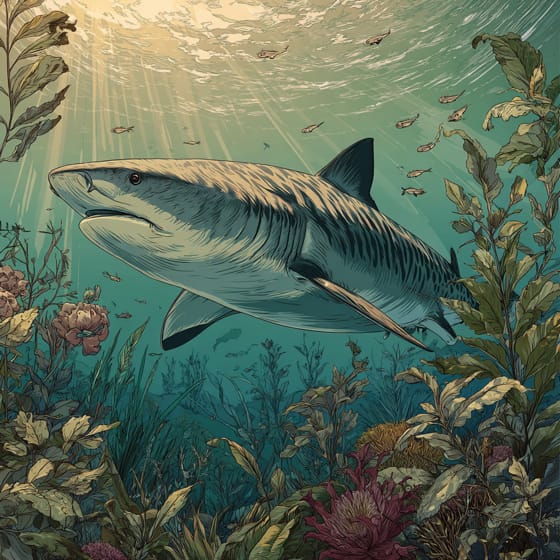
Galeocerdo cuvier
Main predator of larger stingrays.

Carcharhinus leucas
Preys on stingrays in coastal waters.
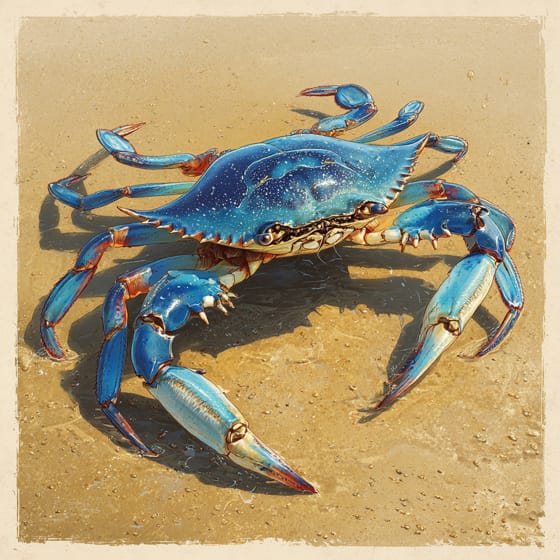
Callinectes sapidus
A common prey item for stingrays.
Penaeus aztecus
Often consumed by stingrays in their habitat.
Wildlife encompasses all undomesticated animal and plant life existing in their natural habitats.
Solitary animals live alone for most of their lives, only interacting with others for mating or parental care.
Camouflaged describes organisms that possess coloring or patterns that allow them to blend into their environment.
Piscivorous organisms are animals that primarily subsist on a diet of fish.

Coastal habitats are dynamic environments located along the interface between land and sea, influenced by tides, waves, and saltwater.

This trait describes organisms capable of generating electric fields or electric shocks.

Aquatic habitats encompass environments where organisms live predominantly in water, including oceans, rivers, lakes, and wetlands.

Venomous organisms produce toxins that are injected into another animal, typically through a bite or sting.
Danger
2/5 · Low
Watch quietly from a distance and never try to feed or chase wild animals.
The easiest way to identify Southern Stingray is to use the Snappit nature identifier app.
30-100 cm
10-90 kg
10-20 years
Southern Stingrays are bottom-feeding hunters, expertly digging up tasty crustaceans and small fish from the seafloor.
8 km/h
Shallow coastal waters
Foraging
Zoom in to split clusters and explore where this object has been snapped.

Ohio, US
You might spot Sand Tiger Shark, Nurse Shark, and Cow.
View guide →

New Mexico, US
You might spot Sand Tiger Shark and Zebra Shark.
View guide →
Missouri, US
You might spot African Elephant, Giraffes, and Zebra.
View guide →
Florida, US
You might spot Sand Tiger Shark, Octopus, and North American River Otter.
View guide →

New York, US
You might spot Sand Tiger Shark, African Penguin, and Sea Lion.
View guide →

Texas, US
You might spot Bottlenose Dolphin and Sea Turtle.
View guide →
Take the discovery with you
Snap it with Snappit to identify it, learn what makes it special, and add the discovery to your collection.