



Fruit Fly
Drosophila melanogaster
The Fruit Fly is a tiny insect that loves ripe fruits. You can often see them buzzing around in kitchens!
Habitat: Homes, especially kitchens and gardens
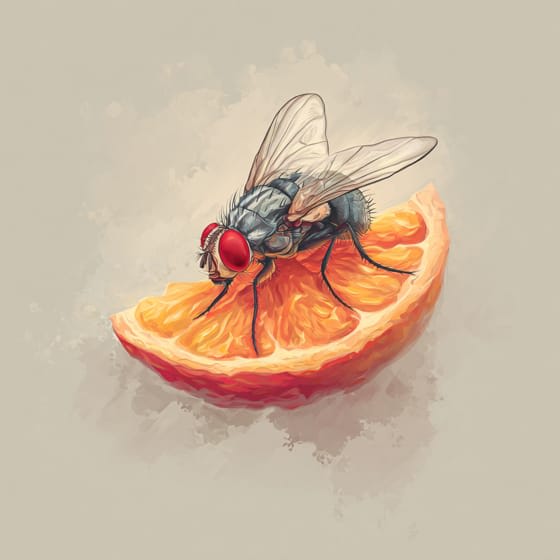
The Fruit Fly is a tiny, yellowish-brown insect with distinctive bright red eyes. It has a rounded head and a segmented abdomen, often with dark stripes. Its transparent wings are relatively large, making it visually different from many other small flying insects.
Category
InsectsRarity
Common
Danger
2/5 · Low
Snaps
Be the first to snap!
A fruit fly can zoom around, changing direction in less than 50 milliseconds!
Fruit flies were among the first living creatures launched into outer space!
If you sliced a fruit fly's eye, you'd find hundreds of tiny lenses inside!
Scientists worldwide study fruit flies to unlock secrets about human health and aging!
Fruit Fly has an amazing sense of smell that helps them sniff out ripe or rotting fruit from far away.
Fruit Fly can lay hundreds of eggs in a short time, which helps their population grow quickly and survive.
Fruit Fly can perform incredible mid-air turns, helping them dodge predators and navigate quickly.
Fruit Fly has a very short life cycle, helping scientists study genetics and human diseases rapidly.
These tiny insects feast on the sugars from rotting fruits, vegetables, and fermented liquids.
Age differences: Larvae feed on microorganisms and yeast within decaying fruit, while adults feed on sugars and yeasts from the surface.
Araniella cucurbitina
Spiders catch fruit flies in their sticky webs for food.
Saccharomyces cerevisiae
Fruit flies feed on the yeast growing on ripe and decaying fruit.
Pachycrepoideus vindemiae
This tiny wasp lays its eggs inside fruit fly pupae, killing them.
Formica rufa
Ants can hunt and carry off fruit flies to feed their colony.
Wildlife encompasses all undomesticated animal and plant life existing in their natural habitats.
This trait identifies organisms whose diet includes both plant and animal matter.
Scavengers consume dead organic matter, helping to decompose carcasses and other waste in the ecosystem.
This trait identifies organisms whose diet primarily consists of insects and other small invertebrates.

This habitat trait indicates species that can coexist with humans in urban and suburban environments, utilizing man-made structures and green spaces.

Nocturnal animals are primarily active during the nighttime hours, typically resting or sleeping during the day.
Danger
2/5 · Low
Do not touch or pick up. Some insects sting or bite. Ask an adult for help.
The easiest way to identify Fruit Fly is to use the Snappit nature identifier app.
5-6 mm
2-3 mm
30-50 days
These tiny insects feast on the sugars from rotting fruits, vegetables, and fermented liquids.
Homes, especially kitchens and gardens
Foraging
6
Zoom in to split clusters and explore where this object has been snapped.
Recent snaps will appear here as new observations are added.
Take the discovery with you
Snap it with Snappit to identify it, learn what makes it special, and add the discovery to your collection.









.jpg&width=800)




